

 Reply With Quote
While im no expert, i think if shows like TUF can remain relatively popular, the sport will stay alive.
If they could get TUF on a major network, it would become ridiculously huge.

This is not a troll thread. If anyone wants an opinion on the state of boxing start a thread and I'll contribute an honest response.
As far as MMA, UFC 84 is a really nice card. However, for me a lot of that excitement is the o fight. Yes I'm a fan of Penn, jardine/silva should be fun, and Thiago is going to make mince meat out of his opponent. However, IMO o makes the card from a casual fan perspective. Of course we know the casual fan is where the real money is made, and yes boxing suffers dearly when attracting the casual fan too.
I'm reading that all the other organizations are hurting, and now o along with Liddell who were the stars are now fading away.
MMA isn't going anywhere because it does have a very loyal following, but will it ever reach what many thought back in 2006. 2007 was down compared to 2006 and I'm not sure 2008 is looking much better.
Am I wrong? Where does the sport go from here?

While im no expert, i think if shows like TUF can remain relatively popular, the sport will stay alive.
If they could get TUF on a major network, it would become ridiculously huge.

The UFC is going to be around for a long time but they are not untouchable. White not caring that o is leaving makes no sense on any level since he is still a huge draw. The UFC should have pulled out all the stops to make the Fedor/Randy fight happen and they didn't really over money mainly. There was no excuse for them not making that fight happen at all. Most of the up and coming stars will still want to come to the UFC because that is where you will get the most attention and in the long run if successful make the most money.
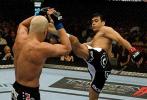
The success of the Ultimate Fighting Championship over the past three years has always carried with it one major question: Is this a long-term sport or a short-term fad?
After all, when what was essentially an underground sport suddenly becomes popular based largely on a reality show on a cable station, it’s easy to question its longevity.
But as we’ve passed three years, it’s looking more and more like “fad” is not the right word.
Short-term, most signs are very strong, particularly on recent pay-per-view numbers. But are questions that remain before mixed martial arts can be declared a permanent, significant part of our sports culture. Can MMA create new headlining stars? And how will the UFC manage to improve its television profile?
On pay-per-view television, the company’s most important revenue stream, the last five outings have produced three of the company’s top 10 shows.
The run started with the Dec. 29 event with a Wanderlei Silva vs. Chuck Liddell top match( with a strong No. 2 match with Georges St. Pierre vs. Matt Hughes); the Feb. 2 show featuring the debut of Brock Lesnar vs. Frank Mir; and the most recent April 19 show with St. Pierre vs. Matt Serra. It’s the company’s best run since late 2006, and that’s throwing in a much-criticized price increase from $39.95 to $44.95 per show.
This surge in pay-per-view revenue has come during a time most believe the country is in recession.
UFC does not release pay-per-view numbers, but all three events are believed to have fallen in the range of 525,000-650,000 buys. Dec. 29 and April 19 both did $5 million in live gates, ranking No. 3 and No. 2, respectively, in company history.
At $5.1 million in U.S. dollars, the St. Pierre vs. Serra set the Canadian record for the largest combat sports live gate in history, beating the record set by Sugar Ray Leonard vs. Roberto Duran in 1980.
Another good sign is that aside from Liddell, who was established as the company’s biggest star when he beat Randy Couture just as UFC and e TV began their partnership, the company drew big numbers with new drawing cards.
Lesnar, who made his name first as a pro wrestler, was in his first UFC match and the show was marketed as almost a “What if a world champion pro wrestler fought for real?” type of event. He garnered more interest for his debut than any fighter in UFC history. But there are certainly questions whether or not he’ll be a long-term drawing card.
Was it a one-time curiosity, or will people be interested in his second match, on Aug. 9 in Minneapolis, when he faces Mark Coleman, an aging MMA legend?
UFC also had the belief that Lesnar drew from a different audience than they usually attract – specifically, pro wrestling fans – which again brings into question whether that fan base will buy a second time.
People who didn’t see the fight and heard about Lesnar losing in 90 seconds by submission to Mir may now consider Lesnar a joke. Most who saw the fight would have a different opinion, since Lesnar, a former NCAA champion heavyweight in college, looked as impressive as anyone could look in a debut match with a quick submission loss.
The raw, athletic talent that some didn’t want to accept because he came from the entertainment world was clearly evident. Lesnar made a mistake based on inexperience. Even if UFC is able to market the match around Lesnar looking for redemption and create an aura around Coleman’s last shot, this time Lesnar has to win. If he does draw again, it’s going to be difficult to promote him in a headline position with two straight losses.
If Lesnar doesn’t work out, the match was still a success, because Mir came out with more notoriety and popularity than at any point in his career. The former champion is now the probable next challenger for interim heavyweight champion Antonio Rodrigo Nogueira, in a match that should take place in late 2008.
You can certainly make a strong case there are more worthy contenders from a win/loss standpoint than Mir. But barring an injury or something unforeseen, such as Randy Couture and UFC settling their legal differences, that win looks to have given Mir a shot at regaining the le he once held.
The success of St. Pierre is another strong long-term sign. At the age of 26, he figures to have significant longevity as a welterweight champion or leading contender. While Lesnar’s ability to be a championship-level heavyweight is a major question, St. Pierre has looked unstoppable and whatever mental questions there were about him last year were seemingly answered when he withstood a tremendous amount of pressure in dominating Serra.
Of course, everyone thought that of St. Pierre in late 2006 after he beat Hughes for the first time. Then Matt Serra walked in, knocked St. Pierre out and opened up a whole line of questions that it seemingly took St. Pierre a year to fully answer.
Short-term business indicators are also good. The only negative this year is that while Lesnar did big numbers on pay-per-view, they had to heavily paper the Mandalay Bay Events Center, drawing barely 7,000 paid.
The probable answer is that Lesnar drew from the WWE audience, which is used to buying pay-per-view, but those fans aren’t as used to coming to Las Vegas and paying UFC ticket prices for a live event.
Any worries it was a sign that Las Vegas, the company’s home market, was burning out have been alleviated since the next show, on May 24 at the MGM Grand Garden Arena, has only a few hundred tickets left, as does London on June 7.
At this point, expectations for the July 5 show in Las Vegas is that the bout between Quinton Jackson vs. Forrest Griffin for the light heavyweight le will do high-end business. The two are building the match weekly as opposing coaches on the reality show, and light heavyweight championship has been the company’s marquee division largely from the day it was created.
But there still exists a huge long-term question.
As strong as the UFC brand name is today, to remain that way, it needs a television vehicle. Without a television show that draws a significant audience to pump up the pay-per-view events, interest in those fights will quickly wane.
The Ultimate Fighter show has worked in that role up to this point. But as it starts filming its eighth season in a few weeks, it’s fare to wonder if the shows format isn’t getting stale. After all, there are only so many ways to frame 16 fighters in a house, watching similar training sessions, sound bites and fights in a gym with no spectators, before it gets stale.
Ratings have slipped the last few seasons, and the April 30 show hit a low point with a 0.91 rating and 1.2 million viewers. Whether the show can ride a few more cycles over the next few years, it’s television, and thus, it’s guaranteed that it will not last forever.
http://sports.yahoo.com/mma/news?slu...yhoo&type=lgns

continues to rise in popularity and exposure...
unless Gina Carano dies in the ring on CBS on the 31st...seriously, a bloodbath in the CBS debut could be a shot to the balls for the UFC...
If the UFC works something out with Fox, look out...
Casino moguls Frank and Lorenzo Fer ta bought a violent fight club called Ultimate Fighting Championship--and built it into a billion-dollar sports empire.
On the evening before the Super Bowl a mix of celebrities (including home run king Barry Bonds and hip-hop impresario Jay-Z), high rollers and rabid fans crammed into the 12,000-seat arena at Mandalay Bay in Las Vegas. Like spectators at a gladiator fight, they were there to witness the highly charged and bizarre spectacle of men bloodying each other in what's known as mixed martial arts. It was the latest fightfest staged by Ultimate Fighting Championship, a Las Vegas company that started as a smutlike fight club that's now worth maybe $1 billion and is drawing compe ors like flies to blood.
UFC co-owner Lorenzo Fer ta, 39, wandered tunnels around the arena. He dropped in on a broadcast booth to pepper producers with questions about which countries would be receiving the night's pay-per-view event, and then checked in with the commentator, Joe Rogan of NBC's Fear Factor, to learn more about the matchups. He made small talk with some of the 18 fighters on the bill before joining the crowd to watch the fights taking place inside an eight-sided ring surrounded by a chain-link fence.
Former Heavyweight Champion Tim Sylvia, a tattooed brawler wearing red and black trunks and 5-ounce fingerless fighting gloves, had just spent two five-minute rounds punishing challenger Minotauro Nogueira with jabs to the face. The Brazilian's cheeks were cut and bruised in several places, leaving his face so swollen he could barely see. Pro wrestling is fake. This stuff is for real.
But in the third round Sylvia let his guard down for a split second, allowing Nogueira, a Brazilian jujitsu master, to grab his neck and pull. Sylvia could not escape the move--a guillotine choke--and was forced into submission. The crowd roared.
Americans will never understand cricket. The British can't grasp American football. But you can't get much more universal than this. "What makes UFC so great," says Fer ta, "is that every single man on the planet gets it immediately. It's just two guys beating each other up."
With his older brother, Frank Fer ta III, 46, and UFC President Dana White, 39, Lorenzo Fer ta has transformed UFC from a business once labeled by Senator John McCain as "human fighting" into a lucrative sports empire that compe ors like Mark Cuban are now hoping to horn in on.
It's the Ultimate Money Machine. That night before the Super Bowl 10,700 fans packed the arena, paying an average of $340 for a ticket to witness nine mixed martial arts fights. Another 500,000 fans paid $45 ($55 for high definition) to watch five of the nine fights at home. The total haul from the event: $25 million.
This year UFC is likely to generate $250 million, capturing perhaps 90% of mixed martial arts revenue. The majority of UFC revenues come from the monthly pay-per-view events. Additional cash is made from ticket sales to live fights and licensing fees from its e cable shows The Ultimate Fighter and UFC Fight Night . These shows in turn act as promotional tools to drive fans to pay-per-view events. More scratch comes from sales of DVDs and T shirts, as well as downloads from UFC's library of past bouts.
The Fer tas field pleas from private equity and media firms to sell UFC. Those offers, they assert, exceed $1 billion. Not a bad return on investment for something they paid a mere $2 million for in 2001. (Indeed, in 2002 FORBES wrote skeptically about the Fer tas' ability to turn their new purchase into anything worthwhile.) The price, if they could get it, would be rich in comparison with the $1.4 billion market value for publicly traded World Wrestling Entertainment (nyse: WWE - news - people ), which has almost double the revenue. Both UFC and WWE racked up similar pay-per-view buys in 2007: UFC got 5.1 million buys for 11 fights while WWE got 5.2 million for 15 fights. Often UFC pay-per-view events draw as many male viewers ages 18 to 49--some 3 million--as one of last year's biggest college football games, Michigan versus Ohio State. That number assumes six people are gathered around the TV to watch each pay-per-view purchase. UFC has broadcast events to 170 countries and territories and recently sold out live fights in Manchester, U.K. and Montreal.
The brothers each own 45% of UFC (White owns the rest), which is operated through their holding company Zuffa (Italian for "fight"), LLC. Add in personal assets and their stake in Station Casinos (nyse: STN - news - people ), which they took private with buyout maven Thomas Barrack for $9 billion in cash and assumed debt last year, and each Fer ta has a net worth of $1.3 billion, ranking each 380th on The Forbes 400.
Marketers salivate over the audience. "UFC has a deep, passionate fan base," says Mark-Hans Richer, chief marketing officer for Harley-Davidson (nyse: HOG - news - people ), which along with Bud Light is a corporate sponsor. "Advertising to such an engaged group of young males is important to us because we want and need to be selling to the next generation of motorcycle riders." Ultimate fighting has also spawned a few side industries (which UFC doesn't own). Sportswear firms like Tapout, American Fighter and Warrior Wear sell an assortment of workout clothes and accessories (wallets, key chains, stickers). Children as young as 6 are taking MMA classes in place of the karate or tae kwon do lessons of a generation ago.
Here is the rest http://www.forbes.com/forbes/2008/0505/080_2.html
Last edited by Evan; 05-19-2008 at 09:41 PM.
In summery
MMA is doing very well but I think every single non UFC organization outside the UFC is trying to grow way too fast with zero sense. Except for HDnet which are filled with geniuses and is turning into the ESPN of MMA without spending a dime. Its amazing. EliteXC is doing well but they are walking the plank.
We're going to see a lot of ups and downs over the next decade but its here to stay.
Everyone is just being so damn impatient.
I want to see them build up super stars and have them battle each other. Anyways ufc 84 is going to be a blast.
This thing takes time...for some reason critics want this to be headlining ESPN over night like the NFL. A few years ago nobody heard about this and look at it now.
Patience...
CBS on Tuesday released the full ratings results for the debut of CBS-EliteXC Saturday Night Fights, which took place on Saturday night in Newark, N.J. and aired live on the CBS Television Network.
The event averaged 4.85 million viewers over the entirety of the telecast. It peaked at 6.51 million viewers during the main event between Kevin “Kimbo Slice” Ferguson and James Thompson.
A statement from CBS indicated that the network seemed pleased with the numbers, especially since it represented a significant increase over the network’s regularly scheduled programming in the same time lot during the 2007-08 season.
The numbers were especially well received by the network in key advertising demographics. The adults 18-34 demographic was up 156 percent and 18-34 men 357 percent.
e TV officials also released numbers for their counter-programming on Saturday night, which leaned heavily on the popularity of Chuck “The Iceman” Liddell. UFC Unleashed: Liddell vs. Silva, which presented the Chuck Liddell vs. Wanderlei Silva Dec. 29 bout for the first time on basic cable, drew an average of 1.6 million viewers. The Ultimate Iceman: Chuck Liddell saw 1.2 million viewers tune in.
Although the e TV numbers don’t compare to the 4.85 million viewers on CBS, e TV officials indicated that the viewership represented a significant increase over its season average in the same time period.
The 1.6 million viewers for Unleashed placed it as the No. 2 watched show on basic cable programming in its time slot, second only to Pirates of the Carribbean.
A more significant comparison can be made between the audiences. CBS-EliteXC Saturday Night Fights, as previously mentioned, drew 4.85 million viewers on average and peaked at 6.51 million during the main event. A more similar event on e TV, a tape-delayed telecast of UFC 75 featuring a le bout between Quinton Jackson and Dan Hendersen, drew 4.7 million viewers on average and peaked at 5.928 million viewers during the main event.
To put these numbers into a better perspective, and to convey the growing popularity of mixed martial arts in general, consider that on the three networks that the NBA basketball playoffs have aired this season they have averaged 5.4 million viewers on ABC, 4.1 million viewers on ESPN, and 3.8 million viewers on TNT.
World Extreme Cagefighting on Tuesday also released the numbers for its Sunday night event, WEC 34, featuring Urijah Faber and Jens Pulver. The overall event averaged 1.536 million viewers and was the most watched event in its timeslot among the key advertising demographics of Men 18-34 and Men 18-49.
UFC vs. EliteXC Ratings Comparisons:
Average Number of Viewers for the Entire Broadcast
(Top 4 UFC broadcasts of all time and EliteXC's one broadcast on CBS)
1. EliteXC in May 2008--- Average of 4.85 million viewers for the whole broadcast
2. UFC 75 in September 2007--- Average of 4.7 million viewers for the whole broadcast
3. UFC: The Final Chapter in October 2006--- Average of 4.2 million viewers for the whole broadcast
4. UFC 70 in April 2007--- Average of 2.8 million viewers for the whole broadcast
5. UFC's TUF 3 Finale in June 2006--- Average of 2.8 million viewers for the whole broadcast
UFC vs. EliteXC Ratings Comparisons:
Average Number of Viewers for the Most-Watched Individual Fights
(Top 4 UFC fights of all time and all 5 of the fights that aired on EliteXC on Saturday night)
1. EliteXC: Kimbo Slice vs. James Thompson--- 6.5 million viewers
2. UFC: Quinton Jackson vs. Dan Henderson from UFC 75--- 5.9 million viewers
3. UFC: o Ortiz vs. Ken Shamrock III from "Final Chapter" show--- 5.9 million viewers
4. EliteXC: Robbie Lawler vs. Scott Smith--- 5.5 million viewers
5. EliteXC: Gina Carano vs. Kaitlin Young--- 4.7 million viewers
6. EliteXC: Joey Villasenor vs. Phil Baroni--- 3.7 million viewers
7. UFC: Mirko Cro Cop vs. Gabriel Gonzaga from UFC 70--- 3.6 million viewers
8. UFC: Kendall Grove vs. Ed Herman from TUF 3 Finale--- 3.5 million viewers
9. EliteXC: Brett Rogers vs. Jon Murphy--- 3.4 million viewers
UFC and EliteXC Ratings vs. NBA Playoff Averages
1. 2008 NBA Playoff Games on ABC--- 5.4 million viewers
2. EliteXC on CBS--- 4.85 million viewers
3. UFC 75 in September 2007--- 4.7 million viewers
4. UFC: The Final Chapter in October 2006--- 4.2 million viewers
5. 2008 NBA Playoff Games on ESPN--- 4.1 million viewers
6. 2008 NBA Playoff Games on TNT--- 3.8 million viewers

Excellent post and agree with you 100% I think its to a point now where MMA is safe to stay. Its got a very good following, but if they want to cater to the "mainstream" like on Prime time CBS and they start to try and clean it up more then they'll lose viewers and fans.
There's a good number of people willing to watch and pay to see two guys pummel themselves on TV. The violence is what draws people.

i totally are with you N.Y.

Wow the popularity of MMA is growing extreamly fast.
One day it will be number one sport in the world. Mainly because on every continent there are some Martial Arts, and diferent styles - the fighters wants to show themselves and the hype will come with it, an excitment and it will be trendy.
All in all people always were intrested in fighting, giving it frames and the arena with the hype, show and you got the intrest.
Like boxing in '70s ...
There are currently 1 users browsing this thread. (0 members and 1 guests)
 Posting Permissions
