Page 2 of 2 FirstFirst 12
Results 26 to 39 of 39
  1. #26
    🏆🏆🏆🏆🏆 ElNono's Avatar
    My Team
    San Antonio Spurs
    Join Date
    Apr 2007
    Post Count
    153,473
    Truly terrible, considering they're the only party even trying here...

  2. #27
    dangerous floater Winehole23's Avatar
    My Team
    San Antonio Spurs
    Join Date
    Nov 2008
    Post Count
    115,224
    The FDA’s and Biogen’s joint preparation of a briefing do ent and a presentation for the FDA advisory committee meeting in November 2020 was unusual. It’s an approach that the FDA had previously used only nine times, investigators wrote, and never before in the neuroscience office. Generally, the agency’s and drug manufacturers’ analyses and briefing do ents are separate and independent. By contrast, Biogen worked so closely with the FDA on the briefing do ent that it was difficult to distinguish between who wrote what, congressional investigators found.
    https://www.statnews.com/2022/12/29/...helm-approval/

  3. #28
    dangerous floater Winehole23's Avatar
    My Team
    San Antonio Spurs
    Join Date
    Nov 2008
    Post Count
    115,224
    The financial burden for Aduhelm would largely fall on Medicare, Biogen acknowledged in an internal projection. Roughly 85% of potential patients would be Medicare beneficiaries. Even if just 250,000 patients were to receive the drug, it would cost Medicare more than $12 billion a year, which would be 26% of the program’s annual budget for medicines administered in a physician’s office and nearly five times as much as the next costliest drug. The company knew many patients would struggle to afford Aduhelm, the do ents show. Biogen’s analysis estimated some Medicare patients would face out-of-pocket costs of up to 20% of their income

  4. #29
    dangerous floater Winehole23's Avatar
    My Team
    San Antonio Spurs
    Join Date
    Nov 2008
    Post Count
    115,224
    The congressional investigation revealed for the first time that the FDA had initially recommended an unusually broad label for Aduhelm. The original label made all patients with Alzheimer’s eligible to receive the drug, even though it had been tested only on patients with early-stage disease. Despite internal misgivings, Biogen didn’t push back on the broad label, do ents showed. After a month of intense backlash, Biogen made a request to narrow the label to the population studied in clinical trials.

  5. #30
    Veteran
    My Team
    San Antonio Spurs
    Join Date
    Mar 2009
    Post Count
    97,536
    yawn

    Like all Federal agencies, FDA/CDC are corrupted by lobbyists, staffed by industry execs and functionaries

  6. #31
    Veteran SpursforSix's Avatar
    My Team
    San Antonio Spurs
    Join Date
    Jul 2015
    Post Count
    21,159
    yawn

    Like all Federal agencies, FDA/CDC are corrupted by lobbyists, staffed by industry execs and functionaries
    That shouldn't be a yawn. It should be another wtf moment.

  7. #32
    Veteran
    My Team
    San Antonio Spurs
    Join Date
    Mar 2009
    Post Count
    97,536
    FDA scientists disapproved of aspartame, but ...

    Donald Rumsfeld and the Strange History of Aspartame

    https://www.huffpost.com/entry/donal...the-s_b_805581

    that chemical aint harmless

    search "aspartame side effects"

  8. #33
    Veteran SpursforSix's Avatar
    My Team
    San Antonio Spurs
    Join Date
    Jul 2015
    Post Count
    21,159
    FDA scientists disapproved of aspartame, but ...

    Donald Rumsfeld and the Strange History of Aspartame

    https://www.huffpost.com/entry/donal...the-s_b_805581

    that chemical aint harmless

    search "aspartame side effects"
    I don't even have to read the link. This was in the news about 30 years ago.

  9. #34
    Veteran
    My Team
    San Antonio Spurs
    Join Date
    May 2008
    Post Count
    20,703

  10. #35
    🏆🏆🏆🏆🏆 ElNono's Avatar
    My Team
    San Antonio Spurs
    Join Date
    Apr 2007
    Post Count
    153,473
    They can still pass the legislation...

  11. #36
    dangerous floater Winehole23's Avatar
    My Team
    San Antonio Spurs
    Join Date
    Nov 2008
    Post Count
    115,224
    second verse, very similar to the first

    Donanemab (marketed in the US as Kisunla) was developed by Eli Lilly and approved by the US Food and Drug Administration (FDA) on 2 July. It is the latest in a new class of treatments for Alzheimer’s disease that has been much praised in the media as “breakthrough drugs” and the first “disease modifying therapies” for the condition. All drugs in the class deliver antibodies that target β amyloid, a protein believed to cause the disease, and they share similar benefits and harms.

    Their effectiveness, however, has been questioned. George Perry, editor in chief of the Journal of Alzheimer’s Disease, told The BMJ that the new anti-amyloid drugs, such as aducanumab and lecanemab, “all demonstrate an imperceptible slowing of dementia in the midst of serious adverse effects, including death.”

    Donanemab, like the two previously approved Alzheimer’s drugs, faces questions not only about its efficacy and the number of deaths among patients taking the drug but also about financial ties to drug makers among FDA advisory committee members. The BMJ has found that three advisers who recommended approval of donanemab received direct payments or research funding from its manufacturer, Lilly.
    In January 2023 the FDA sent a letter to Lilly denying approval of donanemab.1 In a briefing do ent the agency cited a “high rate” of missing data and concluded that the “safety database was insufficient to adequately characterize the long-term safety” of the drug.2


    The FDA noted that treatment discontinuation because of adverse events was more common among patients taking donanemab than in the placebo group in Lilly’s phase 3 trial. Patients who discontinued treatment were often withdrawn by researchers from the study and excluded from the final analysis.3 This led to “incomplete vital status information,” said the FDA, meaning the Lilly trial investigators didn’t know whether a substantial number of test participants were dead or alive.2


    Brain haemorrhage and swelling, collectively referred to as amyloid related imaging abnormalities (ARIA), occurred in 36.8% of patients taking donanemab and 14.9% of placebo patients. Along with infusion reactions, ARIA was the most frequent adverse event leading to treatment discontinuation. Lilly acknowledged three deaths in patients taking donanemab due to ARIA, which the investigators attributed to the drug.3


    The FDA also noted interim data showing an “imbalance” in overall deaths: 17 (2.7%) in the group of patients taking donanemab and 10 (1.4%) in the placebo group.2 In light of these findings, the agency told Lilly that the company would need to retrieve additional mortality information on the missing patients.
    Donanemab: Conflicts of interest found in FDA committee that approved new Alzheimer’s drug | The BMJ

  12. #37
    dangerous floater Winehole23's Avatar
    My Team
    San Antonio Spurs
    Join Date
    Nov 2008
    Post Count
    115,224
    this was eye-opening

    there are six major Alzheimer's researchers on this list


    https://x.com/moreisdifferent/status...20713820553510

  13. #38
    dangerous floater Winehole23's Avatar
    My Team
    San Antonio Spurs
    Join Date
    Nov 2008
    Post Count
    115,224
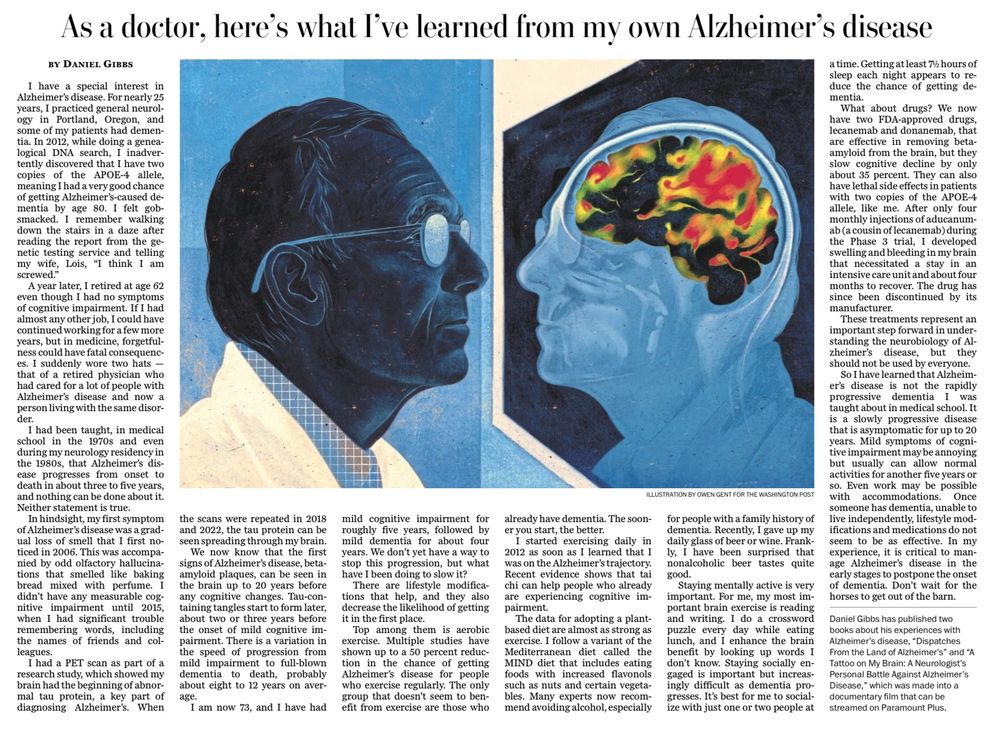
    Good article

    Donanemab about killed Dr. Gibbs


  14. #39
    dangerous floater Winehole23's Avatar
    My Team
    San Antonio Spurs
    Join Date
    Nov 2008
    Post Count
    115,224
    Biden's FDA greenlighted Zyn pouches without examining the safety of the pouch material

    Allegedly, the FDA leaned on Leppanen in late 2024 drop objections about Zyn pouches...

    Leppanen, who lives in St. Paul, Minn., has been a toxicologist for almost 30 years and has published a number of academic papers on environmental toxicology. She joined the Center for Tobacco Products in 2021 for what would be a four-year stint.

    Leppanen was assigned to examine the potential for human and environmental exposure to microplastics. It was in that context that she weighed in on environmental and health questions around Zyn pouches.
    Leppanen’s account raised alarm bells with former FDA officials. If she tried to seek additional information on the pouch material but was shut down by FDA superiors, “this is a pretty serious charge,” said Mitch Zeller, former head of the Center for Tobacco Products.

    David Ashley, who was director of science at the Center for Tobacco Products until 2017, told The Examination that, based on his understanding of the rules for approving tobacco products, a company must provide information on the pouch material. If it doesn’t, it should be issued a deficiency letter or denied the authorization, Ashley said.

    Leppanen’s allegations could open the FDA up to litigation accusing it of failing to satisfy its obligations under the Tobacco Control Act, according to Esther Agbaje, the lead lawyer on federal regulation at the Public Health Law Center. The Minnesota-based organization studies litigation on tobacco and other issues.
    ...and RFK Jr's FDA eventually dutifully recorded her nonvote for the authorization, but might be liable to be sued under the Tobacco Control Act

    Shortly before Leppanen resigned in January 2025, an FDA official emailed her to say that the “finding of no significant impact” would be corrected to say she hadn’t signed it.

    She waited months, but the correction didn’t appear. In the meantime, she sought legal advice and was told to write a book about her experience and go to the media. She did both.
    On March 1, Leppanen used a public comment portal for another Zyn matter before the FDA to press the matter. “It is professionally damaging to be listed as the decision maker in determinations that I did not make or agree with,” she wrote.

    Soon after, two things happened. On March 10, the FDA published a report that concluded the environmental impacts of nicotine pouches and other oral productswere “minimal.” But, it acknowledged, the assessment “does not address the potential effects of plastics and microplastics from the pouch materials.”

    A few weeks later, the FDA updated its Zyn authorization to say that Leppanen did not sign the “finding of no significant impact.” It’s dated Jan. 27, 2025.
    https://www.statnews.com/2026/07/14/...oplastic-risk/

Thread Information

Users Browsing this Thread

There are currently 1 users browsing this thread. (0 members and 1 guests)

Posting Permissions

  • You may not post new threads
  • You may not post replies
  • You may not post attachments
  • You may not edit your posts
  •