

 Reply With Quote
communist boogeyman


This sucker got exactly what he wanted and is now going to be on Oprah. Shames me as a gay man for someone like this to exploit his sexuality for unwarranted attention. We have come to far to get "free publicity" for something that we shouldn't have to hide in the first place. You don't see me or any of my gay menz running around and making sure people know we are sexual. Give us a break Collins and you are going to burn in for this stunt.
http://sports.yahoo.com/blogs/nba-ba...185002019.html




don't blame the man. Blame the US of A. It's the re ed middle class making a huge deal out of this. This country was designed so it's majority middle class stays as dumb as rocks and as evolved as a European of the 1920s.
Collins is a reason why so many Americans are phobic and can't accept it. He demands attention for his sexuality which obviously pisses off the majority of the South and Bible Belt.
It really is funny when I see fear of communism/socialism. If you look at the distribution of wealth in this country and think we're headed in the direction of socialism, you're either really in stupid or you don't know what socialism is (and you'd also be really stupid in that scenario for being scared of something you don't know).

Lol, sig loaded with s..troll harder son..

Is it me, or did just get really weird in here?
BRfevertrees45 is just trolling in his own weird way.
the re ed phobia is just one examples of how backwards ass this country is.
as mentioned above the fear of socialism is another example. that comes from the brainwashing that was being done in the 1950s I mean in this country it was allowed to kill a socialist/communist, they were more evil than rapists or serial killers.
another example is the war on Marijuana. It again comes from an old feud in the 1940s or 50s against the lower income people and minorities who enjoyed this recreational drug.
This country has not evolved since the 1930s IMO
The best was in 2008 when right wing knuckle-draggers were running around saying like, "If that socialist Obama gets elected, I'm moving to Canada!"
The war on Marijuana is still around because of the prison industrial complex (a country turning its prison system into a privatized for profit industry just screams socialism) pouring millions into the lobby to keep it illegal. It's amazing how this country can have such backwards marijuana laws that stick around because a few people can buy Washington off.
and last but not least the racism here is as bad as it was in the 1950s or 60s IMO
this country is so backwards ass a black man and a white man cannot even look at each other in the street
Takeover is nearly complete imo


Still doesn't have a job for being a scrub but media already spinning it to league phobia


^It's a virtual gold mine of materiel for Media if he plays. If he doesn't the stream trickles and then stops altogether by October.

Just saw this....


He sucks (npi), and no team wants that kind of distraction.
Aside from the missed layups and petty cash outlays for [Tucks] it hasn't hurt the Spurs.
wtf did the LGBT write this article?
http://sports.yahoo.com/blogs/nba-ba...181353522.html
When Jason Collins came out of the closet in a Sports Illustrated column during last spring’s playoffs, the veteran center had a good five months before 2013-14 NBA training camps began to find his next team. Collins is an active NBA player, the first openly gay player in the four major North American professional sports to come out, and he was adamant that his career would not be ending with that scene-shifting announcement.
Three months into that journey, though, Collins is still without a team – and this is either typical of someone of Collins’ stature as a role player on the end of the bench, a sign of the NBA’s league-wide fiscal belt tightening, or a worrying note for those that hoped that an openly gay athlete could sign with a pro team with relatively little hoopla to follow. Wednesday marked the one-year anniversary of Collins’ 2012 free agent signing with the Boston Celtics, and every day that follows will unfortunately force us NBA observers to ask a question that we want nothing to do with: Are NBA teams passing on signing Jason Collins the basketball player, or Jason Collins the openly gay athlete?
Collins, one of the headier NBA players in recent memory, is more than ready for both sides of this particular string out. There are the players that you sign as soon as free agency hits in early July, there are the second tiered guys that you sign after that, and then there are the players like Jason Collins that usually have to pick up the scraps following that second or even tertiary rush.
Then there is the groundbreaking part where an openly gay NBA player with openly rock solid NBA credentials attempts to find NBA employment on the open market.
In July, a week into the free agent courting period, Collins discussed as much with the New York Times’ Howard Beck:
“I look at it, honestly, like any other free agency in the past several years, where I know I have to stay patient,” said the 34-year-old Collins, who played in only 38 games last season, averaging 10 minutes a game as a defensive-minded center for Boston and later Washington. “And I know that at this point in my career, you remain hopeful that there’s a job and an opportunity waiting for you once teams start to fill out their rosters.”
As we mentioned above, the Boston Celtics signed Collins to a free agent deal around this time last summer. Prior to that season, the Atlanta Hawks signed him just a few days after the free agency period opened up following the 2011 lockout, but in 2010 Jason had to wait until early September to find a deal with a Hawks team that badly needed his services in defending division rival Dwight Howard, and his Orlando Magic.
That was three years ago, an NBA eternity for a player that hasn’t played more than a thousand minutes in a season since 2007-08, and one that was traded against the wishes of the Boston Celtics’ best player last year mainly because the Celtics just wanted to take a chance on a limited chucker in Jordan Crawford.
Boston’s best player last February, Kevin Garnett, is now a member of the Brooklyn Nets. It's the franchise that employed Collins from 2001-08, and now features a coach in Jason Kidd that made it to the NBA Finals as a player with Collins in the pivot in 2002 and 2003. That team would seem to be the perfect fit for someone like Collins, as a spot player to perhaps battle Roy Hibbert or Joakim Noah off the bench in the playoffs, but the recent signing of swingman Alan Anderson rounded off the team’s roster at 15 spots. And on top of that, Anderson’s relatively modest starting salary of under $1 million a year will cost the Nets over $4 million in luxury tax penalties.
The financial aspect of any end of the bench signing cannot be overlooked in the post-lockout era. Not every team is dealing with the same punitive tax issues that the Nets are, but with so many teams rubbing up against the luxury tax threshold, adding a player like Collins for the veteran’s minimum could cost teams both tax penalties and the revenue sharing benefits that come from working under the tax line. For quite a few teams, even a one year deal could hamstring a club’s ability to take on extra salary in a trade sometime midseason.
This is all for a player that, in a way, is becoming an anachronism in the modern NBA. The last two Miami Heat NBA Finals wins were stamped with a small ball logo, with the Oklahoma City Thunder deservedly earning much scorn for playing a Collins-type like Kendrick Perkins heavy minutes in 2012, and the San Antonio Spurs going away from much-admired pivotman Tiago Splitter in mid-June after months of success with their twin towers lineup. For entirety of his NBA career, Collins’ best attribute has been his ability to work as no-stats All-Star – he doesn’t rebound, he rarely scores, and he doesn’t block shots. All he does is expertly defend the sorts of dominant low post beasts that rarely trod this realm in 2013.
Collins played just 38 games in 2012-13 (Getty Images)There aren’t many of those guys left. Dwight Howard is one, but at worst a division rival will play him four times a year during the regular season. Andrew Bynum may actually play for the Cleveland Cavaliers in 2013-14, but it’s doubtful that this Cavs squad will make the playoffs. And the rest of the league’s best centers (Roy Hibbert, Marc Gasol, Joakim Noah, Tyson Chandler, Andrew Bogut, Andre Drummond) are more respected for their defensive a en, and less feared for their back to the basket moves.
Given this context, Collins’ lack of employment would seem more akin to someone like Charles Jones’ inability to get a new gig in the late 1990s than anything. Save for the part about Collins being on the cover of Sports Illustrated, with an announcement that drove more traffic to Sports Illustrated’s website than the Swimsuit Issue’s unveiling. Jones didn’t really make that sort of mark on the national radar.
This is why any team that wants to sign Jason Collins for basketball reasons – and we’re of the opinion that just about every NBA team should take a shot at Jason Collins for basketball reasons – might want to get the transaction out of the way now. In the heart of the NBA’s downtime, with attention focused on baseball’s stretch run, and NFL training camps.
And that’s giving the credibility of a team taking a flyer on Collins for non-basketball reasons way too much credit. That sort of move is not happening. That sort of move shouldn’t happen. I’m a cynical sort, and the NBA can be full of dolts, but no team is going to sign Jason Collins just to be That Team, and look good in the press while selling a few more jerseys along the way. Jason Collins is still “Jason Collins, the guy that can move his feet and defend centers” more than he is “Jason Collins, the openly gay professional athlete” to NBA teams.
That isn’t to say that latter part of Collins’ Wikipedia page intro won’t influence things.
Whoever decides to sign a nondescript, 34-year old backup-to-the-backup center will make sports history. They will have to go in making sure each and every member of their current roster is on point and free of bias, and they will have to be ready to treat one of the more profound moments in sporting history (seriously, my happy heart is fluttering just typing this) as no big deal. For all the positive non-basketball reasons that could come with such a signing, whatever team that decides to employ Jason Collins for about 300 on-court minutes next season will have to prepare for ten times as much off court work in dealing with media, and their own in-house concerns. Progress takes patience.
Teams should sign up for this, though. Collins can play. More importantly, Dwight Howard can play. And for teams like the Mavericks or Trail Blazers or Pelicans that are attempting to both make the playoffs and fend off Howard’s Rockets four times a year, Collins would be a perfect fit. Those organizations have open roster spots, and room under the luxury tax. And for the Mavericks and Trail Blazers, such a move would be a chance to live up to the nickname they gave themselves.
In a world where the uncaring end presents “who cares?” as its new form of phobia, perhaps Collins’ lack of employment could be viewed as the new normal. It’s very possible that I’m being an appalling optimist in this case, but I have to look through these particular glasses as an NBA analyst first. Jason Collins was a fringe NBA roster participant in 2012-13, before his announcement and dedication brought tears to our eyes. If he doesn’t get a gig this summer, it may have less to do with backwards thinking, and more to do with basketball thinking.
In a way, that would be an advancement of sorts. Even if we have to miss out on Jason Collins flummoxing Dwight Howard’s post moves four times a year in 2013-14.
Let’s not settle for that type of advancement, though. Let’s hire a guy that can contribute to an NBA team for a modest price, and make an indelible mark along the way. It’s a win-win, guys.
He wouldn't hire him though. No in' way.
BUMP
Jobless bum

It has been 18 exhilarating months since I came out in Sports Illustrated as the first openly gay man in one of the four major professional team sports. And it has been nine months since I signed with the Nets and became the first openly gay male athlete to appear in a game in one of those leagues. It feels wonderful to have been part of these milestones for sports and for gay rights, and to have been embraced by the public, the coaches, the players, the league and history.
On Wednesday at the Barclays Center, I plan to announce my retirement as an NBA player. The day will be especially meaningful for me because the Nets will be playing the Bucks, who are coached by Jason Kidd, my former teammate and my coach in Brooklyn. It was Jason who cheered my decision to come out by posting on Twitter: “Jason’s sexuality doesn’t change the fact that he is a great friend and was a great teammate.”
Arguably the most important commissioner in American professional sports history, David Stern spent 30 years at the helm of the NBA. Under his watch, the NBA expanded tremendously, both nationally and internationally. Games are now televised in 215 countries and regular season contests are regularly played outside North America. Stern also changed the structure of the league, ins uting a salary cap and revenue sharing.
Considering all the speculation about problems I might face within the locker room, Jason’s support was significant. It had been argued that no team would want to take on a player who was likely to attract a media circus from the outset and whose sexuality would be a distraction. I’m happy to have helped put those canards to rest. The much-ballyhooed media blitz to cover me unscrambled so quickly that a flack jokingly nicknamed me Mr. Irrelevant.
Among the memories I will cherish most are the warm applause I received in Los Angeles when I took the court in my Nets debut, and the standing ovation I got at my first home game in Brooklyn. It shows how far we’ve come. The most poignant moment came at my third game, in Denver, where I met the family of Matthew Shepard, a gay college student beaten to death in a 1998 hate crime on the outskirts of Laramie, Wyo. For the past two years I have worn number 98 on my jersey to honor his memory. I was humbled to learn that number 98 jerseys became the top seller at NBAStore.com. Proceeds from sales, and from auctioned jerseys I wore in games, were donated to two gay-rights charities.
There are still no publicly gay players in the NFL, NHL or major league baseball. Believe me: They exist. Every pro sport has them. I know some of them personally. When we get to the point where a gay pro athlete is no longer forced to live in fear that he’ll be shunned by teammates or outed by tabloids, when we get to the point where he plays while his significant other waits in the family room, when we get to the point where he’s not compelled to hide his true self and is able to live an authentic life, then coming out won’t be such a big deal. But we’re not there yet.
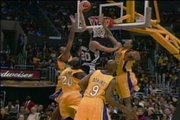
first openly gay player to retire
what a hero

So how much money did he milk?
There are currently 1 users browsing this thread. (0 members and 1 guests)
 Posting Permissions
