Reply With Quote
platyposterous!
Damn, I need to get myself a reproductive pair of horseshoe crabs.

platyposterous!

^Weird.Creature.Of.The.Earth.

that looks like an alien
a Giant Cane Toad
These next few where found only recently, off the coast of Austrailia, are just some of the hundreds of new species found.
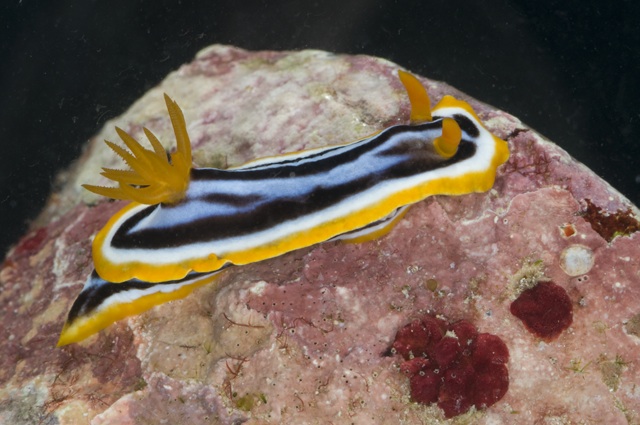
Twisted Nudibranch (A newly discovered type of sea Slug)
Christmas Tree Worm
Pohls Sea Urchin
Ctenophore (Combed Jellyfish)
Sabellids (Fan Worms)

Last edited by phyzik; 03-05-2009 at 10:28 PM.
Time to get some Land Animals in this post....
Kakapo
This is not only the rarest, but the strangest parrot in the world. Imagine a rather portly nocturnal bird that never flies, preferring to hike through hilly forest for miles every night. It weighs in as the heaviest parrot in the world at 8 pounds. Imagine this and you have the very real (but virtually extinct) kakapo. A resident of New Zealand, which is home to a number of rare birds, there are only 62 kakapos remaining on earth. (Bonus fact: New Zealand is full of unusual creatures. It originally had no native land mammals, so its many unique birds evolved in unusual ways - which unfortunately has made them very vulnerable to mammals that were brought in during European colonization.)
Olm
This unusual amphibian is blind, lives to 100, and goes ten years at a stretch without food. It lives in the subterranean waters of Italy, Croatia and Herzegovenia, where it skeeves out the locals with its strange, human-like skin. Its nickname, in fact, is the “human fish”. Unlike most amphibians, the olm lives in the water for its whole life. Another oddity of the olm: its neotenic (larval) gills.
Aye Aye
Sharing something in common with bats, aye ayes are the only primates of the mammal world to rely on echolocation for hunting. The aye aye is a rather unusual cousin of us humans. It lives in spherical nests with a small hole for entry and exit. It uses its long, slender middle finger to tap on trees in order to find tasty insects - and it uses this same finger to scoop them out. Perhaps it is due to its unusually-large eyes and ears that this unique, sensitive primate is believed to be a demon or a bad luck omen. A native of Madagascar, it is often killed at first notice by the island’s supers ious residents
Echidna
The echidna is one of two egg-laying mammals in the world (the other is the famous duck-billed platypus). Though it looks a big hedgehog-like, this y creature is shy and non-confrontational. The echidna has a long, moist snout and an even longer tongue which it uses to feast on termites. It has no teeth, so it has to “chew” termites by crushing them between its tongue and mouth cavity. There are actually 4 species of echidna, and along with the platypus, they are the only monotremes.
Yellow-eyed Penguin
The yellow-eyed penguin, also native to New Zealand, is the rarest and strangest penguin in the world. It can dive to an astounding depth of 400 feet, likes to feed 20 miles from shore, and prefers to nest in the forest rather than on the beach. Penguin families tend to keep to themselves rather than congregate as most penguins do. Because of shoreline deforestation, these unusual-looking penguins are at great risk.
Purple Frog
The purple frog is really purple. But its brilliant hue is not the strange thing about it. The purple frog spends much of the year living 13 feet below ground. Also called the pignose for its snubbed nose, this western Indian-dwelling frog was only discovered in 2003, in Kerala. Locals had known about the purple frog for years, but scientists were skeptical. Part of the reason purple frogs were difficult to find was simply due to the fact that they only come up for air for two weeks during monsoon season in order to mate.
Dugong
The dugong is a cousin of the manatee and is closely related to the elephant. The dugong is unique in that it has a split (whale-like) tail and will “perch” underwater on its tail in order to keep its head above water. The dugong is thought to have inspired ancient myths about mermaids. The dugong is threatened by poachers who hunt the animal for its meat, oil, skin and bones. It is extremely endangered.
Anybody know about the Pizzly bear? Yup, that's right global warming and evolution cynics, polar bears are sick of dying from lack of sea ice and starvation so they're mating with grizzlys and moving south.


the crazy thing is that 99.9% of the species that have existed are no more. What other things were there??

This little guy (the pygmy tarsier) is cute:
His eyes don't rotate in his skull, so he has to move his head for peripheral vision.
weird
There are currently 1 users browsing this thread. (0 members and 1 guests)
 Posting Permissions