

 Reply With Quote
Agreed. I was looking for one or two big damnations, not a lengthy list of this and that with maybe a link to a few heavy infractions.
I got the gun, but it wasn't smoking.

I think it was the length of time this allegedly went on that makes it so egregious


Agreed. I was looking for one or two big damnations, not a lengthy list of this and that with maybe a link to a few heavy infractions.
I got the gun, but it wasn't smoking.

The one big violation case at Youngstown that got the NCAA involved happened with a kid on the 1991 national championship team. The reason Youngstown kept that 1991 championship was because the statute of limitations had expired for the NCAA to strip or vacate it after the investigation was complete.
I don't know what the current statute of limitations is that would apply to OSU. So maybe that will come into play so they can keep their championship. However, I also agree with what some have already suggested on here, and that is that USC would be the more appropriate precedent, not Youngstown. The NCAA has more at stake considering Ohio State being in a major BCS conference and as a perennial football power on the national stage, as opposed to a smaller division 1-AA school like Youngstown. USC's le was already vacated by the NCAA. I would tend to think there's enough reason to believe Ohio State will get its championship vacated as well, unless as I mentioned the statute of limitations prevents that from happening. The pattern of violations and the apparent ongoing nature of those violations do not help their case though.

The difference is that the subject of the original investigation at USC- Reggie Bush- was on the 2004 team. None of the "Tat 5" were on Ohio State's 2002 team. All they have regarding 2002 is the allegations of a few anonymous, untrustworthy sources.
My guess is the NCAA will be satisfied with Tressel's head, along with possibly Gene Smith's and Gordon Gee's. (Neither of the latter two were at Ohio State in 2002.) They'll reach back to 2008, Terrelle Pryor's freshman season, for ammunition for sanctions and that will be it.
Ohio State's 2002 BCS Championship will stay on the books, as it should.
Clarrett was found guilty of receiving improper benefits, and if ties can be made from Tressel to the middle man of any kind, I wouldn't be so sure. Lack of knowledge is no longer the excuse it once was in the early 90s.
if the NCAA can prove that improprieties did indeed take place as far back as 02' (as the SI article states) then it could certainly be vacated
fwiw, I hope that doesn't happen, despite my dislike of OSU
lol @ this article... Poor Tressel
http://msn.foxsports.com/collegefoot...edium=referral

lol @ all the Bucknuts who used to laugh at USC's shady doings...lol @ all the other idiots who think their programs are 100% clean.


I doubt we're 100% clean, but we're pretty clean.
I doubt you were that clean when Dennis Erickson was the head coach.
The whole system is rotten. It doesn't behoove anyone to say contrary. That is something that should be admitted first and then the changing of the culture would need to follow that. At this point, I can't see collegiate sports ever being clean unless you allow kids to go pro after their senior year in H.S.--which is insane in contact sports like football. Just ceases to amaze me how much Tressel has gotten away with over the decade plus. Even at Youngstown St. he supposedly didn't know his QB was taking 10k.
It's a shame what USC did...what Oklahoma did in the 80's and with the dealership incident...etc...etc...it's also a shame what the NCAA continues to do by raking in billions and committing a command of ethics that seems kind've contradictory to me...
"Clean" is a subjective term. I think most people, especially fans of college football and basketball know that the top programs do shady all the time. And even the coaches and programs with the "cleanest" images have their share of skeletons in their closets. But when you get caught, you take the fall, you pay the price, and you don't get a "well everyone does it" sympathy pass. The thing with Tressel and any other coach or program that likes to pat itself on its back, wax rhapsodic about their holier than thou approach to the game, preach about discipline and doing things the right way is that when you get caught, you can't play victim. You can't avoid getting bashed for the hypocrisy, the pretentious righteousness. You get caught, even if everyone else is doing it, you get ted on. That's how it should be. For everyone. Not just for Tressel. Not just for Ohio State. Not just for USC football. Not just for Michigan basketball. Everyone.
We know goes on behind the scenes. But once you get caught, you take your medicine, pay the price, and sleep in the bed you made.
Did I use enough cliches?
Oh no doubt about that!Riley runs a pretty clean program I think.
The Sports Illustrated article on the Ohio St. situation is an interesting read. The blantant disregard the athletes were showing is amazing. I wonder, though, for the remainder of their lives will they look on their tats as symbols of a crooked past?
as usual, jam with the goods
there's a reason they're cliches
I still think the biggest problem are those on the periphery; boosters, street agents, parents etc
These are people who will never be controlled, no matter how much a coach/staff can do.
It's time to look outside the box for a solution, one I don't pretend to have
I don't think there is a solution.
As long as there's this much importance placed on amateur athletics, as long as you have young men with talent in close proximity to old men with money and an interest in the success of a program, as long as you have so many temptations and choices available to these kids, things like this are always going to happen.
There's no draining this swamp.
as usual, you make a great point
I just want to see the playing field leveled. Programs like ours (not that Auburn really approaches OSU in all-time notoriety/accomplishments) are under the microscope far more than others. Thus, we become the scapegoats/examples(USC too, and Bama).
Do we pay these kids? If we do, does that mean people will just pay them more behind the scenes? Why should student/athletes be treated differently than an Economics major on scholarship? It boggles the mind.
At the end of the day, I believe all of this is a symptom of our modern society. Greed, and the obsession with being a winner cloud everyone's better judgement.
IMO, the only way to change this is to change our money grubbing society. And that's just not going to happen anytime soon.
You're good people, JT
There's little anyone can do about boosters, agents, parents. That's outside program control.
But, as we see in the case of Ohio State, what is absolutely tantamount is that when a school/program discovers the indiscretion, immediate and appropriate action must be taken on that student-athlete. The biggest problems come when the student-athlete involved is a star player and coaches and the school find every avenue they can take not to punish a star player in a way that will hurt the team and team success.
I think when the bigger schools with the bigger programs start disciplining star players more strictly, it will help become a deterrent for even the star players who think they can get away with it. And that will help alleviate the influence of the outside-the-program problems without having to try to control them.
Let's take the example of Cam Newton (nothing against you, symple). Say as soon as an investigation is started no matter when it takes place, the NCAA automatically makes him ineligible to play and contact is cut off with coaches and school resources. He can go to class. And you can't force teammates to not talk to him. But he can't talk to coaches. He can't work out at the football facilities. And he's suspended from play. If the NCAA or the different college conferences started proactively implementing much more strict penalties then you at least scare a bunch of kids into not taking the chance. Will there still be violations? Sure. Will things be done even more low key and behind the scenes? I'm sure. But I think you prevent a whole lot of too. Think about Cam Newton getting penalized in the middle of their championship season. But beyond that, think about him not having the resources of the school facilities to train and get ready for the NFL draft. He can't have a pro day on campus. And he can't get attention from the football team's medical staff regarding anything. Now, someone will end up helping him out somehow, but it does make things far more difficult on him and his career aspirations for the time being, directly attributable to being investigated for potential violations.
I think stricter penalties are needed to prevent this . I think schools need to hold a higher standard on how they treat star players who make mistakes. No, schools and the NCAA can't control some things. But perhaps they can really make student-athletes think long and hard before doing something they know is wrong.

I know my program is clean because of how bad our last few recruiting classes have been. You don't need to be dirty to have the 75th best recruiting class in the country
Of course. It would still be the same arms race. I mean, how much could athletic programs pay these kids per month even if they were allowed? $500? $1000? You'd still have the same "friends of the program" offering more and more over and beyond what was allowed.
Anyway, there's no way these kids can ever be paid because of le IX if nothing else. If they pay football players they're going to have to pay female volleyball and lacrosse players too. It would bankrupt every athletic program in the country.
If anything they should at least allow these kids to profit from stuff like memorabilia and tickets. I get why Ohio State is going to be punished, I'm not trying to say they shouldn't be punished, but I think the rule itself, the one Pryor and the rest broke, is stupid. Why shouldn't these guys be allowed to sell their own property?
There's just too much opportunity for abuse. Where do schools and the NCAA draw the line? What is the money used for? Just so they can get by? Is it just to pay for rent like some have claimed? Is it to buy weed, alcohol, and tattoos? Is it even more like other drugs, pros utes? Are they selling merchandise because they can't even get by without selling them? Or is it because they can't party like they want without selling them? Or is it because they can't live the way they want without selling them. Once the NCAA allows players to sell merchandise and autographs for profit, then they are also indirectly allowing what goes beyond the trade of merchandise for money. What is the money for? Schools and the NCAA can't control what kids do with the money, so they safer approach is to not allow student-athletes to pawn stuff off for money. How do you implement ins utional control to prevent abuse?
The problem goes further than the student-athletes just being able to sell their own stuff. You have to look to why these players can't live without doing it when they get free scholarship and room and board paid for. Sure, it's nice to have extra pocket money when you're a college student. But why do some of these kids have $1000 monthly rent and $500 monthly car notes? They're college students, not first year associates at an accounting firm. The indiscretions start at the root of the problem, the student-athletes and their lifestyles. They're treated like rockstars so they want to live like rockstars too.
Yes, the whole system is flawed. And a lot of it goes to how big a money producers college football and college basketball are. But even if you feel like the system is to blame and outside factors like greedy parents or shady agents and boosters share blame, don't let the student-athletes off the hook. I think the vast majority of cases where there are student-athlete violations, the kids knew or had a very good idea of what they were getting themselves into. Just because other players are doing it, it doesn't mean you don't know it's wrong.
LeCharles Bentley has a radio show in Cleveland and he made this exact point yesterday. He said there are levels of expectations that come with being a big-time college athlete: you're expected to dress a certain way, live a certain way and drive a certain car to act the part.
He also said that when he would come back to Columbus in the summer to work out- and this is when he was playing in the NFL- there really wasn't much of a difference between the cars in an NFL players' lot and the cars in the college players' lot, with the egregious exceptions of Bentleys and things like that.
Yeah it's just really hard to control everything enough to make a huge impact on stopping all the shady . And while I think the NCAA would like to clean up a lot of stuff, I don't believe they do everything they can to really make a huge step in preventing this from happening. The penalties just aren't always enough. Say you're a big time player at a big time school and you're projected to be a third round pick or better in the NFL or a first round pick in the NBA. If you lose eligibility, how bad does it hurt you? You'll still end up getting drafted and playing professionally and make big money. How bad has Reggie Bush or OJ Mayo been punished really? Has it really hurt Chris Webber's basketball career that he can't have contact with the University of Michigan for a number of years (forget how many exactly). They're not taking his money or his job opportunities as an NBA analyst. Players (especially those who have futures in pro sports) don't really get hurt when they're caught.
So what if the NCAA worked with the NBA and NFL and did something like if a NCAA student-athlete gets caught with serious enough violations, they would have to wait a two year period after they are actually eligible to go into the draft before being able to enter the draft? Think that would deter players from some of these violations? The violations now only really affect the universities or football/basketball programs.
Or a guy like John Callipari. He gets caught, and oh well... he can just quit and go to another school. What if the NCAA ins utes a rule that if a coach or athletic director gets caught multiple times or with serious enough violations, they are banned from getting another NCAA job for a period of 5 years? It doesn't prevent them from getting a job in the NFL or NBA, but at least a guy like Callipari won't be able to just get another (even better) gig so quickly after leaving a program in violation shambles.
I just think the NCAA needs to take a good, long look at the extent they can actually find serious and legitimate ways to really stop a lot of this stuff from continuing to happen. The NCAA will make an example of a school here and there, but I don't think they do enough to address the problem and how serious it is.

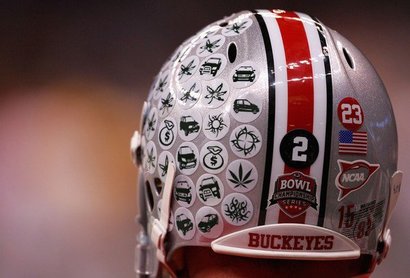
More evidence is coming to light; someone really should have noticed this.
http://cdn1.sbnation.com/fan_shot_im...keyehelmet.jpg
There are currently 1 users browsing this thread. (0 members and 1 guests)
 Posting Permissions
