Reply With Quote
HD hamster hard at work!
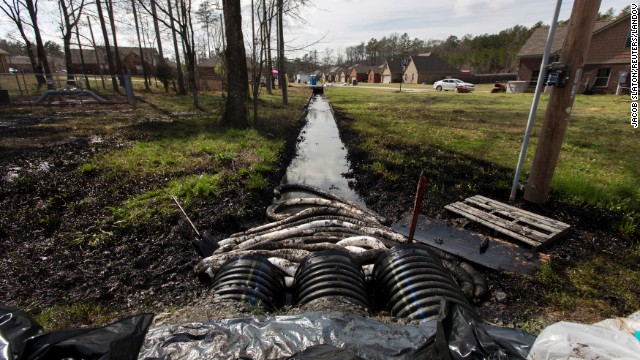
Obviously taken from a helicopter. Note the absence of any news trucks in this picture.

HD hamster hard at work!
HD = hamster drone???
*Trademarks Hamster Drone*

I kinda like the "Your an idiot", too.
http://www.cnn.com/2013/04/02/us/ark...ill/index.html
Still no news trucks. Shameful how far away the media is being kept.

Freedom of the press is dead

Your an idiot. i gotta trademark that ....
Duh! You just noticed?

Ooh, dan is doubling down!
Let's watch.
You owe me royalties !
Bill me, monkey.
MOAR YOAR!!!!
It's just a 'little' oil spill.....have you seen the pictures? Two guys with a hose...
can't be cleaned up with a few buoys and two guys with a hose....Exxon spilled 10,000 barrels of toxic , not even technically classified as oil...
"Exxon, like all companies shipping toxic tar sands, doesn’t have to pay into the fund that will cover most of the clean up costs for the pipeline’s inevitable spills,”The central Arkansas spill caused by Exxon’s aging Pegasus pipeline has reportedly unleashed 10,000 barrels of Canadian heavy crude - but a technicality says it's not oil, letting the energy giant off the hook from paying into a national cleanup fund.
Legally speaking, diluted bitumen like the heavy crude that's overrun Mayflower, Arkansas, is not classified as 'oil'. And it's that very distinction that exempts Exxon from contributing to the government's oil spillage cleanup fund.
....tar sands oil is more likely to spill because it's more corrosive....
http://rt.com/usa/arkansas-spill-exxon-cleanup-244/
.The Federal Aviation Administration (FAA) has had a "no fly zone" in place in Mayflower, Arkansas since April 1 at 2:12 PM and will be in place "until further notice," according to the FAA website and it's being overseen by ExxonMobil itself. In other words, any media or independent observers who want to witness the tar sands spill disaster have to ask Exxon's permission.
Mayflower is the site of the recent major March 29 ExxonMobil Pegagus tar sands pipeline spill, which belched out an estimated 5,000 barrels of tar sands diluted bitumen ("dilbit") into the small town's neighborhoods, causing the evacuation of 22 homes.
The rules of engagement for the no fly zone dictate that no aircraft can fly within 1,000 feet of the ground in the five-mile radius surrounding the ExxonMobil Pegasus tar sands pipeline spill. The area located within this radius includes the nearby Pine Village Airport.
The Arkansas Democrat-Gazette revealed that the FAA site noted earlier today that "only relief aircraft operations under direction of Tom Suhrhoff" were allowed within the designated no fly zone
MORE:
http://www.desmogblog.com/2013/04/03...ar-sands-spill

I don't see any police officers either. They must be excluded too.
I bet you $10,000 that more than two men are working on the Arkansas oil spill.
Do you accept?
6 Things You Need to Know About the Arkansas Oil Spill
1. Not Your Average Crude
InsideClimate News reported [4] shortly after the spill that an Exxon official confirmed the pipeline was "transporting a heavy form of crude from the Canadian tar sands region." Specifically, it has been identified as Wabasca Heavy, Lisa Song writes, "which is a type of diluted bitumen, or dilbit, from Alberta's tar sands region" although you won't hear any Exxon folks calling it tar sands.
Dilbit is some seriously nasty stuff. She writes [5] about a previous dilbit spill by Enbridge in Michigan's Kalamazoo River in 2010:
Dilbit is a mixture of heavy bitumen and diluents--light hydrocarbons used to thin the bitumen so it can flow through pipelines. While most conventional crude oils will float on water, the bitumen began sinking into the river as the diluents evaporated, leaving a sludge of submerged oil that defied traditional cleanup methods. ...
Earlier this month, the EPA ordered Enbridge, Inc., the Canadian company that owns the pipeline, to dredge sunken oil from the riverbed. The cleanup has cost more than $820 million to date and could top $1 billion once the order is carried out.
The Arkansas spill wasn't as big as the Michigan spill and it was farther from main water bodies, but it's still serious business. If you want to know more about how dangerous tar sands/dilbit can be, the Dilbit Disaster [6] is a must-read.
2. Not Your Average Pipeline
The Pegasus pipeline running more than 850 miles between Patoka, Illinois and Nederland, Texas, is 20 inches in diameter and was built in the 1940s to carry crude from Texas to Illinois. But in 2006 the flow was reversed in order to carry Canadian tar sands to Texas. As Ben Jervey wrote [7] for DeSmog blog, the flow was reversed to "help relieve the tar sands crude bottleneck in Cushing, Oklahoma. (The same reason given by proponents for the construction of Keystone XL.)"
The pipeline was built to carry 65,000 barrels a day, but Exxon was allowed to expand that to 95,000 barrels a day just a few years ago.
All of these facts bring up some basic questions. What effect does a higher capacity have on the pipeline? What effect does reversing the flow have on the pipeline? And what effect does switching from conventional crude to dilbit have on the pipeline, considering it was built to have a much thinner crude flowing through it?
John H. Cushman Jr. wrote [8] for InsideClimate News:
... seven years ago, when Exxon, the pipeline's operator, turned it into a higher-volume line for diluted bitumen from Canada flowing under greater pressure to refineries on the Gulf Coast, federal rules did not require a new permit application or safety reviews, according to federal officials.
"Our regulations don't specify how much product a pipeline carries. There is no regulation if they want to change the type of crude they carry," said Damon Hill, a spokesman for the Pipeline and Hazardous Materials Safety Administration, a part of the Transportation Department. "As far as reversing the flow of a pipeline, it is not a safety issue."
To reverse the line that runs from Patoka, Ill. to Nederland, Tex. required 240,000 man-hours of work on pump stations, valves, bypasses and integrity tests, Exxon said when it opened the line.
But only after the spill occurred did the agency step in with an order, issued Tuesday, that clamps down on the Pegasus pipeline, for example by limiting the pressure at which it may operate once it reopens. Noting that the pipeline's flow was reversed in 2006 so that it could carry Canadian tar sands crude 850 miles from Illinois to Texas, the agency's corrective action order remarked that "a change in the direction of flow can affect the hydraulic and stress demands on the pipeline."
3. Tax Exempt?
Who's footing the bill for the cleanup? The government has an Oil Spill Liability Trust Fund that companies which transport oil must pay into. But, as it turns out, the bitumen that Exxon was transporting in its pipeline isn't oil by government standards. Erin O'Sullivan writes [9] for Oil Change International:
In a January 2011 memorandum, the IRS determined that to generate revenues for the oil spill trust fund, Congress only intended to tax conventional crude, and not tar sands or other unconventional oils. This exemption remains to this day, even though the United States moves billions of gallons of tar sands crude through its pipeline system every year. The trust fund is liable for tar sands oil spill cleanups without collecting any revenue from tar sands transport. If the fund goes broke, the American taxpayer foots the cleanup bill.
Keep this in mind as Exxon tries to wiggle out of connecting the contents of its pipeline with tar sands.
4. No Media Access
It feels like BP's Deepwater Horizon disaster all over again when it comes to media access. Lisa Song reported that the command center for cleanup is tightly controlled by Exxon, with even the parking lot off limits and guarded by security. She wrote [10]:
The stakes are high and Exxon is running the show here, with federal agencies so far publicly invisible. The phone number of the command center in Mayflower goes to an ExxonMobil answering service based in Texas, and each day it is Exxon that distributes a unified command press release--which contains the logos of Exxon, Faulkner County and the city of Mayflower--with official updates on the progress of the cleanup. ...
A request for a media tour of the spill site today was turned down by an Exxon spokesperson, who emerged from the command center to speak with a reporter at the gate. All areas being cleaned up so far have also been off limits. There is no central location where members of the media can gather to ask questions.
5. Under Investigation
Exxon may be feeling a little bit of heat as the Pipeline and Hazardous Materials Safety Administration has ordered a corrective action, which puts the broken pipeline under lockdown for the time being (pretty much a no-brainer). Jeannie Nuss reported [11] for the AP that, "the order signed by Jeffrey Wiese, associate administrator for pipeline safety, says 'continued operation of the Pegasus Pipeline would be hazardous to life, property, and the environment.'"
But that's not all. She writes [11]:
The federal agency's order comes as Arkansas' attorney general promised a state investigation into the cause and impact of the spill and other officials say they plan to ask Exxon to move the Pegasus pipeline to protect drinking water.
"There are many questions and concerns remaining as to the long-term impacts, environmental or otherwise, from this spill," Arkansas Attorney General Dustin McDaniel wrote to ExxonMobil executives Tuesday. He also asked ExxonMobil to preserve records pending his investigation.
6. Effects on Keystone XL
So, how is this going to affect decisions about the Keystone XL pipeline? Those who have been against the pipeline because of its environmental risks have new fodder. Others who were previously in favor or indifferent may have second thoughts, especially considering that the Pegasus pipeline capacity was only about a tenth of what the Keystone XL would carry.
Any pipeline poses risks, but tar sands pipelines pose even more risks than conventional oil. "TransCanada's first Keystone pipeline leaked 12 times in its first 12 months," wrote Sierra Club's Michael Brune. "Because tar sands must be pumped at higher pressures and temperatures than conventional oil, it corrodes pipes faster."
Just days before the Arkansas spill, a coalition of environmental groups, led by the National Wildlife Federation, as well as landowners, and others filed a pe ion [12] with the Pipeline and Hazardous Materials Safety Administration and the EPA, calling on them to enact stronger safety regulations for pipelines carrying tar sands oil. The pe ion may well pick up more backers in the spill's aftermath.
http://www.alternet.org/print/enviro...nsas-oil-spill
lol media being kept away

No fly zone
I've been assured drones can fly over the site in order to assassinate RT reporters, no matter their citizenship.
Exxon: "there is no oil in Lake Conway"

Meanwhile....Pipeline Protesters Take to the Streets Outside Obama Fundraiser in San Francisco
"The only oil Americans will ever see from the pipeline that benefits foreign oil companies is the dirty tar sands crude that spills from it. Over 1,000 Obama volunteers, voters and donors turned out in San Francisco to remind our president that his legacy will be judged harshly if he approves Keystone XL. And we have over 50,000 more Americans from every state of the union willing to risk arrest in peaceful civil disobedience to stop him making the most catastrophic decision of his presidency."
Were those taken from Lake Conway?
There are currently 1 users browsing this thread. (0 members and 1 guests)
 Posting Permissions