Page 3 of 4 FirstFirst 1234 LastLast
Results 51 to 75 of 100
  1. #51
    Veteran DarrinS's Avatar
    My Team
    San Antonio Spurs
    Join Date
    Jun 2005
    Post Count
    42,561
    Guys like the Tesla motors (which I loved what they did, BTW). But right now they're struggling because their product is simply not cost-efective, period.


    What do you mean? You don't have $100,000 in your bank account for a green vehicle?


    You could always least a Honda Clarity for $600/month, but you have to live in Torrance, Santa Monica, or Irvine areas of CA.

  2. #52
    🏆🏆🏆🏆🏆 ElNono's Avatar
    My Team
    San Antonio Spurs
    Join Date
    Apr 2007
    Post Count
    153,473
    What do you mean? You don't have $100,000 in your bank account for a green vehicle?
    You could always least a Honda Clarity for $600/month, but you have to live in Torrance, Santa Monica, or Irvine areas of CA.
    I think they did a great job on the R&D... and if they could build it in volumes like other car manufacturers, you could chop the price in half, easily.
    But the infrastructure is not there. They still need to do more work on the range (improved battery tech). And obviously, the market is simply not interested yet.

    But it was a nice glimpse on what the market forces could lead to if fossil fuel is ever on the way out.

  3. #53
    I am that guy RandomGuy's Avatar
    My Team
    San Antonio Spurs
    Join Date
    Jun 2005
    Post Count
    51,121
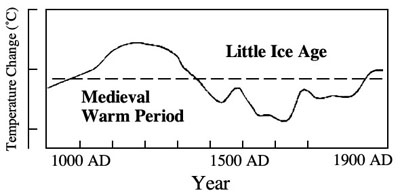
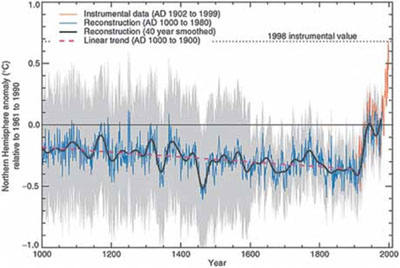
    Recent IPCC reports used the infamous "hockey stick" graph, which has been thoroughly debunked, as well as a numerous numerical errors (e.g. melting ice affect on sea level rise was off by a factor of 10!).

    Given their lack of credibility, should I keep reading them?


    EDIT> The better question would be, why do YOU have so much faith in the InterGOVERNMENTAL Panel on Climate Change?
    Please show me where "recent IPCC reports used the infamous "hockey stick" graph".

    How can you know what is in the reports, if you don't read them in the first place?

    Just like a 9-11 Truther, I would hazard you read somethign somewhere on a website that you are predisposed to agree with without seeing for yourself.

    If you can't be bothered to read the IPCC reports, you take your place in line for a tin foil hat with mouse, cosmored, and Alex Jones.

  4. #54
    I am that guy RandomGuy's Avatar
    My Team
    San Antonio Spurs
    Join Date
    Jun 2005
    Post Count
    51,121
    the infamous "hockey stick" graph, which has been thoroughly debunked
    http://en.wikipedia.org/wiki/Hockey_stick_controversy

    The studies that have been done on the data, much at the behest of people who believe as you do have generally upheld the "hockey stick"s implications.

    My reading of this says that "thoroughly debunked" is something of a stretch.

    Yet another thing you have in common with the 9-11 nutters:

    You declare victory conclusively based on little more than your own predispositions on which side in a scientific debate you want to believe in.

  5. #55
    I am that guy RandomGuy's Avatar
    My Team
    San Antonio Spurs
    Join Date
    Jun 2005
    Post Count
    51,121
    If you compare it to fossil fuels, sure it's not cost-effective. But if fossil fuels supply drastically gets reduced (big IF at this point), then the cost becomes bearable. In that scenario, there's going to be a cost increase no matter what you do anyways.
    That is one of the main problems with things like tar sands. This is the concept of "vanishing horizons". The profitability analysis of things like this posits revenues based on certain oil prices, but fails to account how those prices will affect costs.

    Having the R&D done doesn't necessarily mean it's cost-effective to implement it now. We have the R&D done. The energy market conditions will be one to determine when it's cost-effective to go that route, if ever.
    Actually the implication is that it is much more cost-effective to do it now, as energy is cheaper, relative to a dollar of GDP.

    If you wait until oil plays out to start on this, the costs of switching over get commensurately and proportionally higher.

    We will see a period of declining supply for oil over the coming decades:


    Overall demand will only increase in that time for a variety of factors. Read up on the Hubbert Curve and the peak oil phenomenon for more details. I can supply links if you wish.

    We are right at the cusp of this. It will never be relatively cheaper to make the switch. If we wait it will require a MUCH greater portion of our economy to do it.

  6. #56
    I am that guy RandomGuy's Avatar
    My Team
    San Antonio Spurs
    Join Date
    Jun 2005
    Post Count
    51,121
    I think they did a great job on the R&D... and if they could build it in volumes like other car manufacturers, you could chop the price in half, easily.
    But the infrastructure is not there. They still need to do more work on the range (improved battery tech). And obviously, the market is simply not interested yet.

    But it was a nice glimpse on what the market forces could lead to if fossil fuel is ever on the way out.
    What will happen will be a combination of things.

    We will start living closer to our jobs, causing cities to be denser overall. This will, in parallel, make mass transit even more attractive.

    We will start manufacturing more things closer to where they are ultimately consumed. Think of the cost of transportion of matter as a "tax" of sorts on things that must be imported from far away.

  7. #57
    Veteran DarrinS's Avatar
    My Team
    San Antonio Spurs
    Join Date
    Jun 2005
    Post Count
    42,561
    http://en.wikipedia.org/wiki/Hockey_stick_controversy

    The studies that have been done on the data, much at the behest of people who believe as you do have generally upheld the "hockey stick"s implications.

    My reading of this says that "thoroughly debunked" is something of a stretch.

    Well, you can feed a random signal through the algorithm of Michael Mann and it will produce hockey-shaped graphs. Sounds pretty bogus to me.

    Here, you can download data and make your own. It's not rocket science.

    http://iowahawk.typepad.com/iowahawk...struction.html


    Yet another thing you have in common with the 9-11 nutters:

    You declare victory conclusively based on little more than your own predispositions on which side in a scientific debate you want to believe in.

    Eh, go sell that somewhere else. It ain't workin.

  8. #58
    Veteran DarrinS's Avatar
    My Team
    San Antonio Spurs
    Join Date
    Jun 2005
    Post Count
    42,561
    Please show me where "recent IPCC reports used the infamous "hockey stick" graph".
    From the link that you, yourself posted.

    This chart is Figure 1(b) from the Intergovernmental Panel on Climate Change Third Assessment Report, (c) 2001 The Intergovernmental Panel on Climate Change. The source of this image is a PDF file that can be downloaded here: http://www.grida.no/climate/ipcc_tar..._TAR-FRONT.PDF

  9. #59
    🏆🏆🏆🏆🏆 ElNono's Avatar
    My Team
    San Antonio Spurs
    Join Date
    Apr 2007
    Post Count
    153,473
    That is one of the main problems with things like tar sands. This is the concept of "vanishing horizons". The profitability analysis of things like this posits revenues based on certain oil prices, but fails to account how those prices will affect costs.
    Again, it doesn't matter. You don't have to do absolutely anything for the market to go gradually adjusting based on prices.

    Actually the implication is that it is much more cost-effective to do it now, as energy is cheaper, relative to a dollar of GDP.
    It only is if we could ascertain with any degree of certainty that we're going to be running short of fossil fuel. Which we can't at this point. Which means that, right now, it would be a bad investment and a waste of money.

    If you wait until oil plays out to start on this, the costs of switching over get commensurately and proportionally higher.
    But we don't know IF 'oil will play out'.

    We will see a period of declining supply for oil over the coming decades:
    We will? I see a graph from 2004 that, among other things, doesn't tell me if it accounts for new fields discovered, if it accounts for the the technological advances in drilling over time, etc. I hate graphics unless they're concise to what we're discussing. Otherwise, it's a waste of time.

    Overall demand will only increase in that time for a variety of factors. Read up on the Hubbert Curve and the peak oil phenomenon for more details. I can supply links if you wish.
    Again, your entire premise is based on Peak Oil and the Hubbert peak theory (can't stress this enough). You know, that there is a certain amount of oil in the ground, consumed at a certain rate, and then it's finished. Well, we don't know that. We actually don't know that at all.

    We are right at the cusp of this. It will never be relatively cheaper to make the switch. If we wait it will require a MUCH greater portion of our economy to do it.
    It would actually be irrational and a waste of money to do so now, under the premise of an alarmist theory. If anything, there are indicators that we'll have more supply and from different sources than in the past (like Brazil, which I mentioned before). That is indeed a fact.

  10. #60
    I am that guy RandomGuy's Avatar
    My Team
    San Antonio Spurs
    Join Date
    Jun 2005
    Post Count
    51,121
    It only is if we could ascertain with any degree of certainty that we're going to be running short of fossil fuel. Which we can't at this point. Which means that, right now, it would be a bad investment and a waste of money.

    But we don't know IF 'oil will play out'.
    Well, the oil companies themselves have seen enough data to be certain.

    Read a couple of Exxon's latest annual reports where they actually talk about it.

    We can with a pretty good degree of certainty both know that oil will play out and when. The oil companies, who literally make it their business to know, and have hundreds of billions of dollars on the line have made their own projections and that lines up fairly squarely with a lot of the independently produced projections.

    Oil production and extraction follows a very predictable, bell-shaped pattern. That pattern played out in each individual state in the US, for the US in the aggregate, and for every other major oil producing country. The same pattern shows up when one aggregates world oil production, or at least the first half of the bell curve has.

    There is still a LOT of oil out there, but the oil that is there will require more energy and money to extract. It will be extracted as we progress down the downwards part of the bell curve, but simple physics will dictate that our demands for energy, all other things being equal, MUST go up as the efficiency of that source declines.

    Please do not confuse the technological capacity to get at some oil deposits with being able to economically produce that oil, or, in the case of the massive amounts of sour crude, being able to economically turn that oil into a form where it's available energy can be used.

    Here is a good bit on that:
    http://www.abelard.org/briefings/ene...mics.asp#eroei

    energy return on energy invested, or EROEI
    When an energy source that has an EROEI ratio of 4:1 is replaced with another, alternative, energy source which has an EROEI ratio of 2:1, twice as much gross energy has to be produced in order to reap the same net quan y of resulting usable energy.

    This can be worse than it looks. Consider that I inherited one barrel of oil, and the EROEI was 4:1. I could use my one barrel and end up with four barrels. Now consider that the EROEI was 2:1, and I still wanted four barrels. Well, I can use my one barrel to extract two barrels, then I have to use those two barrels to extract the four barrels that I want. Thus with an EROEI of 2:1, it has cost me three barrels to gain four; whereas with an EROEI of 4:1, it only cost me one barrel.
    (quick note: oils actual EROI is currently estimated to be, according to that website about 30:1, but this varies widely depending on the source of the oil and its underlying quality)

    You don't have to believe me specifically, but we are not finding new oil as fast as we are consuming it. The oil that is left will be less and less efficient in terms of the amount of usuable energy to be had from each new marginal unit.

    In short, you are wrong about that. Oil WILL play out, and we are almost certain that it will play out at an increasingly fast rate over the next 40-60 years or so. There will still be oil pumped after that but not on any scale needed to sustain our economy in its present form.

    Don't trust me. Do some digging, and some reading. The information is there, and readily accessible.


  11. #61
    I am that guy RandomGuy's Avatar
    My Team
    San Antonio Spurs
    Join Date
    Jun 2005
    Post Count
    51,121
    If anybody wants links to support this, I will spend a lunch hour putting some of it together. Some of the people who have this data go into apocolyptic predictions about what will happen as oil plays itself out, but those scenarios are, in my opinion, highly unlikely.

  12. #62
    I am that guy RandomGuy's Avatar
    My Team
    San Antonio Spurs
    Join Date
    Jun 2005
    Post Count
    51,121
    From the link that you, yourself posted.

    [picture omitted for brevity]
    That is from 2001. Do you have anything newer Darrin?

    You presume to judge that the entire thing has been "thoroughly debunked", but then admit you base that on nothing but anecdotal evidence.

    Color me unconvinced of your theory.

  13. #63
    Veteran DarrinS's Avatar
    My Team
    San Antonio Spurs
    Join Date
    Jun 2005
    Post Count
    42,561
    That is from 2001. Do you have anything newer Darrin?

    You presume to judge that the entire thing has been "thoroughly debunked", but then admit you base that on nothing but anecdotal evidence.

    Color me unconvinced of your theory.


    I do computer modeling for a living. If a model produces the same output, regardless of input, I'd say that model is pretty useless.


    Did you ever try your hand at reproducing your own hockey stick? This guy walks you through it, step by step.

    http://iowahawk.typepad.com/iowahawk...struction.html

  14. #64
    Veteran DarrinS's Avatar
    My Team
    San Antonio Spurs
    Join Date
    Jun 2005
    Post Count
    42,561
    Which reconstruction do you believe?


  15. #65
    I am that guy RandomGuy's Avatar
    My Team
    San Antonio Spurs
    Join Date
    Jun 2005
    Post Count
    51,121
    I do computer modeling for a living. If a model produces the same output, regardless of input, I'd say that model is pretty useless.
    ... and I evaluate evidence and do entation to determine if that do entation supports various assertions and conclusions for a living.

    You are a poster child for confirmation bias, and that severely hampers your ability to evaluate data in a logical manner.

    Since you don't hold the sources that you agree with to the same standands of evidence as those you don't, I see no point in following any link you give me, as you do not have the decency to return the favor.

    In that you are just like mouse and cosmored and all the others with their ty youtube videos that you foist on others, fully expecting them to watch and read, and refusing, in turn, to extend the courtesy.

  16. #66
    I am that guy RandomGuy's Avatar
    My Team
    San Antonio Spurs
    Join Date
    Jun 2005
    Post Count
    51,121
    Which reconstruction do you believe?


    I generally believe the one based on more data.

    In this case, though, I can't know the source data for either, and since they are not on the same scales/axes I cannot determine if they even can be relevantly compared.

    The fact that you seem to think they can says volumes.

  17. #67
    Corpus Christi Spurs Fan Phenomanul's Avatar
    My Team
    San Antonio Spurs
    Join Date
    May 2004
    Post Count
    10,363
    Legalized abortion matters less than access to regular birth control and simple economic development according to all the data I am familiar with.

    But thanks for playing the "I let my ideological biases and emotional hot buttons drive my interpretation of all data" game.

    Please provide proof of the assertion that "legalized abortion" is either a main cause, or the main cause of reduced birth rates in any country.

    Your assertion, your burden of proof.


    The comment was made facetiously.... do I have to write [sarcasm] in the footnotes for ya?

  18. #68
    Corpus Christi Spurs Fan Phenomanul's Avatar
    My Team
    San Antonio Spurs
    Join Date
    May 2004
    Post Count
    10,363
    ...

  19. #69
    Chunky Brazil's Avatar
    My Team
    San Antonio Spurs
    Join Date
    Nov 2008
    Post Count
    30,520
    yeah I know I'm hot

  20. #70
    Veteran DarrinS's Avatar
    My Team
    San Antonio Spurs
    Join Date
    Jun 2005
    Post Count
    42,561

    You are a poster child for confirmation bias, and that severely hampers your ability to evaluate data in a logical manner.

    AGW theory is rife with confirmation bias. Is there any confirmation bias in the last 10-12 years of global temperature data?


    Since you don't hold the sources that you agree with to the same standands of evidence as those you don't, I see no point in following any link you give me, as you do not have the decency to return the favor.
    That's absurd. I've pointed out that IPCC reports have had numerical errors. I don't care if you're Joe six-pack climate blogger or an IPCC lead author, if you are wrong, mathematically, by a factor of 10 or 20, you should be called out on it. If something is added up wrong, it doesn't matter if I "like" or "agree" with a particular source. Wrong is wrong. As an accountant, you should be able to appreciate that.


    In that you are just like mouse and cosmored and all the others with their ty youtube videos that you foist on others, fully expecting them to watch and read, and refusing, in turn, to extend the courtesy.

    Do you have a ty Youtube video you want me to watch? I'm not sure I understand your last point.

  21. #71
    I am that guy RandomGuy's Avatar
    My Team
    San Antonio Spurs
    Join Date
    Jun 2005
    Post Count
    51,121


    The comment was made facetiously.... do I have to write [sarcasm] in the footnotes for ya?


    It might help. Sorry for the snit fit.

  22. #72
    I am that guy RandomGuy's Avatar
    My Team
    San Antonio Spurs
    Join Date
    Jun 2005
    Post Count
    51,121
    I've pointed out that IPCC reports have had numerical errors. Wrong is wrong. As an accountant, you should be able to appreciate that.
    As an accountant, I also have a concept called "materiality".

    Errors are unavoidable in data collection. One can avoid them using sound sampling and statistical means, but they are inevitable.

    Taking that into account (HA!), if those errors substantially, i.e. materially, affect an overall conclusion, such as "this bond portfolio overall made money in 2008", then one should reject that conclusion.

    However,

    The one or two indepedent looks at the "hockey stick" as you call it, did outline some errors but found that the underlying conclusions still were generally supported by the evidence presented.

    This is why I don't really accept your "thoughly debunked" statement.

    Since 2001, more data has been added, and that data and other methodologies independet of the methods used to compose "hockey stick" has tended to confirm it.

    What I do not trust is your evaluation of data you admit you won't actually read.

  23. #73
    Veteran DarrinS's Avatar
    My Team
    San Antonio Spurs
    Join Date
    Jun 2005
    Post Count
    42,561
    Nice code these climate scientists use.

    Code:
    ;
    ; Apply a VERY ARTIFICAL correction for decline!!
    ;
    yrloc=[1400,findgen(19)*5.+1904]
    valadj=[0.,0.,0.,0.,0.,-0.1,-0.25,-0.3,0.,-0.1,0.3,0.8,1.2,1.7,2.5,2.6,2.6,2.6,2.6,2.6]*0.75   ; fudge factor
    if n_elements(yrloc) ne n_elements(valadj) then message,'Oooops!'
    
    yearlyadj=interpol(valadj,yrloc,timey)

  24. #74
    Veteran DarrinS's Avatar
    My Team
    San Antonio Spurs
    Join Date
    Jun 2005
    Post Count
    42,561

    What I do not trust is your evaluation of data you admit you won't actually read.


    What is it that you think I won't read? You've repeated this claim numerous times already. If there's something you want me to read, be specific. Post a link. Don't be overly general like "read the IPCC reports". I haven't read EACH AND EVERY piece of scientific literature and I haven't read EACH AND EVERY IPCC report. Neither have you.


    If there's a specific article or study that you think is so damned compelling, then post a link to it and I promise I'll read it (if I haven't already).

  25. #75
    🏆🏆🏆🏆🏆 ElNono's Avatar
    My Team
    San Antonio Spurs
    Join Date
    Apr 2007
    Post Count
    153,473
    Well, the oil companies themselves have seen enough data to be certain.

    Read a couple of Exxon's latest annual reports where they actually talk about it.

    We can with a pretty good degree of certainty both know that oil will play out and when. The oil companies, who literally make it their business to know, and have hundreds of billions of dollars on the line have made their own projections and that lines up fairly squarely with a lot of the independently produced projections.

    Oil production and extraction follows a very predictable, bell-shaped pattern. That pattern played out in each individual state in the US, for the US in the aggregate, and for every other major oil producing country. The same pattern shows up when one aggregates world oil production, or at least the first half of the bell curve has.

    There is still a LOT of oil out there, but the oil that is there will require more energy and money to extract. It will be extracted as we progress down the downwards part of the bell curve, but simple physics will dictate that our demands for energy, all other things being equal, MUST go up as the efficiency of that source declines.

    Please do not confuse the technological capacity to get at some oil deposits with being able to economically produce that oil, or, in the case of the massive amounts of sour crude, being able to economically turn that oil into a form where it's available energy can be used.

    Here is a good bit on that:
    http://www.abelard.org/briefings/ene...mics.asp#eroei


    (quick note: oils actual EROI is currently estimated to be, according to that website about 30:1, but this varies widely depending on the source of the oil and its underlying quality)

    You don't have to believe me specifically, but we are not finding new oil as fast as we are consuming it. The oil that is left will be less and less efficient in terms of the amount of usuable energy to be had from each new marginal unit.

    In short, you are wrong about that. Oil WILL play out, and we are almost certain that it will play out at an increasingly fast rate over the next 40-60 years or so. There will still be oil pumped after that but not on any scale needed to sustain our economy in its present form.

    Don't trust me. Do some digging, and some reading. The information is there, and readily accessible.
    That you convinced yourself that oil will play out doesn't mean that it will. For every quote of an oil executive saying oil will play out, I can find a quote from another one saying that it won't. Again, you don't dispute that peak oil is a theory, not a scientific law. Which is enough to tell me we simply don't know conclusively that it will play out. What you want is for me to have a leap of faith that it will, but I'm a man of science.

    As far as when is the proper time to switch in the case we want to switch away from fossil fuels, that also is going to be determined by the market. Even if it's not the most efficient time, it's simply the time where prices no longer justify keeping up with the current infrastructure, and it makes more sense to build new infrastructure in the long run. Right now there's absolutely no sane justification to do that at least in the US. In other countries, for example Argentina where I was last September, Natural Gas powered cars are pretty common. On their economy, it already has made sense for cab owners to retrofit their cars, and most gas stations have been retrofited also.

    Still fossil fuels though. Right now, it doesn't make economic sense to switch to anything else.

Thread Information

Users Browsing this Thread

There are currently 1 users browsing this thread. (0 members and 1 guests)

Posting Permissions

  • You may not post new threads
  • You may not post replies
  • You may not post attachments
  • You may not edit your posts
  •