


 Reply With Quote
My vote goes to Neil Peart
Im not a big RUSH fan, but i was working security during
the Test for Echo tour and his live playing blew me away.
.

i think i heard nicko's opening 5 second drum lick for "where eagles dare" over and over for about 5 minutes before i heard the whole song. he's such a great drummer. his playing on Somewhere in Time album is flawless.
My vote goes to Neil Peart
Im not a big RUSH fan, but i was working security during
the Test for Echo tour and his live playing blew me away.
.

NOW you can lock the thread.
Unless you want to add Art Blakey.

I can't really say who is the best because I'm not a drum enthusiast, but my favorite drummers are Travis Barker and Jimmy "The Rev" Sullivan.

SLOPPY???I agree that he likes to be the center of attention, but he's anything but sloppy. He plays licks that no other drummer will even attempt. He does play loud though. You might be confusing that with sloppy.
Chambers is nowhere near as good as Cobham. WAAAY too stiff.

http://youtube.com/watch?v=HvCVlmhRQds
No mention of Terry Bozzio?
Pretty good solo here. Not to mention that's the biggest kit I've ever seen.
And for my favorite band.

^^^^
I really don't think an extensive drum set = super talent. It kills me when people judge a drummers set to gauge his/her talent on the drums, not to say that's what you just did.
I've seen some drummers play some bad ass solos (Ringo Starr) on a 4 piece drum set.
Good you pointed that out, I wasn't judging. Pretty kickass solo, pretty kickass kit. That's all I'm saying.

How could I forget Tomas Haake from one of my favorite bands Meshuggah.
He uses some of the strangest time signatures I've heard.
http://youtube.com/watch?v=1TImErpka...elated&search=
I did't think you were judging, but it kills me when others do that.
Rofl. Agreed.
I was gonna start this thread! :P

I'm sorry, but what about Ginger Baker?????
or Ricki Ricardo


The guy from Rush (Neil Peart?) is without a doubt the greatest drummer alive. Listen to any Rush album in its entirety and be silenced. He also writes the lyrics for Rush so that's like bonus points. He's a Canadian Drummer Poet....what more could there be?
Jizmak da Gusha is an underrated drummer.

Forgot about Brian Downey and Phil Taylor.
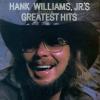
Man, I don't know about o in pure talent but he was truly an artist and could set a crowd ablaze with his work.
I'm goin with Tre Cool from Green Day...just listen to any faster paced Green Day track. Sounds like there is 3 in drummers.

This is an excellent solo Billy played with the Horace Silver Quintet in 1968. He's just an incredible player.
http://youtube.com/watch?v=I2VYKgFBH3A

I have Burning for Buddy 2......I LOVE that cd
Generally acclaimed as fusion's greatest drummer, Billy Cobham's explosive technique powered some of the genre's most important early recordings -- including groundbreaking efforts by Miles Davis and the Mahavishnu Orchestra -- before he became an accomplished bandleader in his own right. At his best, Cobham harnessed his amazing dexterity into thundering, high-octane hybrids of jazz complexity and rock & roll aggression. He was capable of subtler, funkier grooves on the one hand, and awe-inspiring solo improvisations on the other; in fact, his technical virtuosity was such that his flash could sometimes overwhelm his music. After debuting as a leader with the classic Spectrum in 1973, Cobham spent most of fusion's glory days recording for Atlantic; briefer stints on CBS, Elektra, and GRP followed, and by the mid-'80s, Cobham was de-emphasizing his own bands in favor of session and sideman work. Even so, he continued to record for various small labels with some regularity.
William C. Cobham was born May 16, 1944, in Panama, where as a very young child he became fascinated with the percussion instruments his cousins played. When Cobham was three, his family moved to New York City, and at age eight he made his performance debut with his father. He honed his percussion skills in a drum-and-bugle corps outfit called the St. Catherine's Queensmen, and attended New York's prestigious High School of Music and Art, graduating in 1962. From 1965 to 1968, he served as a percussionist in the U.S. Army Band, and after his release, he was hired as the new drummer in hard bop pianist Horace Silver's band. Cobham toured the U.S. and Europe with Silver in 1968, and also moonlighted with Stanley Turrentine, Shirley Scott, and George Benson. After eight months with Silver, Cobham departed to join the early jazz-rock combo Dreams in 1969, which also featured the Brecker brothers and guitarist John Abercrombie. From there, he landed a job in Miles Davis' new fusion ensemble, and played a small part in the seminal es Brew sessions; he also appeared more prominently on several other Davis albums of the time, including more aggressive classics like Live-Evil and A Tribute to Jack Johnson.
Cobham and guitarist John McLaughlin split off from Davis' group to pursue a harder rocking brand of fusion in the Mahavishnu Orchestra, which debuted in 1971 with the seminal The Inner Mounting Flame. With Mahavishnu, Cobham's fiery intensity was given its fullest airing yet, and his extraordinary technique influenced not only countless fusioneers in his wake, but also quite a few prog rock drummers who were aiming for similarly challenging musical territory. The 1972 follow-up Birds of Fire cemented his reputation, and by this time he had also become something of an unofficial in-house drummer for Creed Taylor's CTI label, known for a smoother, more polished style of fusion; here Cobham backed musicians like George Benson, Stanley Turrentine, Freddie Hubbard, Hubert Laws, and Grover Washington, Jr. Unfortunately, the volatile group chemistry that made Mahavishnu's recordings so exciting also carried over into real life and the original lineup disbanded in 1973.
Deciding to make a go of it on his own, Cobham formed his own band, Spectrum (which initially featured ex-Mahavishnu cohort Jan Hammer on keyboards), and signed with Atlantic. His debut as a leader, also called Spectrum, was released in 1973, showcasing an exciting blend of jazz, funk, and rock that benefited from the presence of guitarists John Scofield and Tommy Bolin (the latter better known for his rock recordings); it also found Cobham experimenting a bit with electronic percussion. Spectrum is still generally acknowledged as the high point of Cobham's solo career, and holds up quite well today. Cobham followed Spectrum with a series of LPs on Atlantic that, like fusion itself, grew increasingly smoother and more commercial as the '70s wore on. For his second album, 1974's Crosswinds, ex-Dreams mate John Abercrombie joined the band, as did keyboardist George Duke, who would become a frequent Cobham collaborator over the years; that same year's performance at Montreux produced the live Shabazz. After Total Eclipse, Cobham moved more explicitly into commercial jazz-funk with 1975's A Funky Thide of Sings, which featured an expanded horn section. He pared the group back down for the improved Life and Times in 1976, and also played Montreux again, in tandem with Duke.
In 1977, Cobham switched to the CBS label, which set him firmly on the path of commercial accessibility. In addition to his records as a leader, he'd remained highly active as a session drummer, and began to focus on that side of his career even more in the late '70s. By 1980, he was done with CBS and began pursuing side opportunities, playing live with the Grateful Dead and Jack Bruce, as well as the Saturday Night Live band. He drummed for the Grateful Dead side project Bobby & the Midnites in 1982, and recorded three albums for Elektra in the early '80s with his new quartet the Glass Menagerie. During the mid-'80s, he cut three commercially oriented LPs for GRP, and spent the next few years stepping up his international touring and absorbing a healthy dose of world music. He played Peter Gabriel's 1992 WOMAD Festival, and the following year recorded The Traveler, inspired by a sojourn in Brazil. In 1996, he formed a more acoustic-oriented quartet called Nordic with three Norwegian musicians; the following year, he also started a German-based fusion outfit called Paradox. In 1998, Cobham began playing with a group called Jazz Is Dead, which devoted itself to jazz reinterpretations of Grateful Dead material; their album Blue Light Rain proved fairly popular among Deadheads. As Cobham maintained his touring, session, and bandleading activities, Rhino released the excellent two-CD retrospective Rudiments: The Billy Cobham Anthology in 2001.

Shaughnessy was a cool dude. Boy, did he hate Ray Charles. He was the ultimate big band drummer.
There are currently 1 users browsing this thread. (0 members and 1 guests)
 Posting Permissions
