

 Reply With Quote
So what was the plan? Pass the ACA lose the house, enact the ACA lose the senate, then pass a single-payer system?

Once this epiphany occurs to the insurance industry, they might start reining in their members in order to give Obamacare some chance to succeed. By then, though, it may well be too late, and the previously impossible will be on its way to fruition
The ACA is a pathway to single-payer...been saying that from the start..
So what was the plan? Pass the ACA lose the house, enact the ACA lose the senate, then pass a single-payer system?
No, defeat the conservative propaganda machine with logic and a working system that insures the previously un-insurable and keeps families from declaring bankruptcy if they get sick...you know...the usual plan since 2008

Obama now appealing to one of the core demographics of his base: Beta males wearing onesie pajamas
https://twitter.com/BarackObama/stat...508800/photo/1
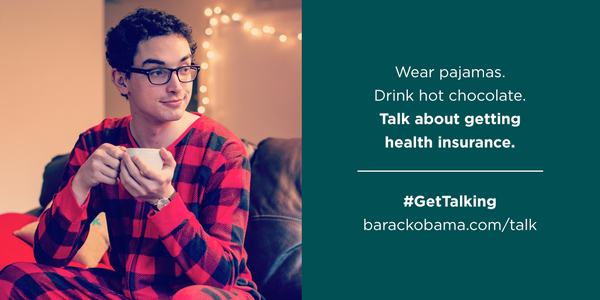
ACA actually permits (encourages?) public option, which is what VT is doing.
https://www.commondreams.org/view/2013/08/11-1

Some good ones in here.
http://thefederalist.com/2013/12/17/...oy-propaganda/
lol...30 million uninsured 10 years from now...great plan.
Can you address the issue? How exactly do you expect this obamacare pathway to single payer to play out?
Repug/Fox/VRWC campaign of lying about ACA going very well, as is the American Myth that Every Man is Rugged Individual Island with no civic responsbility to anyone or anything.
Uninsured Skeptical of Health Care Law in Poll
Fifty-three percent of the uninsured disapprove of the law, the poll found, compared with 51 percent of those who have health coverage. A third of the uninsured say the law will help them personally, but about the same number think it will hurt them, with cost a leading concern.
There are several reasons the uninsured appear to be as wary of the law as the insured, including opposition to the requirement that most people have insurance. Still, nearly six in 10 uninsured said having insurance would make their own health better. And 56 percent said they were more likely than not to get insurance by March 31, the deadline to enroll in coverage or face a tax penalty under the law. Thirty-five percent said they were more likely to pay the penalty.
uninsured Americans — precisely those it was meant to help — remain confused about it and fearful that it will increase their health care costs. And nearly six in 10 said they had not researched insurance on the online marketplace, even though, based on the demographics of the sample, many probably qualify for free or subsidized coverage.
the uninsured reported starkly different experiences with the health care system. Their responses suggested they were far more likely than the insured to have trouble paying for medical care, to rely more on emergency rooms and community clinics, and to forgo treatment.
Of the uninsured who said they were not likely to sign up by the deadline, fully half said it was because of the high cost. Twenty-nine percent said they planned to go without coverage because they object to the government’s requiring it, and 11 percent said they did not need health insurance.
uninsured respondents were generally younger, poorer and less educated than the respondents in the general population. Three-quarters of the uninsured were between 18 and 44, and about one in eight had college degrees. Slightly more than half said they earned less than $30,000 a year.
28 percent of uninsured respondents who said that they planned to sign up for coverage cited the mandate as the main reason. Thirty-eight percent said that they would enroll because having health insurance is good, while 10 percent said that they expected insurance to become more affordable under the law.
most respondents — both insured and uninsured — said that it hurts the country when individuals do not have health insurance, even as most voiced opposition to the mandate. In addition, 64 percent of the uninsured and 54 percent of the general public said they thought providing access to affordable health care coverage for all Americans was the responsibility of the federal government.
Republicans in Congress were judged more harshly, with 73 percent of the general public and 70 percent of the uninsured disapproving of their handling of health care.
http://mobile.nytimes.com/2013/12/19...?from=homepage
Yes, Sean Hannity, Most of Obamacare IS 'Wildly Popular' -- Among Republicans
To answer his question directly, yes. You can silence your audience all you want, Sean, but you can't escape the reality that most of the Affordable Care Act is wildly popular...
...Among Republicans.
Let's do this again.
--80 percent of Republicans -- yes, Republicans -- like the idea of health insurance marketplaces, also known as "exchanges." I think we can safely say that 80 percent approval cons utes "wildly popular."
--Likewise, 57 percent of Republicans like the idea of the government helping to pay the cost of premiums via insurance subsidies.
--54 percent of Republicans like the employer mandate -- the same mandate which the congressional Republicans almost universally oppose, including and partly because of Sean Hannity.
--78 percent of Republicans support the ban on denying insurance to people with pre-existing conditions.
--This one is an eye-opener. 29 percent of Republicans think Obamacare "doesn't go far enough."
While we're here, it's worth noting:
--According to a recent NBC News / Wall Street Journal poll, the tea party had an approval rating of 26 percent. The congressional Republicans didn't fare much better with an approval of 32 percent.
--In the same poll, Sen. Ted Cruz (R-TX), who led the foolish, ill-conceived effort to de-fund the law, has an approval rating of 14 percent. Speaker Boehner's approval is slightly better at 17 percent.
--Comparatively, the dreaded ACA enjoyed approval rating of 46 percent in two different polls taken at the lowest point in the roll-out fiasco. In other words, Obamacare is significantly more popular than the Speaker of the House, the congressional Republicans, Ted Cruz and Cruz's tea party caucus.
The only aspect of the ACA that Republican voters dislike is the individual mandate. But I'm sure they'd feel differently if they were informed that Republicans invented the mandate.
http://www.huffingtonpost.com/bob-ce...b_4468038.html
http://finance.yahoo.com/news/obamac...091500078.html
The problem with solutions is that few of them tend to be perfect, even if they act in a mostly benign manner. Actions produce reactions, a principle as true in politics as it is in physics, and those tend to multiply when solutions increase in complexity.
The nature of these unintended consequences changes dramatically when complex “solutions” turn out to be poorly designed and incompetently administered.
The rollout of the Affordable Care Act has provided many real-world examples of this, but perhaps none so “unintended” as the consequences discovered by the Seattle Times this weekend. Carol Ostrom, The Times’ health reporter, told the story of 62-year-old newlyweds Sofia Prins and Gary Balhorn, who weren’t exactly the models of wild, starry-eyed romantics.
Their nuptials were motivated by a stronger desire to keep their house out of the hands of the federal government, thanks to a little-known key provision of Obamacare. Their meager incomes made them eligible for a federally subsidized health plan, and their assets would be protected.
Does Obamacare actually allow the federal government to seize homes and other assets? Before answering that question, let’s go back to what supposedly motivated the Obama administration and Democrats to pass the ACA in the first place.
For years, Democrats had demanded federal action to address the problem of Americans without health insurance coverage. Estimates of this population went from 14 million to 40 million during the debate in 2009-10 over the scope of the crisis and potential solutions for it.
While those numbers sound large, a Gallup poll in late 2009 put them in better perspective, noting that 85 percent of American adults had health insurance, 87 percent of whom were satisfied with their coverage, and 61 percent satisfied with the costs. Even among the uninsured, half were satisfied with their situation, although only 27 percent expressed satisfaction about their costs for health care.
Instead of designing a solution that focused on the half of the 15 percent who needed better options and leaving everyone else alone, Barack Obama and his fellow Democrats on Capitol Hill insisted on imposing an overhaul of the entire health-insurance industry. This includes, crucially, an unprecedented individual mandate to carry health-insurance coverage. The ACA contains a highly-complex series of subsidies that help working-class Americans pay the now-skyrocketing premiums caused by coverage mandates on insurers, but only down to a certain income level.
Below that point, Americans who do not have employer-based coverage have to accept Medicaid coverage in order to comply with the Obamacare individual mandate, or pay full price for the skyrocketing premiums from private-sector insurers.
People often confuse Medicaid with Medicare, but there is a critical difference between the two programs. Medicare eligibility derives from Social Security contributions, and is a true “en lement” program. Theoretically, coverage comes as part of the funds paid into the system, although in reality the federal government has to borrow billions of dollars to cover the costs.
Medicaid, on the other hand, is a state-based and federally-subsidized welfare program, one that employs means-testing – which includes ownership of assets as well as income levels. Medicaid programs include conditions that put recipients’ assets remaining after death at risk for seizure to reimburse taxpayers who footed the bill for the recipient’s health care during his/her lifetime.
This was done to prevent fraud, to ensure that limited resources went to the truly needy, and to recapture resources to cover future costs. Until now, though, Medicaid was a voluntary program, and the vast majority of people who entered into it had few assets to risk by signing up.
Here’s where the law of unintended consequences comes into Obamacare. Thanks to the exchange programming, consumers are getting enrolled in Medicaid whether they understand what that means or not, and in much greater numbers than before. (In the first month, nearly 90 percent of all the enrollees in the federal and state exchanges were Medicaid applicants.)
Unless they look at the fine print in the paperwork in Washington and other states with similar asset-forfeiture regulations, any assets they own will not pass to their heirs but to the state instead.
Prins and Balhorn are hardly alone in Washington. Adults between the ages of 50-64 account for 18 percent of the enrollments in the state’s Apple Health Medicaid program, and the seizure regulations apply in their cases for those 55 and older. The state exchange uses only income levels to means-test Washington applicants for the program, which means most of them will have no idea that their assets are at risk until it’s too late.
“People will think this is wonderful, this is free insurance,” Dr. Jane Orient, executive director of the Association of American Physicians and Surgeons, said in an interview. “They don’t realize it’s really a loan, and is secured by any property they have.”
That’s one of the problems of Obamacare itself – the perception that it’s a free lunch. Even those who do qualify for subsidies get that only through the collection of a myriad of taxes imposed by Obamacare. Those taxes apply to employers, insurers, and medical-device manufacturers, which drive up the costs for consumers and workers in indirect ways. It’s a s game--not a reform that actually drives costs down. Instead Obamacare only masks price increases through dishonest opacity.
The problem here is the arrogance of the solution itself. Had the Obama administration focused on just those who could not get coverage because of income or pre-existing conditions, they could have expanded Medicaid in an intelligent manner while protecting existing assets, without disrupting the rest of the market.
That might still have been controversial and would not have been cost-free by any means, but it would not have fatally undermined a system that worked for 85 percent of Americans and misled many of the rest into risking their estates without any warning that government would strip their heirs of family homes.
Targeted and modest solutions minimize unintended consequences, and allow for more speed and efficiency when they do arise. Obamacare will serve for decades as the cautionary tale when arrogance rules over modesty and common sense.
If TAXPAYERS pays $10Ks or $100Ks for health costs of necessarily poor people (aka, "redistribution of wealth"), then why shouldn't TAXPAYERS be reimbursed by seizing the dead poor person's definitely meager estate?
Does this anti-govt propagandist provide any numbers of how many Medicaid dead people's estates were seized and how much the $$ were?
btw, Medicaid (taxpayers) already does "estate recovery" to obtain reimbursement when Medicaid (taxpayers) has paid long-term nursing home costs (often paid in exorbitant prices to hedge fund/financial outfits that buy nursing homes fore the (Medicaid) guaranteed cash flow)
Last edited by boutons_deux; 12-19-2013 at 02:59 PM.
Sounds like there is no need for a backup plan
Why Obamacare’s Insurance Marketplaces Won’t Implode Next Year
Worried that Healthcare.gov’s botched rollout — and ongoing problems with some states’ Obamacare web portals — could wreak havoc on enrollment efforts and create an unsustainable insurance marketplace that has too few young, healthy enrollees? Don’t be.
Two new reports by the Kaiser Family Foundation (KFF) and the Urban Ins ute/Robert Wood Johnson Foundation (RWJF) find that Obamacare can survive lower-than-expected enrollment numbers in its first year, and that premiums won’t necessarily skyrocket even if just a small number of young and healthy Americans get coverage this year.
Insurers in the pre-Obamacare market regularly charged sick people more for their coverage. That practice of medical “underwriting” is prohibited under the Affordable Care Act, which allows insurance companies to base their premiums on just three variables — a consumer’s geographic location, age, and whether or not they smoke. Age is largely used as a stand-in for health status, since younger people are also generally healthier. And in order to keep marketplace premiums in check and stop insurers from cherry-picking their customers, the health law only allows companies to charge older people up to three times the amount they charge younger people.
That’s why the White House and KFF has projected that, in order to keep the marketplaces stable, about 40 percent of the expected seven million people who will enroll in private Obamacare coverage in 2014 must be relatively young and healthy. Otherwise, the insurance pools might be filled with a disproportionate number of sicker and older people — known as “adverse selection” — who are in greater need of health coverage but more expensive for insurers to cover, forcing companies to aggressively hike premiums across the board. That would then further discourage younger people from enrolling in coverage and lead to a vicious cycle that policy experts refer to as the insurance “death spiral.”
However, “because premiums are still allowed to vary substantially based on age, the financial consequences of lower enrollment among young adults are not as great as conventional wisdom might suggest,” explain the authors of KFF’s new report.
KFF found that if just one-third of a marketplace’s enrollees are between the ages of 18 and 34, insurers’ total costs “would be about 1.1% higher than premium revenues.” Strikingly, even a 50 percent lower-than-expected enrollment rate among young people — considered a worst-case scenario — would result in costs just 2.4 percent higher than revenues.
“[E]ven in the worst case, insurers would still be expected to earn profits, and would then likely raise premiums in 2015 to make up the shortfall,” concluded the authors. But the required premium increase would likely be limited to one or two percent, “well below the level that would trigger a ‘death spiral.’”
RWJF’s new study points to several other reasons that insurers are unlikely to hike rates even if enrollment skews toward sicker and older Americans. For instance, “risk corridors” — an Obamacare mechanism meant to limit how much insurers can profit or lose in the marketplaces — lets the government take money from insurance companies that set their 2014 premiums too high and use it to stem losses for companies that ended up setting their rates too low. Several other provisions will also limit insurer losses and consequently reduce the need for higher premiums.
The study authors also say that young people will be encouraged to sign up — if not in 2014, then during the next enrollment period — because of the way that Obamacare’s subsidies are structured. Since younger people tend to make less money, they’ll have access to more robust financial assistance under the health law. In fact, between 65 and 70 percent of 18 to 35-year-olds are expected to qualify for Obamacare subsidies. The youngest Obamacare enrollees are also far more likely to fall in an income bracket (less than 1.5 times the poverty level) where their out-of-pocket expenses are further limited under the law.
Thus, neither low enrollment numbers nor potentially sicker and costlier risk pools “is likely to affect the long term viability of the reforms or to substantially affect the nongroup premiums faced by consumers in future years,” concluded the researchers.
http://thinkprogress.org/health/2013...death-spiral/#
So under that scenario when I lose my individual policy next year instead of a 283% increase, I'll be looking at a 285% increase in my premium. And you think that's good news
Just think about how many poor people you'll be helping get insured!
You Lie

Wifey will just have to work a little bit harder to keep the family insured, huh?
I'll make sure she does
33% of the Texas population has no healthcare...
http://newsbusters.org/blogs/noel-sh...watch-more-foxThat’s approximately is 4.8 million people who can not see a DR. unless its at an emergency room.
Tonight on Rachael, she discussed Issa’s trip last night to hold hearings on “Obamacare”.. There was one point when Issa amazingly dressed down the head of Medicaid in Texas by showing him a clip of Fox News
and then stating to him, “that he should watch more Fox News”...No need to even begin to comment..
My point is that out of ing 4.8 million, could not anyone in that state start advocating for the uninsured by perhaps getting them into the street to peacefully to protest the fact that the State is purposely trying to keep them from receiving healthcare for political purposes? ...
I realize that poor people are so distressed that they feel almost impotent to do anything at all which might enable them to get themselves out of this horrid condition..
But out of 4.8 million one just has to think that Texas Democrats could organize a small protest demonstration every day in front of Perry”s office. I’m talking 2 or 3 hundred on a continuous basis.
Christ... are you telling me that Texas Democrats are that weak that they can not get this horrible issue out front for all the nation to see.....Or are you rather telling me that the Uninsured in Texas are so deep in the dark, and that they hate Obama so much that they would rather die in order to destroy his presidency?
In the meantime, a summary of the crap Rachael carried today..
Just like Barry knew you would. Let's give it up for snakeboy's wife paying her fair share to prevent the death spiral.
ah, lying again, snakeboy
ACA didn't cancel your policy. The insurance company did.
When did you buy it? I bet the insurance company sold you a ty junk policy AFTER ACA was passed, knowing it would have to cancel it since it was garbage.
ACA didn't increase your premium. The insurance company, always ready to screw its customers (under false pretense of ACA), increased your premium.
List the deductible, premium, coverages of you old ty junk policy and your new ACA-compatible policy.
Obama has announced that the appx 500K people like yourself can now go buy ty, junk policies again. Good luck in finding an insurance company that will sell you a ty, junk policy at your previous price.
My " ty junk" policy - 100% preventative care, $2500 individual deductible, $5 million individual lifetime max for $315/month
Obamacare Gold Policy - 100% preventative care, $3000 individual deductible, No individual lifetime max for $892/month...oh but I get free birth control pills and shmashmortions.
Keep on trying to polish that turd boutons.
I wasn't aware that being uninsured in Texas caused death.Or are you rather telling me that the Uninsured in Texas are so deep in the dark, and that they hate Obama so much that they would rather die in order to destroy his presidency?
not having access to health care causes the poor to die earlier than than those with access to health care
Study links 45,000 U.S. deaths to lack of insurance
http://www.reuters.com/article/2009/...58G6W520090917
then there's about the same number/year of deaths WITH HEALTH CARE due to avoidable medical errors.
There are currently 1 users browsing this thread. (0 members and 1 guests)
 Posting Permissions


