Page 4 of 6 FirstFirst 123456 LastLast
Results 76 to 100 of 144
  1. #76
    Veteran
    My Team
    San Antonio Spurs
    Join Date
    Mar 2009
    Post Count
    97,536
    Both give money to the rich and both rely on it affecting the job market. .
    The (bankers') FED QE was saving the BANKRUPT financial sector, er, casino, giving $Ts to the banks, which didn't trickle down, got played in the casino, no jobs created, and still doesn't (try to get mortgage with minimum 20% down and good credit, etc, etc)

    The Bush/Obama stimulus, aka Keynesian counter-cyclical govt spending, was spending money on infrastructure, job creation, etc, etc. NOT pumping $Ts into the financial sector. The stimulus saved and created Ms of jobs, but it was $2T - $3T too small, so we have had a long tail to the financial crisis, longer than need be, but YOUR Repugs were intent on keeping the financial pain maximized on people to try to unseat Obama, to deny Obama ANY success in helping the country emerge from the Banksters Great Depression. all Repugs and all you Repug voters.

  2. #77
    Veteran Ignignokt's Avatar
    My Team
    San Antonio Spurs
    Join Date
    Aug 2007
    Post Count
    7,042
    The (bankers') FED QE was saving the BANKRUPT financial sector, er, casino, giving $Ts to the banks, which didn't trickle down, got played in the casino, no jobs created, and still doesn't (try to get mortgage with minimum 20% down and good credit, etc, etc)

    The Bush/Obama stimulus, aka Keynesian counter-cyclical govt spending, was spending money on infrastructure, job creation, etc, etc. NOT pumping $Ts into the financial sector. The stimulus saved and created Ms of jobs, but it was $2T - $3T too small, so we have had a long tail to the financial crisis, longer than need be, but YOUR Repugs were intent on keeping the financial pain maximized on people to try to unseat Obama, to deny Obama ANY success in helping the country emerge from the Banksters Great Depression. all Repugs and all you Repug voters.

    Outside of this monopoly board game view of macro economics, infrastructure spending is nice and all, we already do that through pork barrell spending, and it still ends up in the hands of top hat mustache whiskered gents with big money bags like the ones in your childish liberal dreams.

  3. #78
    🏆🏆🏆🏆🏆 ElNono's Avatar
    My Team
    San Antonio Spurs
    Join Date
    Apr 2007
    Post Count
    153,473
    1. Keynes proposed 3 ways to stimulate the economy; Stimulus spending, War, and Tax cuts. Supply side is the third aspect of Keynesian theory. JFK was for cutting taxes to stimulate growth.

    2.You are being delusional if you think govt giving money to corporations through a stimulus bill compared to recieving money through financial investments is any different. In the end, the corporations that recieve the monies are the final arbiters and their fiduciary duty is to the CLIENT. the investors. Doesn't matter where it comes from.
    They're both a solution to the same problem: the lack of money movement in the economy. They both try to address it by pumping money, disposable income, and hoping the money starts moving again.

    The difference is that government can direct specifically where those funds are to be used (ie: infrastructure projects, science projects, etc), and thus have a direct impact on jobs, disposable income and the overall economy. Plus government doesn't have an intrinsic goal of making money. Sure, in the micro they pick winners and losers, and the winners certainly make money, but the overall goal is in the macro. The criticism with it is that government allocation of funds is inefficient and crony, and that government is slow to retract from the market once the economy is moving again.

    Trickle down was essentially the same thing, addressing the inefficiencies and the picking of winners and losers. It just stopped working because companies stopped caring about the country's economy, and prioritized their bottom line instead. It intrinsically trusts the beneficiaries of actually reinvesting the extra money in Main Street, but Wall Street is more profitable, incurs less risk, and there's really nothing preventing companies from hoarding the cash. So unless you actually make Wall Street a less desirable investment than Main street, this is not a workable solution anymore.

    They're both interventionist solutions to deal with a very specific problem. You can get away with monetarism and moving the interest rate levers while the economy is working fine, but once that doesn't cut it, you're going to need government intervention in one way or the other.

    This whole thing is certainly more complicated than two dogmas, and encompasses the investment markets (especially derivatives), the economic realities (deflation, inflation), etc.

  4. #79
    Veteran Ignignokt's Avatar
    My Team
    San Antonio Spurs
    Join Date
    Aug 2007
    Post Count
    7,042
    They're both a solution to the same problem: the lack of money movement in the economy. They both try to address it by pumping money, disposable income, and hoping the money starts moving again.

    The difference is that government can direct specifically where those funds are to be used (ie: infrastructure projects, science projects, etc), and thus have a direct impact on jobs, disposable income and the overall economy. Plus government doesn't have an intrinsic goal of making money. Sure, in the micro they pick winners and losers, and the winners certainly make money, but the overall goal is in the macro. The criticism with it is that government allocation of funds is inefficient and crony, and that government is slow to retract from the market once the economy is moving again.

    Trickle down was essentially the same thing, addressing the inefficiencies and the picking of winners and losers. It just stopped working because companies stopped caring about the country's economy, and prioritized their bottom line instead. It intrinsically trusts the beneficiaries of actually reinvesting the extra money in Main Street, but Wall Street is more profitable, incurs less risk, and there's really nothing preventing companies from hoarding the cash. So unless you actually make Wall Street a less desirable investment than Main street, this is not a workable solution anymore.

    They're both interventionist solutions to deal with a very specific problem. You can get away with monetarism and moving the interest rate levers while the economy is working fine, but once that doesn't cut it, you're going to need government intervention in one way or the other.

    This whole thing is certainly more complicated than two dogmas, and encompasses the investment markets (especially derivatives), the economic realities (deflation, inflation), etc.
    That's the most economically ignorant statement ever. You need to make money to have reserves to pay people for those jobs that will last for more than a quarter. You're senslessly beating around making no point. What's the point if the govt gives you money to hire people if it's not going to be profitable in the long run, they will just terminate those temp jobs when the money dries up.

  5. #80
    The Wemby Assembly z0sa's Avatar
    My Team
    San Antonio Spurs
    Join Date
    Jun 2005
    Post Count
    15,772
    Socialists aren't Marxist-Lennists, difference being Marxists would fight wars, kill millions and then have a 'what now?' approach afterwards. Socialism is more refined.
    Ok, name a more important revolution fought by "socialists" that didn't end exactly like you are saying. It's not like the PRC has had a bloodless transition from dynasty to republic to communist regime.

    To cut through the BS on my end, I see socialism as a pipe dream - greatest story ever told on paper, yet completely inert as a realistic endeavor. A mixed economy has been and will always be much more effective means of generating wealth for the producing classes.

  6. #81
    🏆🏆🏆🏆🏆 ElNono's Avatar
    My Team
    San Antonio Spurs
    Join Date
    Apr 2007
    Post Count
    153,473
    That's the most economically ignorant statement ever. You need to make money to have reserves to pay people for those jobs that will last for more than a quarter. You're senslessly beating around making no point. What's the point if the govt gives you money to hire people if it's not going to be profitable in the long run, they will just terminate those temp jobs when the money dries up.
    There's nothing ignorant about it. No solution is a silver bullet, otherwise, well, there would be no debate.

    What direct government investment does is it makes companies take on risks they wouldn't take with their own money. Those 'temp' people spend money on other local businesses, which gives those other businesses opportunity to invest, expand, export, etc. Plus it's an investment that's directed towards the country's economy. Some will pan out, some will not.

    You can give tax breaks to companies, but you can't ensure they'll be hiring Americans, or investing that money on the local economy. Which is another external issue that's part of the overall problem.

    Not to mention that taxes is perhaps the major redistribution tool for the government, and between tax breaks and companies parking trillions in tax-heavens, that tool becomes less and less useful, and now you have to make it up with more deficit spending.

    Maybe on a "pure" free market trickle down would work again, but this isn't a "pure" free market, and none of the actual players that matter want it to be.

    The points are:
    - It's clear that under the current market conditions, trickle down doesn't work.
    - Keynesian stimulus might work, but it's inefficient, and thus it's impact limited.
    - An actual real solution involves reforming a lot of areas of economic activity, from investments to tax loopholes, going through tariffs, outsourcing and trade agreements.

  7. #82
    Still Hates Small Ball Spurminator's Avatar
    My Team
    San Antonio Spurs
    Join Date
    Jun 2003
    Post Count
    37,751
    Supreme Slurper of the Liberal Narrative detected

    are you seriously going to say like that when the liberals believe in the same only on the demand side. It's called Keynesianism, but based on your posting experience i dont expect you to know any better.


    I simply ask WC his specific philosophical problem with the trade agreement and this guy uses it as an opportunity to show off all the stuff he learned browsing Wikipedia for an hour.

    The subsequent input from El Nono has been good reading though.

  8. #83
    Veteran Ignignokt's Avatar
    My Team
    San Antonio Spurs
    Join Date
    Aug 2007
    Post Count
    7,042
    There's nothing ignorant about it. No solution is a silver bullet, otherwise, well, there would be no debate.

    What direct government investment does is it makes companies take on risks they wouldn't take with their own money. Those 'temp' people spend money on other local businesses, which gives those other businesses opportunity to invest, expand, export, etc. Plus it's an investment that's directed towards the country's economy. Some will pan out, some will not.

    You can give tax breaks to companies, but you can't ensure they'll be hiring Americans, or investing that money on the local economy. Which is another external issue that's part of the overall problem.

    Not to mention that taxes is perhaps the major redistribution tool for the government, and between tax breaks and companies parking trillions in tax-heavens, that tool becomes less and less useful, and now you have to make it up with more deficit spending.

    Maybe on a "pure" free market trickle down would work again, but this isn't a "pure" free market, and none of the actual players that matter want it to be.

    The points are:
    - It's clear that under the current market conditions, trickle down doesn't work.
    - Keynesian stimulus might work, but it's inefficient, and thus it's impact limited.
    - An actual real solution involves reforming a lot of areas of economic activity, from investments to tax loopholes, going through tariffs, outsourcing and trade agreements.
    Wrong, when clinton cut capital gains tax in the 90's that was credited with a soaring economy.

  9. #84
    Veteran Ignignokt's Avatar
    My Team
    San Antonio Spurs
    Join Date
    Aug 2007
    Post Count
    7,042


    I simply ask WC his specific philosophical problem with the trade agreement and this guy uses it as an opportunity to show off all the stuff he learned browsing Wikipedia for an hour.

    The subsequent input from El Nono has been good reading though.
    Wikipedia would be a step up from the Cuckington Post tho.

  10. #85
    Veteran
    My Team
    San Antonio Spurs
    Join Date
    Mar 2009
    Post Count
    97,536
    "When clinton cut capital gains tax in the 90's that was credited with a soaring economy."

    aka, the dot com bubble. Internet was the stimulus attracting investment, not decreased capital gains. Capital w/o the Clinton cut would have inflated the dot com bubble anyway.


  11. #86
    Veteran Ignignokt's Avatar
    My Team
    San Antonio Spurs
    Join Date
    Aug 2007
    Post Count
    7,042
    "When clinton cut capital gains tax in the 90's that was credited with a soaring economy."

    aka, the dot com bubble. Internet was the stimulus attracting investment, not decreased capital gains. Capital w/o the Clinton cut would have inflated the dot com bubble anyway.


    Actually, that may not be so. The more you inflate money supply, the more risk people are willing to take.

  12. #87
    Still Hates Small Ball Spurminator's Avatar
    My Team
    San Antonio Spurs
    Join Date
    Jun 2003
    Post Count
    37,751
    Wikipedia would be a step up from the Cuckington Post tho.
    Several steps, tbh.

  13. #88
    🏆🏆🏆🏆🏆 ElNono's Avatar
    My Team
    San Antonio Spurs
    Join Date
    Apr 2007
    Post Count
    153,473
    Wrong, when clinton cut capital gains tax in the 90's that was credited with a soaring economy.
    But it wasn't. It was a bubble that soon burst, followed by a recession in the early 2000s, and it was one more mistake of the effusiveness of the 90's which included getting rid of the Glass–Steagall Act, etc.

    I do take your point, though, because I think that's a major reason why we won't see market reform: such incentives made everybody and their mother jump into the market, and it turned the market from a long-term economic gear for the nation into a short-term speculative market looking for the quick buck. Now there's too much money tied up in there to muck with it.

  14. #89
    Veteran Ignignokt's Avatar
    My Team
    San Antonio Spurs
    Join Date
    Aug 2007
    Post Count
    7,042
    But it wasn't. It was a bubble that soon burst, followed by a recession in the early 2000s, and it was one more mistake of the effusiveness of the 90's which included getting rid of the Glass–Steagall Act, etc.

    I do take your point, though, because I think that's a major reason why we won't see market reform: such incentives made everybody and their mother jump into the market, and it turned the market from a long-term economic gear for the nation into a short-term speculative market looking for the quick buck. Now there's too much money tied up in there to muck with it.
    Nono, give me some informed analysis, not some pundit talk geared towards the lowest common denominator.

    1. Keynesian policies produce bubbles too, look at Nazi Germany in which Keynes commended hitler and chastised FDR for not going the full route like the Weimarcht.

    2. We've been doing keynesianism for more than half a century with a little bit of monetarism, in all fairness, we do a mix of the two. Both contribute to stratification of the classes.

    3. Glass Steagall didn't cause the recession, anyone parroting that has no clue.

  15. #90
    🏆🏆🏆🏆🏆 ElNono's Avatar
    My Team
    San Antonio Spurs
    Join Date
    Apr 2007
    Post Count
    153,473
    Nono, give me some informed analysis, not some pundit talk geared towards the lowest common denominator.

    1. Keynesian policies produce bubbles too, look at Nazi Germany in which Keynes commended hitler and chastised FDR for not going the full route like the Weimarcht.

    2. We've been doing keynesianism for more than half a century with a little bit of monetarism, in all fairness, we do a mix of the two. Both contribute to stratification of the classes.

    3. Glass Steagall didn't cause the recession, anyone parroting that has no clue.
    I think we need to split theory vs actually applying the theory to an economic context. Both theories are sound to address severe deflation, the cases where monetarism can't really cut it anymore because interests rates simply get to zero and the levers just don't work anymore. One does it from the private sector, the other does it from government. They do, theoretically anyways, try to address the problem at hand. Accelerate the velocity of money.

    We actually moved heavily into monetarism in the 90's and really only brought back a heavy Keynesian hand after '08, when the hit the fan.

    But the problem isn't with the theories, it's with the context. When you actually apply the theory to an economic context, they largely fail to solve the problem, and the reason is the context (the current reality) is what's flawed. The context include things like market regulations that allow banks to gamble with depositors money at will (something that Glass Steagall prevented), the "too big to fail", the technological gaming of the market (ie: flash crash), the free for all outsourcing, the focus on dividends over actual products, the lack of compe iveness on areas like manufacturing, due to, among other things, the Chinese heavy manipulation of their currency, trade agreements that entice shipping jobs overseas, etc. You also have other areas that are really not fixable, but simply an evolution of the economy, like automation.

    So, bubbles, stratification, those aren't things that either theory try to tackle. They're a byproduct of the rules of the game, the context.

    That's why I said that in a free market utopia, they would probably work, and I would even advance that trickle down is probably the better option. But in the current economic context, they largely don't work, and that's because we won't touch the rules of the game. And if you have enough money, you'll always get a better shot at writing those rules, so in that sense, I certainly agree with the sentiment that the more things change, the more they stay the same.

  16. #91
    Board Man Comes Home Clipper Nation's Avatar
    My Team
    Los Angeles Clippers
    Join Date
    Oct 2011
    Post Count
    54,257
    Do the workers own the means of production in Europe? yes or no?
    Of course they don't... you can't buy the means of production with foodstamps

  17. #92
    Veteran Ignignokt's Avatar
    My Team
    San Antonio Spurs
    Join Date
    Aug 2007
    Post Count
    7,042
    Of course they don't... you can't buy the means of production with foodstamps
    Omar kent buy it with det subsidized halal meat

  18. #93
    dangerous floater Winehole23's Avatar
    My Team
    San Antonio Spurs
    Join Date
    Nov 2008
    Post Count
    114,146
    it's like you're offended that the government visibly spends our taxes or something. why so angry, gtown?

  19. #94
    Veteran Ignignokt's Avatar
    My Team
    San Antonio Spurs
    Join Date
    Aug 2007
    Post Count
    7,042
    it's like you're offended that the government visibly spends our taxes or something. why so angry, gtown?
    It's like you're offended govt allows people to keep the money they earned. why so angry, winehole?

  20. #95
    Still Hates Small Ball Spurminator's Avatar
    My Team
    San Antonio Spurs
    Join Date
    Jun 2003
    Post Count
    37,751
    Define "earned."

  21. #96
    Believe. Blizzardwizard's Avatar
    My Team
    San Antonio Spurs
    Join Date
    Dec 2012
    Post Count
    4,303
    Of course they don't... you can't buy the means of production with foodstamps
    But Conservative individualist anti-government types in 'Murica can buy their 'freedom' with all their money that they ship offshore to prevent paying tax.

    "I earned all this dang money, why should I have to contribute by paying taxes".

    'Murica

  22. #97
    Board Man Comes Home Clipper Nation's Avatar
    My Team
    Los Angeles Clippers
    Join Date
    Oct 2011
    Post Count
    54,257
    But Conservative individualist anti-government types in 'Murica can buy their 'freedom' with all their money that they ship offshore to prevent paying tax.

    "I earned all this dang money, why should I have to contribute by paying taxes".

    'Murica
    "Why can't the state forcibly coerce productive members of society into giving up every cent they've earned to subsidize lazy welfare queens like me?"

  23. #98
    Believe. Blizzardwizard's Avatar
    My Team
    San Antonio Spurs
    Join Date
    Dec 2012
    Post Count
    4,303
    "Why can't the state forcibly coerce productive members of society into giving up every cent they've earned to subsidize lazy welfare queens like me?"
    'Productive members of society'

    You mean the middle class white people who drive around in their custom BMW bought by daddy flipping off all the hobos in the street.

    Also known as 'Libertarians'

  24. #99
    I am that guy RandomGuy's Avatar
    My Team
    San Antonio Spurs
    Join Date
    Jun 2005
    Post Count
    51,121


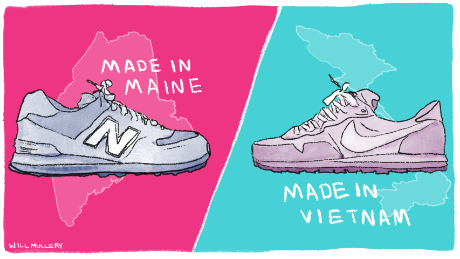
    http://www.cnn.com/2015/05/08/politi...e-new-balance/

    So, is their point to send even more jobs overseas, and put USA workers out of jobs?

    Buy New Balance.

    Made in USA!
    The percentage of shoes sold in the US that are made in the US is somewhere south of 1%.

    The types of jobs left at Nike are high-paying, hard to export types.

    The jobs are gone, deal with it. That is the way free markets work.

    LOL WC wants socialism, and doesn't understand capitalism.

  25. #100
    I am that guy RandomGuy's Avatar
    My Team
    San Antonio Spurs
    Join Date
    Jun 2005
    Post Count
    51,121
    'Productive members of society'

    You mean the middle class white people who drive around in their custom BMW bought by daddy flipping off all the hobos in the street.

    Also known as 'Libertarians'
    Pretty much.

    The irrational nature of Libertarianism.

Thread Information

Users Browsing this Thread

There are currently 1 users browsing this thread. (0 members and 1 guests)

Posting Permissions

  • You may not post new threads
  • You may not post replies
  • You may not post attachments
  • You may not edit your posts
  •