Page 7 of 7 FirstFirst ... 34567
Results 151 to 160 of 160
  1. #151
    Veteran Wild Cobra's Avatar
    My Team
    Portland Trailblazers
    Join Date
    May 2007
    Post Count
    43,117
    The link is at the bottom of post #41, by boutons.

  2. #152
    Veteran
    My Team
    San Antonio Spurs
    Join Date
    Mar 2009
    Post Count
    97,536
    2nd Amendment? Only ingnorant, naive s think it's all about the 2nd Amendment

    Behind the NRA's Money: Gun Lobby Deepens Financial Ties to $12 Billion Firearms Industry

    Well, the ties have become extensive in recent years. They date back principally to 2005, when the gun industry was facing a major crisis. It had been hit by dozens of suits from cities in recent years prior to that, and they were facing significant financial costs from this litigation. Litigation was aimed at recouping healthcare and other costs from gun violence in major cities. And the gun industry turned to the NRA for its lobbying muscle, which is legendary in Congress. They needed help. And they came up with a plan to obtain a liability shield for gun manufacturers and distributors. It’s the only industry in the country that was able to secure such a shield from most litigation. The NRA pushed it very hard for a few years, and it passed Congress in 2005, providing unique protection to gun manufacturers.

    At the same time, that very same year, the NRA launched a new fundraising program aimed at corporate donors, most of whom have been firearms companies, ammunitions makers. And that program has boomed since it started in 2005. There are no precise numbers, but the NRA posts data about the range of contributions from firearms industry firms. And according to a report in 2011 from the Violence Policy Center, between $14 million and $39 million came into NRA coffers in that period. This is probably a conservative estimate. Most of the NRA’s money is still from other sources, the bulk of the money, but the firearms industry has formed a kind of symbiotic relationship with the NRA in recent years—it benefits both.


    it’s anecdotal, but there’s obviously evidence in recent years that one of the major pushes of the NRA over the last decade has been to pass laws in states called "concealed carry laws," which are now existing in almost every state. The president of one of the big companies, Sturm, Ruger, in Connecticut, in a conference call with analysts back in 2011, said that they were looking for a nice uptick in sales in Wisconsin after the—that state passed a concealed carry law. These are ones that, you know, the NRA has pushed in Second Amendment grounds, self-defense grounds, but they obviously have been good for the firearms industry, too.

    the NRA still has, you know, huge influence in Congress. It tried to defeat President Obama in 2012. It spent over $10 million in that effort.


    http://truth-out.org/video/item/13992-behind-the-nras-money-gun-lobby-deepens-financial-ties-to-$12-billion-firearms-industry

  3. #153
    Rising above the Fray spursncowboys's Avatar
    My Team
    San Antonio Spurs
    Join Date
    Jan 2009
    Post Count
    7,669
    I said I would. Again, was not meant to be anything personal.


    .
    gracias.

  4. #154
    Rising above the Fray spursncowboys's Avatar
    My Team
    San Antonio Spurs
    Join Date
    Jan 2009
    Post Count
    7,669
    Technically they are correct SnC. The Nazi's did not confiscate guns from German citizens.

    The strict gun laws were actually passed by the Weimar Republic trying to disarm the Nazi's and the communists.

    When the Nazi's came to power they made certain looser gun laws for "German Citizens" but redefined who was a German citizen. They just used the law against their enemies.

    In 1838 they, however passed a law that specifically excluded JEWS as German citizens.

    We all saw how that worked out.
    ALthough they did not take away weapons from German citizens, they did put all that decision and power into the Nazi's. So the Nazis at any time could take their weapons away.

  5. #155
    Alleged Michigander ChumpDumper's Avatar
    My Team
    San Antonio Spurs
    Join Date
    May 2003
    Post Count
    154,406
    ALthough they did not take away weapons from German citizens, they did put all that decision and power into the Nazi's. So the Nazis at any time could take their weapons away.
    So there's even less of a chance something like that would happen in the US.

    Cool.

  6. #156
    Veteran
    My Team
    San Antonio Spurs
    Join Date
    Mar 2009
    Post Count
    97,536
    The Right’s Second Amendment Fraud


    Exclusive: The Senate has beaten back a filibuster from Tea Party Republicans to block debate on possible gun-reform laws in the wake of last December’s massacre of 20 first-graders and six educators in Connecticut. But the setback won’t stop the extremists from continuing to twist the Second Amendment, says Robert Parry

    By Robert Parry

    Frankly, I’d have more respect for Sen. Ted Cruz and other Tea Party Republicans if they would recite the Second Amendment as it was written, not the abridged version that they prefer. After all, the amendment is only 26 words long.

    Drafted by a congressional committee that seemed a bit challenged in the precise use of punctuation, it reads: “A well-regulated Militia, being necessary to the security of a free State, the right of the people to keep and bear arms, shall not be infringed.”


    Sign at a Tea Party rally in Arizona.

    But Cruz, R-Texas, and other Tea Party favorites typically lop off the 12-word preamble that explains what the First Congress was thinking when it approved the amendment in 1789. By truncating the amendment, Cruz and the Tea Party obscure the two key motives for the amendment: “a well-regulated Militia” and state “security.”

    You see the Second Amendment was not originally viewed as some “libertarian” right to kill representatives of the elected government – as some on the Right now fantasize – but rather the collective right of each state to maintain its own militia drawing from white male citizens who were expected to show up with their own guns. The Cons ution also gave the President the power to federalize the state militias for the purpose of defending the Republic.

    The Second Amendment should be understood, too, in the context of the follow-on Militia Acts enacted by the Second Congress. They mandated that white military-aged men obtain muskets and other military supplies for service in state militias. President George Washington then took command of several state militias to put down the Whiskey Rebellion in western Pennsylvania.

    So, contrary to the Tea Party’s desired “history,” the initial use of the Second Amendment and the Militia Acts was to crush an anti-tax revolt in rural Pennsylvania. A similar uprising in western Massachusetts – the Shays Rebellion – was also fresh in the minds of Washington and other Framers, since it was one reason they went to Philadelphia in 1787 to throw out the ineffective Articles of Confederation and start over with a new Cons ution.

    The thinking of George Washington, James Madison and other key Framers was that an elected Republic operating under the rule of law as prescribed by the Cons ution – with its intricate checks and balances – was the best way to protect American independence and liberties.

    Of course, the Framers had a rather distorted view of what cons uted independence and liberty. They accepted slavery of African-Americans, excluded Native Americans and denied suffrage to women and some white men. (Indeed, putting down slave revolts became an important role for state militias in the South.)

    But the Framers clearly did not embrace the modern “libertarian” notion that disgruntled Americans should have personal arsenals so they can shoot police, soldiers or other government representatives. In fact, the Framers had a word for such activity. They called it “treason,” which was the charge brought against some leaders of the Whiskey Rebellion who were sentenced to hang (although Washington used his pardoning power to stop the executions).

    If you’re not sure that the Framers really did disdain insurrection against the new Republic, you can look it up in the Cons ution. Treason is defined as “levying war against” the United States as well as giving “Aid and Comfort” to the enemy (Article III, Section 3). Article IV, Section 4 further committed the federal government to protect each state from not only invasion but “domestic Violence.” There’s also language about insuring “domestic Tranquility.”

    Incendiary Words


    Yes, I know some on the Right have cherry-picked a few incendiary comments from Thomas Jefferson (without seeming to know that Jefferson had very little involvement in writing the Cons ution and the Bill of Rights since he was serving as the U.S. representative in Paris). Many other right-wing citations claiming the Founders favored armed insurrection against the elected U.S. government have been taken out of context or were simply fabricated. [See a summary of dubious quotes compiled by Steven Krulick.]

    But the key point about the Second Amendment is that it was never about an individual’s right to possess guns without restrictions. It was framed mostly out of concern that a standing federal army could become excessively powerful and that the states should maintain their own citizen militias. [See Krulick’s detailed explanation.]

    So, the Second Amendment was viewed as a concession to states’ rights. Many leading political figures – both Federalists who supported the Cons ution and anti-Federalists who opposed it – favored maintaining the citizen militias that helped win the Revolution.

    Though Madison initially dismissed the need for a Bill of Rights, he recognized that he would have to make concessions to gain ratification of the Cons ution, which he had labored so hard to produce. So, in exchange for some key votes on ratification, he promised to push a batch of amendments through the first Congress.

    As the militia amendment progressed from Madison’s original wording, one consistent element in the various versions was the understanding that “bearing arms” was connected to “military service” in a citizens’ militia to maintain security, not to any notion of enabling armed insurrection against the legally cons uted government.

    For instance, a Senate rewording of the proposed amendment read: “A well regulated militia, composed of the body of the people, being the best security of a free state, the right of the people to keep and bear arms shall not be infringed; but no one religiously scrupulous of bearing arms shall be compelled to render military service in person.”

    In other words, “bearing arms” and “military service in person” were treated as synonymous. Later, the conscientious-objector clause was dropped and the phrasing was further whittled down to its final form. But the preamble continued to explain what the Framers had in mind, “a well-regulated Militia” to maintain the “security of a free State.”

    For generations, the U.S. Supreme Court and lesser courts interpreted the Second Amendment within this context of a collective right of the people to defend the security of their states and country, not a libertarian right for a mob of insurrectionists to possess guns for killing government officials.

    Only in modern times, with the lobbying from an increasingly extreme National Rifle Association, has that anarchic view taken hold, gaining limited acceptance in 2008 when five right-wing justices on the U.S. Supreme Court overturned longstanding precedents and asserted a limited individual right to own a gun for self-protection.

    However, some on the extreme Right continue to push the envelope, arguing that the Framers wanted individual fighters for “liberty” to have the capacity to inflict massive harm on fellow American citizens and to destroy the nation’s “domestic Tranquility.”

    Further, these gun-rights extremists maintain that neither the states nor federal government can do anything to protect the safety of citizens and the security of the nation because the Framers, through the Second Amendment, tied the country’s hands. This right-wing interpretation of the Second Amendment rests on some very bad history or perhaps a willful misinterpretation of the Framers’ intent, which was to establish the rule of law within an orderly Republic.

    This dishonesty (or ignorance) from the Right will be on display during the upcoming congressional debate. You can detect the fraud when Sen. Cruz and other Tea Partiers insist on dropping the first half of the Second Amendment.

    http://consortiumnews.com/2013/04/11...endment-fraud/

  7. #157
    Veteran
    My Team
    San Antonio Spurs
    Join Date
    Mar 2009
    Post Count
    97,536
    More Second Amendment Madness

    Exclusive: Elements of the American Right are suggesting that Barack Obama, the twice-elected President of the United States, is a tyrant whose gun-control plans should be resisted by force, a gross and dangerous distortion of why the Framers wrote the Second Amendment, says Robert Parry.

    By Robert Parry

    The Right’s powerful propaganda apparatus has sold millions of Americans on the dangerous – and false – notion that the Framers of the U.S. Cons ution incorporated the Second Amendment in the Bill of Rights so an armed population could fight the government that the Framers had just created.

    As a result of that historical lie, many right-wingers today appear to be heeding a call to arms by buying up assault weapons at a frenetic pace. A “Gun Appreciation Day” is scheduled for the Saturday before Barack Obama’s Second Inaugural, which coincidentally falls on Martin Luther King Day. Thousands of gun owners are expected to turn out waving flags and brandishing rifles.


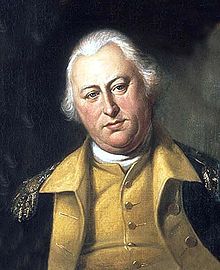
    General Benjamin Lincoln who led a force in 1787 to put down Shays’ Rebellion in western Massachusetts. (Painting by Charles Willson Peale)


    The organizer of that effort, right-wing activist Larry Ward, wrote that “the Obama administration has shown that it is more than willing to trample the Cons ution to impose its dictates upon the American people.”

    In recent weeks, this bogus narrative of the Framers seeking to encourage violence to subvert the peaceful and orderly process that they had painstakingly created in Philadelphia in 1787 also has been pushed by prominent right-wingers, such as radio host Rush Limbaugh and Fox News personality Andrew Napolitano

    Napolitano declared: “The historical reality of the Second Amendment’s protection of the right to keep and bear arms is not that it protects the right to shoot deer. It protects the right to shoot tyrants, and it protects the right to shoot at them effectively, with the same instruments they would use upon us.”

    The suggestion is that armed Americans must confront the “tyrannical” Barack Obama – the twice-elected President of the United States (and the first African-American to hold that office) – if he presses ahead seeking commonsense gun restrictions in the face of the massacre of 20 schoolchildren in Newtown, Connecticut, and hundreds of other horrendous incidents of gun violence.

    These “revolutionary” Americans have been persuaded that they are channeling the intent of the Framers who supposedly saw armed uprisings against the legally cons uted U.S. government as an important element of “liberty.”

    But that belief is not the historical reality. Indeed, the reality is almost the opposite. The Second Amendment was enacted so each state would have the specific right to form “a well-regulated militia” to maintain “security,” i.e. to put down armed rebellions.

    The Framers also made clear what they thought should happen to people who took up arms against the Republic. Article IV, Section 4 committed the federal government to protect each state from not only invasion but “domestic Violence,” and treason is defined in the Cons ution as “levying war against” the United States as well as giving “Aid and Comfort” to the enemy (Article III, Section 3).

    Second Amendment’s History


    The historical context of the Second Amendment also belies today’s right-wing mythology. At the time of the Cons utional Convention, the young nation was experiencing violent unrest, such as the Shays’ Rebellion in western Massachusetts. That armed uprising was testing the ability of the newly independent nation to establish order within the framework of a democratic Republic, a fairly untested idea at the time. European monarchies were predicting chaos and collapse for the United States.

    Among the most concerned about that possibility was General George Washington, who had sacrificed greatly for the birth of the new nation. After the British surrender at Yorktown in 1781 and their acceptance of American independence in 1783, Washington fretted over the inability of the states-rights-oriented Articles of Confederation, then governing the country, to deal with its economic and security challenges.

    Washington grew disgusted with the Articles’ recognition of 13 “independent” and “sovereign” states and the correspondingly weak central government, called not even a government, but a “league of friendship.”

    As Commander-in-Chief of the Continental Army, Washington had watched his soldiers suffer when various states reneged on their commitment to supply money and arms. After the war, Washington retired but stayed active in seeking reforms that would strengthen the central government’s ability to organize national commerce and to maintain order.

    His fears deepened in 1786 when Daniel Shays, a former Continental Army captain, led an uprising of other veterans and farmers in western Massachusetts, taking up arms against the government for failing to address their economic grievances.

    Washington received reports on the crisis from old Revolutionary War associates in Massachusetts, such as his longtime logistical chief, Gen. Henry Knox, and Gen. Benjamin Lincoln, who accepted the British surrender at Yorktown as Washington’s second in command. They kept Washington apprised of the disorder, which he feared might encourage renewed interference in American affairs by the British or other European powers.

    On Oct. 22, 1786, in a letter seeking more information about the rebellion from a friend in Connecticut, Washington wrote: “I am mortified beyond expression that in the moment of our acknowledged independence we should by our conduct verify the predictions of our transatlantic foe, and render ourselves ridiculous and contemptible in the eyes of all Europe.”

    In another letter on Nov. 7, 1786, Washington questioned Gen. Lincoln about the unrest: “What is the cause of all these commotions? When and how will they end?” Washington was especially concerned about the possibility of a hidden British hand.

    Lincoln responded: “Many of them [the rebels] appear to be absolutely so [mad] if an attempt to annihilate our present cons ution and dissolve the present government can be considered as evidence of insanity.”

    However, the U.S. government – under the Articles of Confederation – lacked the means to restore order. So wealthy Bostonians financed their own force under Gen. Lincoln to crush the uprising in February 1787. Afterwards, Washington remained concerned the rebellion might be a sign that European predictions about American chaos were coming true.

    “If three years ago [at the end of the American Revolution] any person had told me that at this day, I should see such a formidable rebellion against the laws & cons utions of our own making as now appears I should have thought him a bedlamite – a fit subject for a mad house,” Washington wrote to Knox on Feb. 3, 1787, adding that if the government “shrinks, or is unable to enforce its laws … anarchy & confusion must prevail.”

    Just weeks later, Washington’s alarm about Shays’ Rebellion was a key factor in his decision to take part in – and preside over – the Cons utional Convention, which was supposed to offer revisions to the Articles of Confederation but instead threw out the old structure entirely and replaced it with the U.S. Cons ution. The Cons ution shifted national sovereignty from the 13 states to “We the People” and dramatically enhanced the power of the central government.

    The key point of the Cons ution was to create a peaceful means for the United States to implement policies favored by the people but within a structure of checks and balances to prevent radical changes deemed too disruptive to the established order. For instance, the two-year terms of the House of Representatives were meant to reflect the popular will but the six-year terms of the Senate were designed to temper the passions of the moment (and senators were initially chosen by state legislatures, not the people).

    Within this framework of a democratic Republic – where peaceful change was possible though intentionally gradual – the Framers criminalized taking up arms against the government. But it was the Cons ution’s drastic expansion of federal power that prompted strong opposition from some Revolutionary War figures, such as Virginia’s Patrick Henry who spearheaded the Anti-Federalist movement.

    Prospects for the Cons ution’s ratification were in such doubt that its principal architect James Madison joined in a sales campaign known as the Federalist Papers in which he tried to play down how radical his changes actually were. To win over other skeptics, Madison agreed to support a Bill of Rights, which would be proposed as the first ten amendments to the Cons ution. The Bill of Rights was a mix of concessions, some substantive and some rhetorical, to both individual citizens and the states.

    The Second Amendment was primarily a right granted to the states. It read: “A well-regulated Militia, being necessary to the security of a free State, the right of the people to keep and bear arms, shall not be infringed.”

    Madison’s political maneuvering narrowly secured approval of the Cons ution in key states, such as Virginia, New York and Massachusetts. The First Congress then approved the Bill of Rights, which was ratified in 1791. [For more details on the Cons ution, see Robert Parry’s America’s Stolen Narrative.]

    Behind the Second Amendment


    As the preface to the Second Amendment makes clear, the concern was about enabling states to organize militias that could maintain “security,” which fit with the Cons ution’s goal of “domestic Tranquility” within the framework of a Republic.

    This concept was amplified by the actions of the Second Congress amid another uprising which erupted in 1791 in western Pennsylvania. This anti-tax revolt, known as the Whiskey Rebellion, prompted Congress in 1792 to expand on the idea of “a well-regulated militia” by passing the Militia Acts which required all military-age white males to obtain their own muskets and equipment for service in militias.

    At the time, Madison was in the U.S. Congress and Washington was in the presidency – with both supporting the new laws – so the “original intent” of the Framers could not be easily misunderstood.

    The right “to keep and bear arms” was always within the context of participating in militias – or today the National Guard – not as the right of individuals to possess devastating weapons that could be used to violently overthrow the U.S. government or to kill its officials. (The recognition of a collective – rather than individual right – was only reversed in 2008 when right-wing ideologues had gained control of the U.S. Supreme Court and then overturned longstanding legal precedents.)

    But if there was any doubt about how the actual Framers saw the Second Amendment, it was answered in 1794 when President Washington led a combined force of state militias against the Whiskey rebels in Pennsylvania. The revolt soon collapsed; many leaders fled; and two participants were convicted of high treason and sentenced to hanging, though Washington later pardoned them.

    Beyond this clear historical record – that the Framers’ intent with the Second Amendment was to create security for the new Republic, not promote armed rebellions – there is also the simple logic that the Framers represented the young nation’s aristocracy. Many, like Washington, owned vast tracts of land and favored domestic tranquility to promote economic development and growth.

    So, it would be counterintuitive – as well as anti-historical – to believe that Madison and Washington wanted to arm the population so the discontented could resist the cons utionally elected government. In reality, the Framers wanted to arm the people – at least the white males – to repulse uprisings, whether economic clashes like Shays’ Rebellion, anti-tax protests like the Whiskey Rebellion, attacks by Native Americans or slave revolts.

    Fabricated History


    However, the Right has invested heavily over the last several decades in fabricating a different national narrative, one that ignores both logic and the historical record. In this right-wing fantasy, the Framers wanted everyone to have a gun so they could violently resist their own government.
    To build that narrative, a few incendiary quotes are cherry-picked, taken out of context or invented. [See, for instance, Steven Krulik's compilation of such apocryphal references.]

    This “history” has then been amplified through the Right’s powerful propaganda apparatus – Fox News, talk radio, the Internet and ideological publications – to persuade millions of Americans that their possession of semi-automatic assault rifles and other powerful firearms is what the Framers intended, that today’s gun owners are fulfilling some centuries-old American duty.

    It should be noted, too, that Thomas Jefferson, one of the most radical-sounding (though hypocritical) leaders of the Revolutionary War, was not a Framer of the Cons ution. In 1787, when the do ent was written, he was the U.S. representative in France.

    There is also the obvious point that the Framers’ idea of a weapon was a single-shot musket that required time-consuming reloading, not a powerful semi-automatic assault rifle that could fire up to 100 bullets in a matter of seconds without the necessity to reload.

    However, people like Andrew Napolitano on the Right – as well as some dreamy revolutionaries on the Left – still suggest that the Framers enacted the Second Amendment so the firepower of people trying to overthrow the U.S. government and kill its agents would be equal to whatever weapons the government possessed.

    This crazy notion would be laughable if its consequences were not so horrible. The human price for this phony concept of “liberty” – and this bogus history – is the horrendous death toll that gun violence inflicts on American society, including the recent slaughter of those children in Newtown.

    Yet, instead of recognizing the actual history and accepting that the Cons ution was an attempt by the Framers to create a democratic process for peaceful change, today’s advocates of a violent revolution – whether from the Right or the Left – feed the paranoia and the ignorance of their followers.

    http://consortiumnews.com/2013/01/14...dment-madness/

  8. #158
    Veteran
    My Team
    San Antonio Spurs
    Join Date
    Mar 2009
    Post Count
    97,536
    You Know What The Founding Fathers Said About Your Right To Bear Arms?

    http://www.upworthy.com/you-know-wha...ms-this?c=upw1

  9. #159
    wrong about pizzagate TSA's Avatar
    My Team
    Sacramento Kings
    Join Date
    Feb 2007
    Post Count
    22,596
    You Know What The Founding Fathers Said About Your Right To Bear Arms?

    http://www.upworthy.com/you-know-wha...ms-this?c=upw1

    @ author Adam Mordecai

    "Adam Mordecai:
    I write stuff for Upworthy. I want my gay friends to be able to get married. I want my undo ented friends to gain citizenship. I want everyone to have healthcare. I want the media to do their job. And I want politicians to learn shame. Also, side note, I think Jon Stewart is some sort of oracle. You can find me on Twitter, like my stuff on Facebook, and read my long winded ranting on Quora."

    where do you find this and how are his long winded rants

  10. #160
    wrong about pizzagate TSA's Avatar
    My Team
    Sacramento Kings
    Join Date
    Feb 2007
    Post Count
    22,596
    wish I could post his pics from my phone

Thread Information

Users Browsing this Thread

There are currently 1 users browsing this thread. (0 members and 1 guests)

Posting Permissions

  • You may not post new threads
  • You may not post replies
  • You may not post attachments
  • You may not edit your posts
  •