


 Reply With Quote
Probable deaths are an estimate. Do you not know that a covid death doesn't have to test posotive for COVID-19?

You're getting your information from the CDC who openly states they cannot guarantee accuracy.
Probable deaths are an estimate. Do you not know that a covid death doesn't have to test posotive for COVID-19?
Death certs are wrong 50% of the time even without COVID. You have a reason to doubt a death cert just out of principle.

I'm not, I'm getting my information from the local counts, which then they transmit to the CDC. I don't trust the CDC in general, considering they were lagging in counts for a long ass time vis a vis the local counts (eventually they caught up).
Local counts include deaths marked as covid but have not tested positive for covid. Its the same issue
50% sounds like an exaggeration, link?. But even with minimal error, I have no reason to believe a medical prac ioner has any reason to fudge death certificates. The CDC is a different story.
You just tried to lie on this thread, so I'm going to put you on timeout until you had the chance to re-think why you openly lie.
I'll consider giving you some of my attention if I see you change your ways.
Source: NJ Spotlight analysis of data from the NJ Department of Health.
The number of people dead from COVID-19 in New Jersey is likely about 2,000 higher than the state had been reporting, as officials announced Thursday in their first count of probable deaths due to the virus.
During his daily media briefing, Gov. Phil Murphy announced that state health officials had combed through death data and are attributing an additional 1,854 deaths since March 4 — the day the first case was announced — to the novel coronavirus. On top of 26 new lab-confirmed deaths, the total number of New Jerseyans who have died as a result of the pandemic is now nearly 15,000
Reporting Issues
On a daily basis, we encounter an increasing number of reporting issues. Some of these include official governmental channels changing or retracting figures, or publishing contradictory data on different official outlets. National or State figures with old or incomplete data compared to regional, local (counties, in the US) government's reports is the norm, so we try to compensate by collecting the missing data and maintaining an accurate and timely count. -Worldometer
Thanks for the discussion, time for bed.
Results:
Of 601 original death certificates, 319 (53%) had errors; 305 (51%) had major errors; and 59 (10%) had minor errors. We found no significant differences by certifier type (physician vs nonphysician). We did find significant differences in major errors in place of death (P < .001). Certificates for deaths occurring in hospitals were more likely to have major errors than certificates for deaths occurring at a private residence (59% vs 39%, P < .001). A total of 580 (93%) death certificates had a change in ICD-10 codes between the original and mock certificates, of which 348 (60%) had a change in the underlying cause-of-death code.
https://www.ncbi.nlm.nih.gov/pmc/articles/PMC5692167/
Night!
As far as what you quoted, that's good. It's clear there are gaps in recording and transmission, and apparently whenever errors are found, data is corrected. That's the way it should be, so people can't go claiming they're largely bogus numbers.
A probable case or death is defined as:
A person meeting clinical criteriaAND epidemiologic evidence with no confirmatory laboratory testing performed for COVID-19;
A person meeting presumptive laboratory evidence AND either clinical criteria OR epidemiologic evidence;
A person meeting vital records criteria with no confirmatory laboratory testing performed for COVID-19.
Clinical Criteria
At least two of the following symptoms: fever (measured or subjective), chills, rigors, myalgia, headache, sore throat, new olfactory and taste disorder(s)
OR
At least one of the following symptoms: cough, shortness of breath, or difficulty breathing
*cdc also added runny nose and diarrhea*
Or you dont have to have any symptoms
Epidemiologic Linkage
One or more of the following exposures in the 14 days before onset of symptoms:
Close contact** with a confirmed or probable case of COVID-19 disease;
OR Close contact** with a person with:clinically compatible illness ANDlinkage to a confirmed case of COVID-19 disease.
Travel to or residence in an area with sustained, ongoing community transmission of SARS-CoV-2.Member of a risk cohort as defined by public health authorities during an outbreak.

This isn't a social science issue, dumbass. I don't know if social science means what you think it means. Also you didn't read the scientific paper that we are talking about, that i linked, you went to your facebook group to get some random bull , go back ask them to explain the paper to you, in their moonbat way
Last edited by Trainwreck2100; 06-26-2020 at 12:56 AM.
That's just Vermont though. (Conclusions: Error rates on death certificates in Vermont are high and extend to ICD-10 coding).
My understanding is that nationally it's much closer to 30%, and when reduced to actual diagnosis errors (which is what matter here), even lower.
Plus the point of error rates is moot, as it goes both ways, it could mean some deaths were marked as covid that were not, and the other way around (this why error rates are marked as plus minus). Thus, even if the error rate is 25%, that would put the death count between 100k and 160k. Neither number is really flattering.
Journal of the Medical Library Association : JMLA
Medical Library Association
How to write an original research paper (and get it published)
Always note limitations that matter, not generic limitations.
Point out unanswered questions and future directions. Give the big-picture implications of your findings, and tell your readers why they should care. End with the main findings of your study, and do not travel too far from your data. Remember to give a final take-home message along with implications
Ok the final take home message was they need more people for the study. Also how do you know what limitations were listed if you didn't read the paper. Also if you wouldn't mind please explain why you used a social science rubric to prove your point.
Last edited by Trainwreck2100; 06-26-2020 at 01:28 AM.
I await your facebook group's response
Just giving you multiple sources. S.a. have limitations and future research direction.
You were wrong. Its ok
.
/
from usc, no hyperlink and you expect me to take your word on it. And what does that have do to with the facebook group which is what you quoted, also why did you link a social science rubric to back up your point
Last edited by Trainwreck2100; 06-26-2020 at 02:00 PM.
You dont have to take my word for it. Thinking that published research doesn't have limitations or future implications is your error not mine. You can keep posting. I'll watch
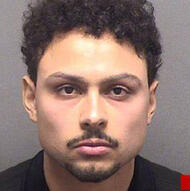
Metro Health director cracks.
Metro Health director resigns as COVID-19 cases surge in San Antonio
https://www.ksat.com/news/local/2020...n-san-antonio/
There's no reason to believe Vermont has inherently flawed death cert recording that es it above other states. "No significant differences by certifier type. It stands to reason that if there are no significant difference between doctor vs non doctor, then state by state wouldn't be the deciding factor.
https://pubmed.ncbi.nlm.nih.gov/23588178/
Does Quality Control of Death Certificates in Hospitals Have an Impact on Cause of Death Statistics?
Interpretation: The continuous correction of death certificates in the hospital was important for adjustments at the individual level and as a quality control of cause of death statistics, but had only minor effects on the general statistics from the hospital.
The point is that death certificates are quite often wrong, and so to use numbers as a concrete proof for anything without first questioning and verifying the veracity of the numbers is to begin going down the wrong road. Bad data leads to bad conclusions.
Last edited by DMC; 06-26-2020 at 05:37 PM.
Great news
There are currently 1 users browsing this thread. (0 members and 1 guests)
 Posting Permissions