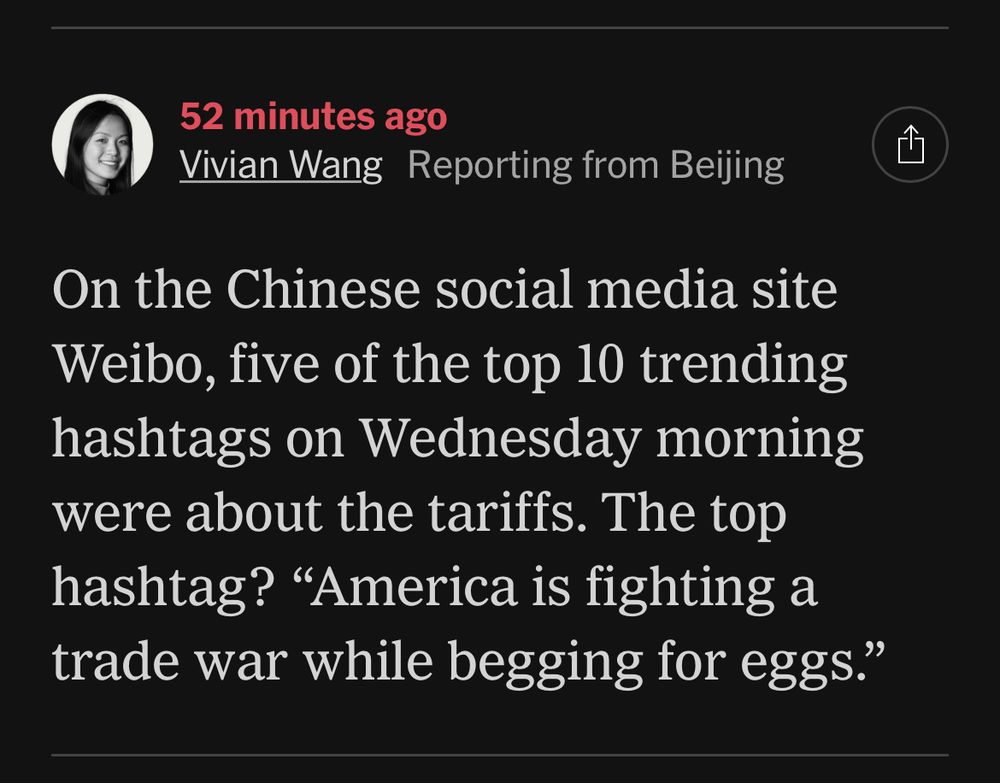
Reply With Quote
be a shame if everyone started doing this
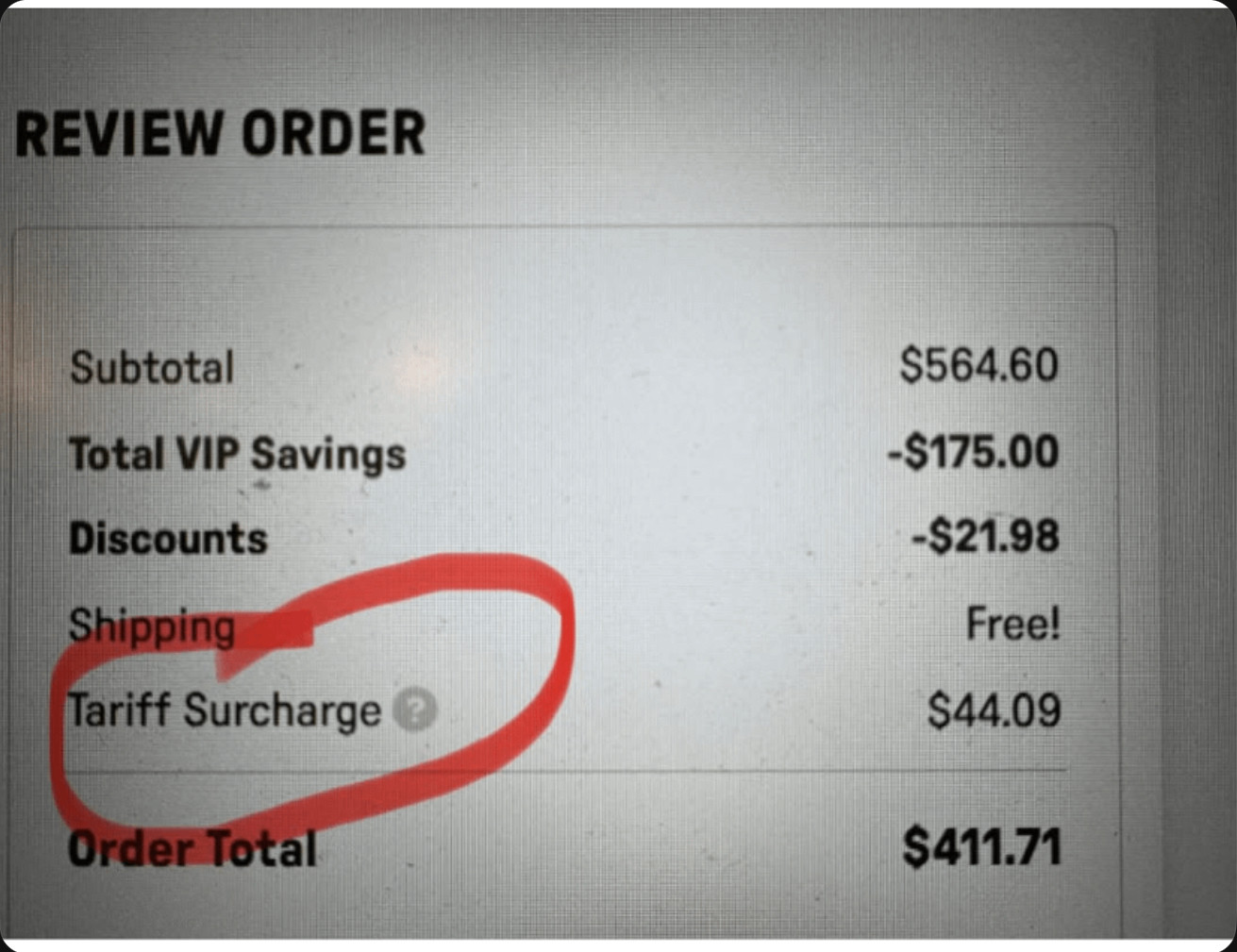

I wouldn't even deal with them here-on-out. Shut it down, kick 'em out of the U.S...no trade war. No tradePERIOD

be a shame if everyone started doing this
sure this sounds bad but remember this nation was founded on the principle of cheerfully tolerating large surtaxes on imported goods

not such a good number for the US oil patch
last year's breakeven price was estimated at ~$62/bbl for WTI

should be interesting just for the vote, Trump would of course veto

losing the US Chamber of Commerce would be a measure of how extreme and unhinged Trump's policy is
https://fortune.com/2025/04/07/chamb...iberation-day/The U.S. Chamber of Commerce, which represents millions of U.S. businesses big and small but which is heavily funded by industry ans, has been weighing taking the tariff battle to the courts and is being urged to do so by some of its largest members. The move would effectively provide cover for companies distressed about the tariffs’ impact on their businesses but fearful of incurring the President’s wrath by openly criticizing his trade policy.
Chamber of Commerce spokesperson Matt Letourneau declined to comment. The White House did not immediately respond to a request for comment.
As he should.
He's all in now, finally!
large differences in tariff rates will incentivize evasion
interesting historical examples in the article
https://mileskellerman.substack.com/...tariff-evasionIf you normally reroute through Vietnam, why not shift your operations to the Philippines where the rate is 26% lower? These are enormous differences, more than enough to justify the trouble of building new contacts and shifting your goods across the South China Sea. You are, of course, still worse off than before, as the new tariff on Philippine imports is now effectively 27% (17% + 10% baseline). If you really want to minimize your import tax exposure, you might go through, say, East Timor, which escaped Trump’s formula with no added tariffs.
Rerouting is, of course, easier said than done. There are variations in enforcement practices and new risks to consider. But if pre-revolutionary French smugglers could do it, so can the world’s modern criminal organizations. And it is worth repeating just how fat the margins are here. Evading, say, a 5% tariff might not be worth the risks of bribing Malaysian customs officers. But when we start talking about 20, 25, 30% differences, the calculation changes.
We can reasonably expect, then, that Trump’s tariffs will trigger dramatic shifts in the illicit market for tariff evasion. This is a problem for the administration, as successful evasion deprives the U.S. of customs revenue and distorts the intended impact of the tariffs (which appears to be trade rebalancing).21 The natural solution is enforcement. Like the French monarchy, Trump can wage war on smuggling. But does the U.S. really have the capacity to enforce these tariffs? And can they still rely on allies — many of whom have also been hit with tariffs — to help?
For smugglers, this is all very good news. By employing a crude formula to determine country-by-country tariffs, the Trump administration has created a new and exciting market for evasion arbitrage. The U.S. lacks the capacity to monitor its own imports, let alone transshipment occurring via third countries. And, even better, it has angered the very allies whose help is needed to enforce these levies.

The ST avocado smuggler said this couldn't happen like when he smuggled avocados.

https://www.cnbc.com/2025/04/09/walm...p-tariffs.htmlWalmart says Trump tariffs could hit quarterly profits as it tries to keep prices low
DALLAS — Walmart
on Wednesday scrapped its outlook for operating income in the first quarter, citing uncertainty about the potential impact of sweeping tariffs on China, Vietnam and other key sources of goods across the globe.
In a news release, the discounter said it wants to “maintain flexibility to invest in price as tariffs are implemented.” It said it widened the operating guidance for the fiscal first quarter, but did not provide a new range for first-quarter operating income. It had projected an increase of 0.5% to 2.0% in adjusted operating income in the fiscal first quarter.
Walmart maintained its first-quarter sales outlook of 3% to 4% growth.
In an investor presentation on Wednesday, Chief Financial Officer John David Rainey said “operating income has been harder to predict and we’ve widened our internal range of scenarios, given the current backdrop.”
Rainey said Walmart is “still working through what this [new tariff environment] means for us.” About two-thirds of what Walmart sells in the U.S. is made, grown or assembled in the U.S., he said. The third that Walmart imports comes from across the globe, he said, but China and Mexico are the “most significant.”
...
It's truly incredible that Biden actually passed a law to open the door to a new era of high tech, high margin US manufacturing, and Trump is just like, "Bring back the sweatshops"
https://www.bbc.com/news/articles/cedyyll7467oCanada hits back at US car tariffs with reciprocal measures
Canada says it has started imposing a 25% tariff on certain vehicle imports from the US, retaliating against a similar measure from its neighbour.
The tariffs - or import taxes - will be paid by Canadians who buy some automobiles or their parts from the US.
Confirming that the new taxes would apply after midnight on Wednesday, Canadian Finance Minister Francois-Philippe Champagne said his country was responding to "unwarranted and unreasonable" tariffs.
After returning to power, US President Donald Trump has unleashed a raft of these taxes - which apply globally and specifically aim at some of his top trading partners, including Canada. He claims they will address unfairness in global trade.
Canada was not directly hit by the new swathe of American tariffs - which also came into force at midnight - but Ottawa was already in a row with Washington over Trump's pre-existing policies, which tax a range of items brought across the border.
"We'll protect our workers, our businesses, and our economy," Champagne wrote on X, as he confirmed the start of the retaliatory Canadian measures.
...
https://www.bbc.com/news/articles/c5yrr0e7499oTrump tariffs spark US government debt sell-off
Confidence in the US economy is plummeting as investors dumped government debt amid growing concerns over the impact of Donald Trump's tariffs.
Governments sell bonds - essentially an IOU - to raise money from financial markets for public spending and in return they pay interest.
The US does not normally see high interest rates on its debt as its bonds are viewed as a safe investment, but on Wednesday rates ed sharply to touch 4.5%.
The rise came after Trump pressed ahead with sweeping tariffs on goods being imported into the US, while Washington's trade war with China escalated further.
After the US implemented a 104% tariff on products from China at midnight on Wednesday, Beijing hit back with 84% levy on American products.
Stock markets have been falling sharply over the past few days in reaction to the escalating global trade war and fears of tariffs leading to higher prices.
However, the sale of bonds in the US poses a major problem for the world's biggest economy.
...
https://www.cnbc.com/2025/04/09/trum...-sell-off.htmlInvestors flee to German bonds as Trump tariffs spark Treasury sell-off
...
Germany bucked the trend as its 10-year bund, seen as a benchmark for the euro zone, traded 7 basis points lower.
Shorter-dated bonds in Europe meanwhile rose in value. The yields on 2-year government bonds in France, Italy and Britain were 9, 6, and 4 basis points lower, respectively. The yield on Germany’s 2-year bunds
“One factor people are speculating about on Treasurys is around the ongoing theme of a move away from the U.S. dollar, of it becoming less trusted,” Ken Egan, senior director for sovereigns at credit rating analysis agency KBRA, told CNBC in a call on Wednesday. “If you follow that through, one way that could manifest is structural holders of debt, reserve managers in China, could move away from Treasurys in response to policy moves from the U.S.”
Egan added that secondary investors also appeared to be taking a step back from U.S. Treasurys, typically seen as a traditional safe haven assets, given the volatile geopolitical climate.
“Various forces are at odds, because you have inflationary concerns and a rapid repricing of Treasurys on those, but on the other side you have weak demand and growth, and more rate cuts being priced in,” he told CNBC.
...

We voted for the biggest idiot in the room to sit down at the poker table and play with our money. And we can all see each other's hands.
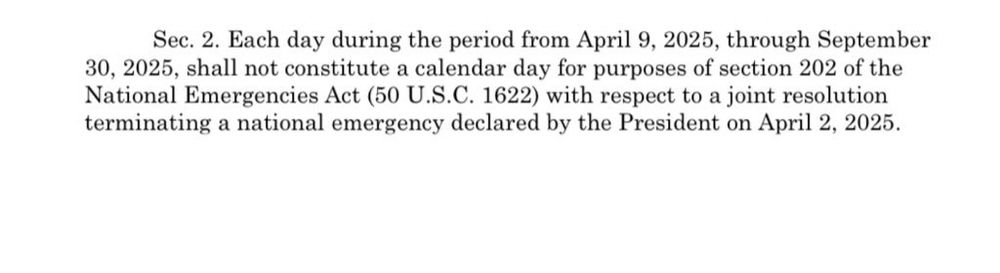
"from now until October is only one day"
if this amendment is included in the big spending bill, tariffs can't be removed by Congress until the fall
Oh look, snacks jumped at the chance to be racist.
Could not be any more predictable

Why didn't he just start by asking for trade negotiations with his great friend Xi?
He did. That didn't work so he laid another 20% on 'em today.
There are currently 8 users browsing this thread. (0 members and 8 guests)
 Posting Permissions