Reply With Quote

Blake swallowing the Chinese propaganda in full like the idiot he is
Inside China's decision to come to the table on Trump tariffs
"After Trump's "Liberation Day" tariffs, Chinese Commerce Minister Wang Wentao quietly reached out to his U.S. counterpart, Howard Lutnick, but was rebuffed as not senior enough, according to one official familiar with the exchanges.
Trump has been pushing for direct talks with Chinese President Xi Jinping. But China has rejected that idea as not in keeping with its traditional approach of working out the details first before the leaders sign any deal, according to public statements by both sides.
Another significant factor for China was Trump's public berating of Ukrainian President Volodymyr Zelenskiy in February, said one of the sources, adding that any unscripted hostile interaction between the U.S. and Chinese leaders would represent an unacceptable loss of face for Xi.
As messaging on both sides grew more conciliatory, China decided to put forward its vice premier and Xi confidant He Lifeng, whose direct predecessor struck the "Phase One" trade deal with the U.S. in 2019.
The move satisfied Washington's demands for substantive talks with a senior official with direct access to Xi, but avoided exposing the Chinese leader to potential embarrassment, said one of the sources."
"Among the main drivers of Beijing's climb-down were internal signals that Chinese companies were struggling to avoid bankruptcies and to replace the U.S. market, three people familiar with the Chinese government's thinking said.
Some areas feeling immediate impact were furniture and toy makers, as well as textiles, said one of the officials.
U.S. diplomats in China have also been closely monitoring factory closures, strikes, and job losses in the industrial heartland in southern China.
Many analysts have downgraded their 2025 economic growth forecasts for China, and investment bank Nomura has warned the trade war could cost it up to 16 million jobs. China's central bank this week announced fresh monetary stimulus.
One of the officials said Chinese companies were struggling to replace the U.S. market because developing nations cannot buy as many items, and that for many firms this was an existential threat that needed to be resolved in days or weeks."
https://www.reuters.com/world/inside...fs-2025-05-09/


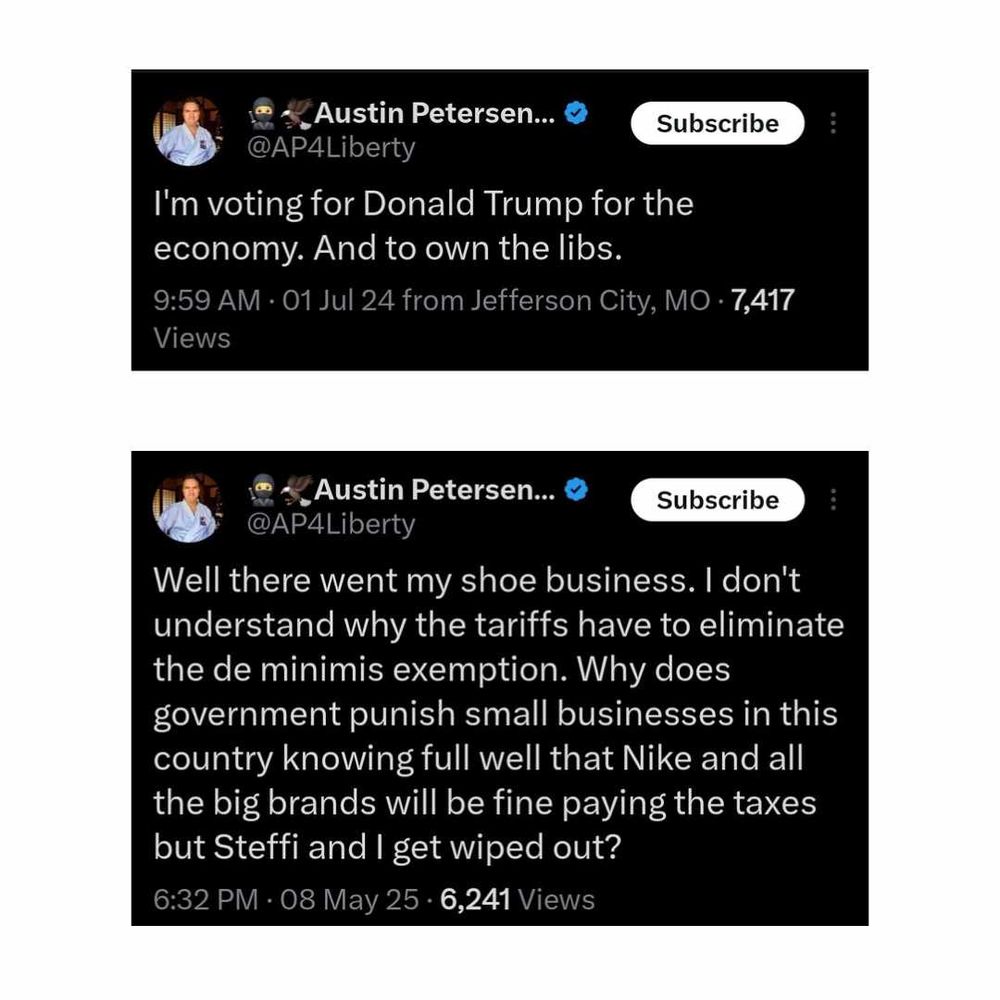

 what are you smoking?