Page 2 of 11 FirstFirst 123456 ... LastLast
Results 26 to 50 of 260
  1. #26
    I Got Hops Extra Stout's Avatar
    My Team
    San Antonio Spurs
    Join Date
    Dec 2004
    Post Count
    13,614
    The laws of physics, ultimately must be obeyed.

    40mpg 2.5 to 3 ton vehicle is not at all feasible in the near future.

    However, if the govt. would ease up on some of the safety restrictions on cars, VERY light vehicles, with minimum power requirements would result. It ridiculous that I can go buy a motorcycle, which obviously haw NO seatbelt, bumpers, etc...but if someone puts a third and fourth wheel on that ride, I need not only belts, but side impact protection (big heavy steel bars), and a bank of airbags to boot!
    It seems to me that a fair number of the safety requirements we've adopted in the last 10 years came in order to compensate for the proliferation of 6000-lb SUV with bumpers that bash into your head if you're driving a normal car.

  2. #27
    i hunt fenced animals clambake's Avatar
    My Team
    Dallas Mavericks
    Join Date
    May 2006
    Post Count
    25,321
    very good scott.

    i should have been a bit more clear with my question because it was spawned from all the nonsense being spewed by republican senators.

    everyone thinks that free range drilling will give specific relief to american consumers. we all know this is a hoax. it would all be produced for the world market and american consumers would have to foot the bill for materials, construction, labor, housing, transportation, distribution...you name it.

    it would be better for struggling americans if other countries did the drilling and foot the bill, because it will have no effect on american oil indepedence.

  3. #28
    Homer 2centsworth's Avatar
    My Team
    San Antonio Spurs
    Join Date
    Nov 2004
    Post Count
    8,677
    Absolute piece of cake.

    Your 2012 Chevy Tahoe:


  4. #29
    I am that guy RandomGuy's Avatar
    My Team
    San Antonio Spurs
    Join Date
    Jun 2005
    Post Count
    51,121
    (reads 101A and Extra Stout)

    I guess I am not alone in thinking that.

    One thing that would easily improve actual gas mileage for the entire USA, as well as reduce automotive fatalities:

    Go back to 55mph national speed limit.

    Engines, from what I understand from my brother in law who is smart and has actually studied engine design/engineering, have to be designed with ONE optimal speed. In US cars that speed is usually around 45-55 mph. This is usually what is estimated to be the average speed that the car will be driven at.

  5. #30
    I Got Hops Extra Stout's Avatar
    My Team
    San Antonio Spurs
    Join Date
    Dec 2004
    Post Count
    13,614
    it would be better for struggling americans if other countries did the drilling and foot the bill, because it will have no effect on american oil indepedence.
    For example the blue-eyed sheiks of the United Albertan Emirates.

  6. #31
    Homer 2centsworth's Avatar
    My Team
    San Antonio Spurs
    Join Date
    Nov 2004
    Post Count
    8,677
    very good scott.


    everyone thinks that free range drilling will give specific relief to american consumers. we all know this is a hoax. it would all be produced for the world market and american consumers would have to foot the bill for materials, construction, labor, housing, transportation, distribution...you name it.
    please be more specific. Where do you come up with American consumers paying for the business expenses?

  7. #32
    Veteran
    My Team
    Denver Nuggets
    Join Date
    Mar 2006
    Post Count
    12,134
    I have no idea where this came from but it was emailed to me this morning.

    President Reagan liked to say, "There are no easy answers, but there are simple ones." This principle applies to America's energy woes. Since the Democrats took control of Congress in January 2007, the price of a gallon of gas has soared from $2.33 per gallon to over $4. Furthermore, over the next two decades, global demand for oil is expected to rise by 50%, meaning that further price escalation is almost inevitable. When confronted by these facts, the energy solution - as President Reagan would say - is simple. We need more energy! We should be increasing our production of oil, natural gas, clean coal, and nuclear power – and those resources should come from America, instead of foreign dictatorships. Unfortunately, enacting this agenda won't be easy. The Democratic Leadership in Congress is determined to "punish" energy companies with new taxes, even if the greatest victim of those taxes is the American consumer.

    The Democratic nominee for President, Senator Barack Obama, is eager to burden oil producers with a "windfall profits tax" - a euphemistic phrase that implies an undue or undeserved "profit." As Alan Greenspan once said, "Whatever you tax, you get less of." By raising taxes, and thereby, reducing the incentives to produce energy, the consequences of this policy are obvious: we will end up with a smaller supply of domestic energy. But don't just take my word for it; take a look at history. In 1980, Congress passed a "windfall profits tax" and the consequences were devastating. In the six years following that levy, domestic oil production dropped by 1.26 billion barrels and imports of foreign oil rose 13%. The "windfall profits tax" was an unmitigated disaster, which is precisely why it was repealed. We shouldn't make that same mistake again.

    Instead of searching for scapegoats, we should be striving to create a bold, comprehensive plan for America's energy security in the 21st century. Specifically, this will require overturning literally decades of Big-Government regulations that have prevented energy companies from tapping America's bountiful natural resources. So many people in Washington have grown accustomed to the idea that we must either import oil from the Middle East or make an expensive transition toward homegrown fuels like corn-based ethanol. This is a false choice. One of the best kept secrets in politics today is that our country is one of the richest energy nations in the world, and is extremely capable of achieving energy independence - but only if we have the willpower to do it.

    When investigating America's assortment of energy problems, a common theme starts to emerge: the more you look around, the more you'll find government taxes, regulations, and subsidies that distort the market, raise prices, and increase our dependence on dictators thousands of miles away.

    In May I joined my Senate Republican colleagues to introduce legislation that would go a long way toward solving our energy problems. How? By increasing the supply through development of our own natural resources. Our bill, The American Energy Production Act of 2008, will remove unnecessary government barriers to domestic energy production.

    The most obvious example of unnecessary federal interference is the ban on oil production in the Arctic National Wildlife Refuge. Despite its lofty name, ANWR is not all a pristine Eden. Rather, the area that would be drilled is a frozen tundra where temperatures can reach 70 degrees below zero in the winter. As even the Washington Post admitted, ANWR "is one of the bleakest, most remote places on this continent, and there is hardly any other where drilling would have less impact on the surrounding life." In 1995, the Republican Congress passed legislation to open ANWR - which is estimated to contain 10.4 billion barrels of oil - for energy production. But President Clinton vetoed our bill. If he had signed it, today America would be producing almost enough oil to replace all of our daily imports from Saudi Arabia. By consistently blocking ANWR production, we are failing to help America become less dependent on foreign imports for basic economic needs.

    But the problem goes beyond ANWR. Current federal law prevents oil and gas production in the deepwaters off the Atlantic and Pacific Coasts. These laws, which were first passed in 1981 when the price of oil was $35 per barrel, were a luxury at the time, but today, given America's growing energy needs, they are indefensible. The fact is, these areas, along with another energy-rich section of the Gulf of Mexico, could contain as much as 115 billion barrels of oil - which is greater than Venezuela's current reserves - and 565 trillion cubic feet of natural gas - which is greater than the combined reserves of Iraq, China, Yemen, Oman, Nigeria, and Venezuela. Federal laws also prevent us from exploiting one trillion barrels of shale oil in Colorado, Wyoming, and Utah - an amazing amount that is three times what Saudi Arabia has on reserve. Our bill, The American Energy Production Act of 2008, would allow us to tap these resources with environmental safeguards.

    As conservatives, we must unite to repeal one of the most misguided policies of the last decade - government mandates to increase the production of corn-based ethanol. These policies - which give incentives to farmers to divert their plantings from other crops to corn in order to produce ethanol - have been robbing the world of one of its most important sources of food.

    Since February 2006, the shift in farming habits has caused the price of corn, wheat and soybeans to increase by more than 200%. Rising food prices are hitting the pockets of lower-income Americans and people who live on fixed incomes. Food riots are breaking out in some parts of the globe, and relief organizations are facing gaping shortfalls as the cost of food outpaces their ability to provide aid for 800 million people.

    I have introduced legislation that would freeze the corn-based biofuel mandate at current levels, instead of steadily increasing it through 2015, which is the present policy. This is a commonsense measure that will reduce pressure on global food prices and restore balance to America's energy policy.

    The rush to embrace corn-based biofuels stemmed from a belief that America must increase its use of alternative fuels to reduce our dependence on foreign oil. But if that's the mission - and it's a worthy one -we must embrace more economically-viable energy sources such as solar power, wind power, and especially nuclear power - which, in addition to being a reliable and affordable energy source, emits almost no carbon gasses. The best way to broaden our energy portfolio is through American ingenuity, not Washington bureaucracy.

    On all of these energy-related issues - preventing tax hikes, reducing government regulations, repealing mandates, and accelerating innovation - the American people are solidly behind us. The Democrats, however, have an ace up their sleeves - or so it seems. They feel empowered to challenge plans to increase supply - instead preferring to demagogue the profits of oil companies.

    In 2007, the oil industry's profit margins were 7.6 percent of revenues, which is not much higher than the 5.8 percent profit margin for all U.S. manufacturing. In fact, if you exclude the financially troubled auto industry, the oil industry actually appears less profitable than most manufacturers, which are earning 9.2 cents on every dollar of sales. America's energy problem isn't oil company profits; it's a changing global energy market - in which demand is surging while supply is remaining largely stagnant. As President Reagan might say, the simple solution is to increase the domestic energy supply to lower prices - precisely the opposite of what the Democrats are advocating.

    Conservatives are well poised to lead a pro-growth energy program that could create millions of jobs and secure our economy. But wherever possible, we should look for allies across the political spectrum. We can find allies among national security Democrats who understand that energy independence is a vital component of winning the War on Terror. We could also find friends in the environmental community, where concerns over corn-based ethanol and the carbon emissions necessary to produce it have grown considerably. Respect for nuclear power has also accelerated.

    This year, we will spend about $500 billion to import oil. All of those dollars should stay here in America, instead of being sent to corrupt regimes that are hostile to our interests. We need energy for Americans by Americans, and we need it now. At a time when conservatives are playing defense on so many issues, energy is one issue where we can go on offense and win. Victory would be good for our party, and better yet, it would be good for our country

  8. #33
    I am that guy RandomGuy's Avatar
    My Team
    San Antonio Spurs
    Join Date
    Jun 2005
    Post Count
    51,121
    However, if the govt. would ease up on some of the safety restrictions on cars, VERY light vehicles, with minimum power requirements would result. It ridiculous that I can go buy a motorcycle, which obviously haw NO seatbelt, bumpers, etc...but if someone puts a third and fourth wheel on that ride, I need not only belts, but side impact protection (big heavy steel bars), and a bank of airbags to boot!
    I concur.

    Heh, but make the drivers wear helmets?

    I think such cars WILL be around, especially as US cities WILL get more dense. Really small cars make a lot of sense if you don't have to drive 15 miles to get to the grocery store. (RG thankfully only has to drive 1/3 of a mile to his local grocery store)

  9. #34
    I Got Hops Extra Stout's Avatar
    My Team
    San Antonio Spurs
    Join Date
    Dec 2004
    Post Count
    13,614
    (reads 101A and Extra Stout)

    I guess I am not alone in thinking that.

    One thing that would easily improve actual gas mileage for the entire USA, as well as reduce automotive fatalities:

    Go back to 55mph national speed limit.

    Engines, from what I understand from my brother in law who is smart and has actually studied engine design/engineering, have to be designed with ONE optimal speed. In US cars that speed is usually around 45-55 mph. This is usually what is estimated to be the average speed that the car will be driven at.
    This gets back to worldview. I've slowed down to 60-65 and I keep right without the government telling me what to do. I don't need the government to tell me to slow down. Neither do the other people on the road who have slowed down. If the yahoos (usually in pickup trucks) want to spend the extra money to go 80, let them.

    People aren't going to slow down to 55 because the government passes a law. Never have, never will. They'll slow down because it saves them a measurable amount of money that they want or need to save.

    All the liberal so-called solutions to get people to stop buying gas-guzzling SUV's couldn't do in ten years what $4 gas did in one month.

  10. #35
    Homer 2centsworth's Avatar
    My Team
    San Antonio Spurs
    Join Date
    Nov 2004
    Post Count
    8,677
    (reads 101A and Extra Stout)

    I guess I am not alone in thinking that.

    One thing that would easily improve actual gas mileage for the entire USA, as well as reduce automotive fatalities:

    Go back to 55mph national speed limit.

    Engines, from what I understand from my brother in law who is smart and has actually studied engine design/engineering, have to be designed with ONE optimal speed. In US cars that speed is usually around 45-55 mph. This is usually what is estimated to be the average speed that the car will be driven at.

    restricting freedom even more shouldn't be a solution.

  11. #36
    Displaced 101A's Avatar
    My Team
    San Antonio Spurs
    Join Date
    Apr 2005
    Post Count
    7,711
    Absolute piece of cake.

    Your 2012 Chevy Tahoe:

    Even this is only getting 25 - 30 mpg.

    Here's your Tahoe:


  12. #37
    I Got Hops Extra Stout's Avatar
    My Team
    San Antonio Spurs
    Join Date
    Dec 2004
    Post Count
    13,614
    I concur.

    Heh, but make the drivers wear helmets?

    I think such cars WILL be around, especially as US cities WILL get more dense. Really small cars make a lot of sense if you don't have to drive 15 miles to get to the grocery store. (RG thankfully only has to drive 1/3 of a mile to his local grocery store)
    City cars all meet the Euro NCAP.

  13. #38
    I Got Hops Extra Stout's Avatar
    My Team
    San Antonio Spurs
    Join Date
    Dec 2004
    Post Count
    13,614
    Even this is only getting 25 - 30 mpg.

    Here's your Tahoe:

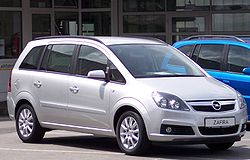
    With the 1.9 diesel the Zafira gets 38 combined.

  14. #39
    Homer 2centsworth's Avatar
    My Team
    San Antonio Spurs
    Join Date
    Nov 2004
    Post Count
    8,677
    Now you guys are exagerrating. My Toyota Matrix is twice the size of that Zafira and gets 36mpg.

  15. #40
    Displaced 101A's Avatar
    My Team
    San Antonio Spurs
    Join Date
    Apr 2005
    Post Count
    7,711
    It seems to me that a fair number of the safety requirements we've adopted in the last 10 years came in order to compensate for the proliferation of 6000-lb SUV with bumpers that bash into your head if you're driving a normal car.
    To a certain extent, yes, but the safety rules have come in a pretty steady stream since the early sixties.

    Doesn't explain the existence of motorcycles, however.

  16. #41
    I am that guy RandomGuy's Avatar
    My Team
    San Antonio Spurs
    Join Date
    Jun 2005
    Post Count
    51,121
    I have no idea where this came from but it was emailed to me this morning.
    That whole bit of relaxing oil drilling restrictions would have similar results to scott's #3 proposal, or tax breaks for oil companies:

    (click on the little arrow to jump)
    What the email you posted misses is it is actually CHEAPER to increase energy efficiency than it is to increase the energy supply. "Supply side" economics writ large on energy policy end up costing the economy more in the long run.

    This is where Europe is a step ahead of us. Like it or not, they taxed the out of gasoline after the OPEC embargo, and used that money to build mass transit. Their economies, though higher energy prices, are much more "energy efficient" than ours in terms of energy used per unit of GDP.

  17. #42
    Displaced 101A's Avatar
    My Team
    San Antonio Spurs
    Join Date
    Apr 2005
    Post Count
    7,711
    With the 1.9 diesel the Zafira gets 38 combined.
    Didn't realize it was an oil burner.

    1/2 ton diesel would be a good thing. Been rumors GM's been working on one. We'll see.

  18. #43
    I am that guy RandomGuy's Avatar
    My Team
    San Antonio Spurs
    Join Date
    Jun 2005
    Post Count
    51,121
    (RG thankfully only has to drive 1/3 of a mile to his local grocery store)
    Nobody picked up on this. I should be walking at that distance... 6 minutes at normal speeds. Doctor says I need more exercise.

  19. #44
    I Got Hops Extra Stout's Avatar
    My Team
    San Antonio Spurs
    Join Date
    Dec 2004
    Post Count
    13,614
    Now you guys are exagerrating. My Toyota Matrix is twice the size of that Zafira and gets 36mpg.
    They're roughly the same size.

  20. #45
    I Got Hops Extra Stout's Avatar
    My Team
    San Antonio Spurs
    Join Date
    Dec 2004
    Post Count
    13,614
    Nobody picked up on this. I should be walking at that distance... 6 minutes at normal speeds. Doctor says I need more exercise.
    Oh, I picked up on it, but it depends whether you're picking up 3 or 4 things, or a full week's worth of groceries. If you make a special car trip of 1/3 mile, to pick up a carton of milk and some eggs... wow. I always walk or bike that and always have.

  21. #46
    Displaced 101A's Avatar
    My Team
    San Antonio Spurs
    Join Date
    Apr 2005
    Post Count
    7,711
    Now you guys are exagerrating. My Toyota Matrix is twice the size of that Zafira and gets 36mpg.
    The Smart for Two (the smallest of the cars discussed) gets 33 city 41 highway.

  22. #47
    I Got Hops Extra Stout's Avatar
    My Team
    San Antonio Spurs
    Join Date
    Dec 2004
    Post Count
    13,614
    The Smart for Two (the smallest of the cars discussed) gets 33 city 41 highway.
    And there's a difference between the EPA numbers and personal results. The EPA revised its tests recently to reflect the more aggressive and less efficient American driving style. If you drive smoothly, keep a constant speed, accelerate gently, coast to red lights rather than braking abruptly, etc., you'll exceed the EPA estimate. I went from 21 mpg to 26 mpg in my beat-up old Taurus simply by changing my driving style. Well, that and the A/C went out and I never bothered to fix it.

  23. #48
    Homer 2centsworth's Avatar
    My Team
    San Antonio Spurs
    Join Date
    Nov 2004
    Post Count
    8,677
    They're roughly the same size.
    I fit 4 people comfortably and have ample trunk space.

  24. #49
    Veteran scott's Avatar
    My Team
    San Antonio Spurs
    Join Date
    Apr 2003
    Post Count
    20,555
    I will be at the coast all weekend catching some food, and I won't be able to get a very detailed response until then... But I wanted to provide a brief (required because this is a blackberry post likely full of spelling and grammar errors) response to the 40 mpg tahoe.

    Let's think outside of the 8 cylinder combustion engine. 40 mpg is only impossible if you limit yourself to existing technology.

    Have a nice weekend

  25. #50
    i hunt fenced animals clambake's Avatar
    My Team
    Dallas Mavericks
    Join Date
    May 2006
    Post Count
    25,321
    this morning i paid $4.76 a gallon and diesel was priced at $5.22 a gallon.

Thread Information

Users Browsing this Thread

There are currently 1 users browsing this thread. (0 members and 1 guests)

Posting Permissions

  • You may not post new threads
  • You may not post replies
  • You may not post attachments
  • You may not edit your posts
  •