


 Reply With Quote
I'd like to hear Lumpy first.

Please don't run away from your own claims.
Power grids, much like any other network that requires substantial uptime, are designed with redundancy in place from the get go. You bring up stuff that has been dealt with a long time ago.
No engineer would ever design a grid with a majority of unreliable power sources without some sort of redundancy system. This is basic stuff.
If that's what you're scared of, then sleep easy. We'll never have such a grid.
I'd like to hear Lumpy first.

Which have the underlying premise that we start using and relying on wind a great deal. Far more than we do today.
If we have to have to build redundant power for something that can be unpredictable, then why build it at all?

I think there's a problem with your logic; you're assuming that we replace gas power (which you believe/assume/know/whatever is more reliable) with wind power, whereas the point most seem to be making is to call for MORE windpower to augment our power generation.
We can keep a baseline of gas generation for reliability, and use solar/wind to add to our power requirements more cleanly than adding more gas.
At the expense of building two power plants instead of one, and subsidizing the less cost effective one.
Real good accounting practices.
Where is my logic failing me?
Using and relying are two completely different things.
You could use a cheaper/cleaner/more effective method of harvesting energy, even if unreliable. It reduces the need for other sources to create the same energy. Now, reducing doesn't imply replacing.
Because it's cost effective for them to do so. If harvesting from wind/solar is more efficient for them as a complementary power source, then why wouldn't they do it?
That said, it doesn't mean that they would switch to those as reliable power source. That's a completely inane proposition.
Gas might be more cost-effective now in certain cir stances, but in the long run it's debatable. There's also the fact that perhaps increasing the current gas generation would require certain expenses that can simply be more-cost effective to do with wind/solar (IE: increasing only peak-time, increasing on a smaller scale than a full blown new gas plant, etc)
Depends on what your timeframe is, and your determination of cost. The two big benefits of wind, which are why it has proponents are:
Wind is essentially an eternal power source (as long as your equipment is working), coal/fossils obviously aren't
Wind is (for the purposes of this convo) cleaner, introducing less pollution
An added bonus is that we don't have to worry about the governments of foreign countries producing windpower for us.
I don't debate against that. My problem referring to those items is that the industry will use such technologies without subsidies when they become cost effective, and natural gas has little emissions to work about.
We shouldn't be wasting money.

For someone who constantly sings the praises of the free market you seemed to be bent on stopping wind power when the free market wants to go in that direction.
Its sad how you keep trying to manipulate either the argument or facts in order to suit your desires.
My rebuttal would be that, if alt power is too expensive, then it is likely that gas companies would continue to use gas until it became too expensive to use. But by that time we realized we were close to tapping out gas reserves, it would be too late to create these alternative forms of energy fast enough (let alone troubleshooting issues related to them) to supply the power grid.
If anything, one could classify that as a national security issue. Developing and diversifying in alternate methods of energy creation in this case can be seen as a way to provide power in the case of a crisis. Government R&D could also lead to lowered costs for technology to power this, and could be run much like DARPA projects, where they hold contests to determine new contracts.

I wonder how much carbon it takes to truck all those blades, individually, across Texas?
Probably as much as it takes to pull up barrels of gas all over the world and transport them here. :p
I initially said:
before you responded:
What a ing chump.I understand AC power, and have worked with rotary UPS. Those things do not store rotational power.
And for domestic one rail in the breaker is 110 and two is 220 @ 60hz. Every monkey knows that.
http://www.sonicelectronix.com/cat_i...apacitors.html
Weeeee......... The machines you change parts on are in the order of e-6 but when you get down to the level of microprocessors they get down to the order as low as e-12. That would be a picofarad.
The only thing being exposed is your myopic knowledge, parts changer.
LOL... I missed the farad talk...
You can actually get EDLC capacitors with up to 5,000 farad capacity these days...

No explanation on how temperature inversions can cause winds to suddenly stop, WC?

Quite a fair amount. But it is a one time cost.
Now answer this question:
How much carbon does it take to continually dig up megatons of coal, and transport that coal to where it is ultimately burned?
Extra credit to answer the following questions:
What type of fuel is used to transport that coal?
Now, how much of that fuel is used to transport the 1.1bn tons of coal produced in the US every year?
What implication does this have on the costs of using coal, if the price of that fuel goes up faster than the price of coal?
When driving through rural SD near the black hills we saw trains that went on for miles that were loaded with nothing but coal. Quite a few of them too - one after another. Interesting sight.
Last edited by MannyIsGod; 10-06-2010 at 10:03 AM.

There you go again twisting what I say to your perverted bigoted thinking.
No. If the free market is willing to pay for non subsidized wind power then I have no problem with it.
That would be you.
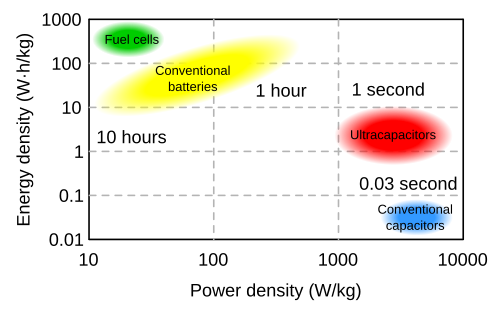
Yes, I know. I didn't think Fuzzy would be able to find them. Besides, I also said capacitors are normally rated in microfarads and below. They finally broke the 1 farad point about 20 years ago if I recall correctly. Still, their capacity falls short of batteries, and they fall short of retaining power for any decent time. Have to convert to DC, then back to AC also. When you consider they are halved in value for series, and DC transmission are normally something like 300KV+... Did a quick check, the best out there by Wiki is 20 Wh/Kg. maybe a little better now, but it won't be much.
When the denser air flows off the warmer air and over the top of the mountains, then is depleted. I don't know all the reasons, I just know it happens. I'm not even sure if this is exactly how it happens.
Now in gorge areas, other wing patterns I think can act as a switch, stopping movement. there are frequent winds through the Columbia River Gorge. Wind patterns on the other side of the mountains might be ably to stop the flow. I'm only guessing here.
Again, I'll bet you cannot prove me wrong. Stop having a sore ass over this and move on. It's not that important to the discussion at hand since windmills would likely not be built in such areas.
Some of us don't care about carbon emissions.
There are currently 1 users browsing this thread. (0 members and 1 guests)
 Posting Permissions