

 Reply With Quote
I'll post a few more of the articles over my lunch hour.

We are, by all credible estimates, VASTLY underinvesting in our infrastructure.
I have been reading a series of articles in many different sources about this, and the more I read, the more apparent the need is for us to do something about it. This gentleman has one solution I will be looking into.
Posted By Clyde Prestowitz
First to Third World in one lifetime
Posted By Clyde Prestowitz Tuesday, May 24, 2011 - 6:13 PM Share
I'm sitting at Gate 31 of Washington's Reagan National Airport waiting for a flight to Chicago. I've actually been sitting here for about four hours so far with no departure time in sight. During that time, I have been booked on three different flights, denied boarding on my original flight when the pilot failed to show up, and had my plane swapped from the Chicago route to become a flight to Denver, but then that was also delayed for want of a pilot.
This follows an experience last week in which I waited at National Airport for four hours while trying to get the 11 a.m. shuttle to New York and then waited at La Guardia for another four hours before my return flight took off.
The guy next to me just remarked that he prefers traveling in what we have become accustomed to calling the "Third World." My wife just called to report that the outer loop of the Washington Beltway has been completely blocked for hours.
As luck would have it, today's Wall Street Journal has a special feature on the future of transportation that has provided particularly appropriate reading while I wait. The Journal cites estimates that congestion costs the U.S. economy over $200 billion annually. But that's mostly from sitting in our cars on blocked freeways and in airplanes on delayed flights. It doesn't count the losses from dropped phone calls, slow Internet speeds, and lagging application of existing technology that could remedy many of these problems.
Take the Washington Beltway and the heavily traveled Interstate 95 that connects much of the East Coast. The technology exists to post information on electronic highway signs showing where the bottlenecks are, how long the wait will be, and alternate routes. A few of these signs exist between Washington and Baltimore, but none seem to be in use on the Beltway. Comparing this to driving in Singapore, urban China, Japan, or Germany makes one want to cry.
South Korea's Internet speeds are about 10 times faster than those in the United States, which makes it possible for Koreans to do levels and types of research just not possible in America. Indeed, we Americans come in at only about No. 18 in the international Internet speed comparisons. We also lag in Internet penetration.
The Journal supplement on transportation speaks breathlessly of all the potential in using technology to create a digital train control system, smart roads, and cars that will automatically choose the best routes and most efficient speeds. It also speaks of new aircraft guidance systems, more and better bridges, electric cars, cars that talk to each other, and much more.
There are only two problems -- cost and policy. J
ust to maintain the current transit and highway systems will take about $100 billion above current annual revenues for the next 25 years. To improve the system would take $150 billion annually. China, with an economy less than one-third the size of the U.S. economy, is spending about $1 trillion on upgrading its infrastructure. The total U.S. bill for a modern infrastructure would probably be on the order of $5 trillion to $10 trillion over the next quarter-century. That's a lot of money, and it's unlikely to come from either increased taxes or reduced government expenditures. It could, however, come from an Infrastructure Bank that could use an initial government-funded capitalization to leverage private capital on a project-by-project basis.
But don't hold your breath on this. It's not going to happen because of the policy issue. Or perhaps I should better say the jurisdiction issue. As currently structured and organized, the U.S. government makes infrastructure and other appropriations in the context of a legion of committees and subcommittees, each of whose chairman can be counted on to fight to the death to maintain oversight and appropriation authority of his/her piece of the budget. A bank would preclude this jurisdiction by taking much of the project-by-project decision power and thus the political credit for projects out of the hands of the chairmen.
The Journal supplement further talks about the need for states and municipalities to cooperate and coordinate on their bridge, harbor, road, airport, and other infrastructure projects. But that is not going to happen either. All the incentives in the system run the other way. States build duplicate harbors and airports and then compete to attract traffic. Even sillier, they compete to see who can give the biggest tax breaks to attract investment. Take the case of some of the European and Korean plans to invest in new auto assembly plants in the United States. The decisions to invest in America were based on fundamental considerations of supply chains, appealing to customers, costs of production, and so forth. Those investments were going to be made in America under almost any cir stances. Yet by competing to see who could give the biggest bribes, the winning states reduced the value of those investments to the United States.
The bottom line here is that the United States does not have an economic problem or a compe iveness problem so much as it has a political problem. Its ins utions, largely created for the 18th and 19th centuries, are simply no longer adequate to shape the debate and the decisions we need to arrest the slide toward Third World status that has taken place in my lifetime.
I'll post a few more of the articles over my lunch hour.

Well, I would say that most of our infrastructure development was before we started spending such a significant portion or our budget on social costs. Developing nations don't have these same costs and can develop infrastructure like we did before the mid 70's.
We've been underfunding our infrastructure relative to growth/demand for decades now. We're going to pay a price for it.

They had a real chance to fix this with the stimulus and ed it up.
This is the future of American infrastructure right here.It could, however, come from an Infrastructure Bank that could use an initial government-funded capitalization to leverage private capital on a project-by-project basis.
+10000000000
Only 5% of the stimulus bill went to infrastructure projects.

Social costs such as our glorious for-profit health care system that delivers lousy outcomes and soaring fees.
Although I was against such a large stimulus, I agree it would have been better spent on actual infrastructure.
Maybe improve the roads where there is congestion. Maybe fund a moon base. Anything that would actually put USA citizens into jobs. Not bailout the elite for poor investment decisions.

What's an example of research that we can't do but south koreans can because their internet is that much faster than ours?

We saw how well the soviets centralized planning worked.
Cost of Repairing the US's Crumbling Infrastructure? $2 Trillion
http://www.washingtonpost.com/local/...y.html?hpid=z3
===========
Why doesn't the "free market" solve the infrastructure problem?
Why hasn't the free market modernized the nation's electrical grid? Water and sewage? etc, etc.
"We saw how well the soviets centralized planning worked."
We see how well the UCA's financial and airline deregualtion worked.

First to third world? Really?
I don't know about the rest of the US, but it appears that they are CONSTANTLY reinvesting in infrastructure in Texas. The roads, for sure.

ing toll roads up here.
Got me there.
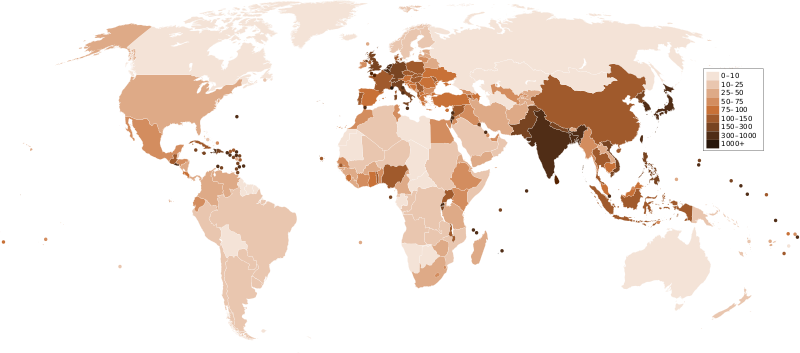
Here is something those propagating such facts leave out though. Population density. Because of a far higher city density in Korea, the material cost isn't as costly per person for high speed internet. Distance per person for fiber and cable have both real labor and material costs.
I wondered that as well. Sorry I don't have an answer. I might try to find it at some point.
Something else to chew on.
New York city has the highest population density in the USA at about 10,000/sq mile. Seoul Korea is about double that.
I'll bet on internet searches, they don't get all the extra BS we get on our searches. Not the whole of the issue, but I'll bet it contributes. Once you get to tier 4 level and above, I don't think most users will notice much difference on the actual data speed, unless they are doing massive data exchanges.
Toll roads are a pretty good idea, given how little we tax gasoline.
If you want to use up the road by driving on it, pay for it.
Better would be simply to tax gasoline much more, and avoid the overhead that invariably accompanies toll systems though.
Take a good chunk of the gasoline taxes and use that to fund roads, or other transportation infrastructure projects.
I am pretty sure that densities will change as gasoline gets more expensive.
We build new roads, but don't spend enough to maintain them apparently.
It is a well known facet of city planning that we tend to skimp on maintenance, and building capacity in advance of projected growth. Things don't get done until systems are strained to crisis levels.
Their internet is so advanced, when they search "Jennifer Love Hewitt nude" she really is naked.
In our city, the liberals actually admit they want to make it harder for cars and easier for bicycles and public transportation, even when a MAX ride is subsidized over $20 per person.
No one is advocating soviet style central planning of the entire economy.
The problem is that we have virtually no coherent national plan at all. We can't and don't even do much regional planning.
What we end up with is a system of inefficient local and state solutions that hinder growth. This is especially true when you get special interest groups paying for gimmies from state legislatures and local city councils.
Too much emphasis is given to narrow special interests at the expense of wider systemic efficiency.
There are currently 1 users browsing this thread. (0 members and 1 guests)
 Posting Permissions
