

 Reply With Quote
Who is better than Jordan?Championships: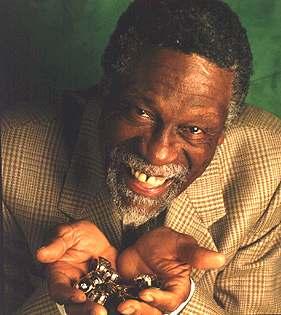 Who has more rings? Put your mouse over the picture and learn the answer.Bill Russell -- Bill Russell is the greatest winner in the history of team sports. There is no comparing anyone to him. All the guy did was win. In college, Russell won 2 national championships in 3 seasons at the University of San Francisco. When Russell went there, they were a small-time program. They didn't even have a home gym. Under Russell, they won 55 games in a row, to go along with those 2 national championships. During his first championship, he teamed with future Celtic teammate K.C. Jones, but he won the second le without him, and was named the Final Four MVP. Russell went on to the 1956 Olympics and brought home the gold medal.
When he joined the Celtics, they had never won a championship. His first year, he led them to the championship. His next season, they made the NBA finals. Russell was injured in the finals, and they lost the finals. The next eight seasons, Russell won the championship. After this run, he was made player-coach. They lost the next season to Wilt Chamberlain's Sixers in the conference finals. Russell came back in his final two seasons and won two more championships and then he retired. In the first post-Russell season, the Celtics failed to make the playoffs.
In summary:
- Russell won 2 championships and had a 55-game winning streak in college
- Russell won an Olympic Gold Medal.
- In 13 seasons in the NBA, Russell won 11 championships.
- The 2 seasons Russell didn't win the championship, he made the NBA finals and the conference finals.
- He won 8 straight championships (an octo-peat)
Michael Jordan -- Jordan also played 3 seasons in college with the powerful North Carolina Tar Heels. UNC made the NCAA finals the year before Jordan joined. In Jordan's first season, they won the NCAA le. Unlike Russell, Jordan was not the star of his team. He was a supporting player. James Worthy was the All-American (not Jordan). Worthy was the ACC player of the year, the NCAA regional MVP, the Final 4 MVP and the leading scorer of the NCAA Championship game (28 pts to Jordan's 16). Jordan hit the shot to put UNC on top, and Worthy stole the ball to secure the victory. After that season, Worthy went to the NBA. With Jordan as the leader of the team (he was The Sporting News player of the year the next 2 seasons), Jordan's Tar Heels achieved a #1 and a #2 seed, but failed to live up to their seed, losing in the Sweet 16 and the Elite 8.
Like Russell, Jordan led the Olympic team to the gold medal (1984). Jordan joined a Bulls team, that like Russell's had never won a le. Before Jordan arrived, they were a losing team. In Jordan's first year, they were a losing team (38-44). They made the playoffs with a losing record, where they were defeated in the first round 3-1 by Milwaukee. The next year, Jordan's Bulls had a losing record (30-52), yet made the playoffs again, where they were defeated 3-0 in the first round by Larry Bird's Celtics. The next year, Jordan's Bulls posted their third consecutive losing season (40-42) and were once again swept in the first round of the playoffs against Bird's Celtics.
In his fourth season, Jordan's team finally won more games than they lost, and made it out the first round of the playoffs, where they were defeated by Isiah Thomas' Pistons 4-1. The next year, Jordan's Bulls finished 5th place in a 6-team division, but advanced another round in the playoffs, losing again to the Pistons 4-2. The next year, (Phil Jackson's first as head coach), the Bulls finished in 2nd place and lost in the conference finals 4-3.
After that, the Bulls finally got on top, winning 3 in a row. Jordan came back in 1995, but couldn't get them out of the second round of the playoffs, which is where they finished the year before without him. Afterward, the Bulls won 3 more les, before Jordan retired for the second time. Jordan came back 2 years later with the Washington Wizards, a losing team. Under Jordan's leadership, they posted the 4th and 5th losing seasons in Jordan's career and failed to make the playoffs both years.
In summary:
- Jordan won 1 championship in college, in a supporting role. He failed to make the final 4 in 2 seasons as the team leader of North Carolina.
- Jordan won an Olympic Gold Medal in 1984 and 1992.
- In 15 seasons in the NBA, Jordan won 6 championships.
- The 7 seasons Jordan didn't win the championship, he made the conference finals twice, the semi-finals twice, the first round 3 times, and no playoff appearance twice.
- He won 3 straight championships twice.
Final Analysis:
Bill RussellMichael Jordan Number of Season Played in the NBA 13 15 Number of NBA championships 11 6 Number of conference championships 10 6 Number of times he failed to make the conference finals 0 7 Number of times he failed to make the playoffs 0 2 Number of losing records 0 5 Number of seasons playing college basketball 3 3 Number of Championships 2 1 Number of Final 4 appearances 2 1
When Bill Russell is brought up, you see Jordan fans go into ultra-panic mode. Jordan supposedly had a mythical ability to "will his teams to victory", but his achievements are paltry compared to Russell's. Jordan fans will say one (or more) of four things:
First, Russell had talented teammates and he was lucky. There is some truth to this. However, Jordan's teammates were very talented also. How else could they go from a 57-25 record in 1993 to 55-27 in 1994, when Jordan retired? Jordan was replaced with a CBA player, and his team slipped two games. Without Jordan, Scottie Pippen, Horace Grant, and B.J. Armstrong were all named to the all-star team. Without Bill Russell, the Celtics went from the NBA championship to not even making the playoffs. Furthermore, while Russell joined a team in 1956 that had Bill Sharmin, Bob Cousy, Tommy Heinsoln, and Frank Ramsey (all hall of famers), all of these players retired and Russell kept on winning championships. Without him, they never won a championship. Coincidence?
Second, Jordan fans will say without free agency and less teams, it was easier to dominate. This is absurd. Less teams make for a stronger league. It's simple math. If you cut the number of current NBA teams in half and had a draft of their players, the remaining teams would pick up players and cut the worst players on their teams. The result would be that each team would get better. This would strengthen the league. Furthermore, how many key players did the Bulls lose to free agency during the Jordan years? Answer: None. Horace Grant was the only significant loss and he left while Jordan was retired. This argument holds no water at all.
Third, Jordan fans like to claim that if Jordan had not retired, the Bulls would have won eight straight (ignoring that Jordan DID play in 1995 and couldn’t win the le), but if Russell had not sprained an ankle, Russell probably would have won 10 les in a row (and 12 in 13 seasons). Even woulda, coulda, shoulda arguments don't help in the Jordan vs. Russell argument.
Fourth, Jordan fans will say that Russell was not a great offensive player. In his best season, Russell averaged 18.9 ppg on 45% shooting. and 4.5 apg (this assists average is more than Jordan's 1996-98 average, and Russell was a center!). However, this point is moot. You clicked on this link because you compare players based on championships. You obviously think Magic Johnson is better than Larry Bird, even though Bird averaged more points. So what if Russell didn't score 20 ppg? If you want to argue that, then the lesson to be learned is that ballhogging is not the key to winning championships. Everybody with any basketball knowledge knows defense and rebounding wins championships and Russell is the greatest defensive player in history and the second greatest rebounder. If Jordan were more interested in winning than in scoring points, then he would have more championships.
You judge players based on championships. Therefore, you must conclude that Bill Russell is the greatest player in history - not Michael Jordan.
Thank you for playing.Most MVPs and championships
Kareem Abdul-Jabbar Bill Russell Michael Jordan College championships 3 1 1 NBA championships 6 11 6 MVPs 6 5 5 Note that based on this criteria (and you clicked this link because this is your criteria), that Jordan is no better than the THIRD best player in history. I make my point about Russell on a different section of this site. So to keep from repeating myself, I will argue why Kareem is better than Jordan, but I will list Russell on tables.
Kareem Abdul-Jabbar – Kareem Abdul-Jabbar, like Jordan, won six championships. However, he won more Most Valuable Player awards (six to five). Pretty open-and-shut. However, Jordan-supporters often say, "yeah, but where would he be with Magic Johnson?" This is a fair question. Similarly, I ask, "What did Jordan do without Scottie Pippen?"
Kareem Abdul-Jabbar without Magic (10 seasons) Bill Russell without Bob Cousy (6 seasons) Michael Jordan without Pippen (5 seasons) NBA championships 1 5 0 MVPs 5 1 0 NBA Finals 2 5 0 Best record in NBA* 3 2 0(* Irrelevant, but good for grins)The answer is that he did quite nicely without Magic...much better than Jordan did without Pippen. But to be fair, Jabbar played 10 seasons without Magic and Jordan only played 5 seasons without Pippen, so let's compare this for their first 3 seasons. Before we do, let's also put into context that Jabbar joined an expansion team that was in their 2nd year of existence and Jordan was on the Bulls, who had been around for nearly 20 years.
Kareem Abdul-Jabbar, first 3 years Bill Russell, first 3 years Michael Jordan, first 3 years NBA championships 1 2 0 MVPs 2 1 0 NBA Finals 1 3 0 Best record in NBA 1 3 0 Playoff record 23-12 23-9 1-9 Losing Records 0 0 3 Scoring les* 2 0 1( * Irrelevant, but good for grins)So you see, no matter how often Jordan fans whine and try to make up excuses and rationalizations, it all comes down to Kareem has more MVPs and rings than Michael Jordan.
Thank you for playing.
Putting Jordan's "greatness" into context
A Jordan fanatic will usually hype up Jordan's career scoring average, 5 MVPs, 6 rings, 6 playoff MVPs, his defensive player of the year award his 9 first-team all-defensive team honors.It sounds quite impressive. Surely better than anybody else in history. That is, until you put this into context.
I know it's speculation, but it's not unfounded speculation. If you put these awards at the beginning of the NBA, I believe Bill Russell would stack up to Jordan accordingly:
Bill Russell Michael Jordan Years played 13 15 Defensive Player of the year award 10 1 First team all-defense 10 9 Playoff MVPs 6 6 MVPs 5 5 Championships 11 6
The reason I say Russell would put up these numbers is as follows:10 Defensive player of the year awards - Russell was the preeminent center in the league until Wilt Chamberlain came along, so the first 3 seasons are a given. Wilt won the MVP in his rookie season. For the next 3 seasons, Wilt put up the 3 highest scoring averages in history (38.4, 50.4, and 44.8 PPG), yet Russell won the MVP each season (averaging 16.9, 18.9, and 16.8 ppg). Russell won his other two MVPs averaging 16.6 and 14.1 PPG). Only Wes Unseld, the 1969 MVP, scored less in a MVP seasons than Russell in his 5 MVP seasons. THAT is how good Russell was at defense. I think it's safe to say that Wilt would have won defensive player of the year in 1967 and 1968. Just to be conservative, I will give Wilt another defensive player of the year nod.10 times on the first team all-defense - If he is the defensive player of the year, it's safe to assume he is first team all-defense.6 Playoff MVPs - I am being EXTREMELY conservative on this. Russell was a 5-time MVP whos numbers were BETTER in the playoffs than they were in the regular season. He holds the Finals records for most rebounds in a 4-game series (118...2nd place is 76 by Wes Unseld), a 5-game series (144), and a 7-game series (1969). To say that dominating player of an 11-time champion will only win the Playoff MVP 54% of the time is extremely generous.5 Regular Season MVPs and 11 Championships - This is not speculation. This is fact.Looking at this criteria, it is easy to see that Russell is Jordan's superior. If you think this speculation is incorrect, please e-mail me and tell me who would beat Russell. If not, then you can see that Jordan is not the best player to ever play.Most dominating
Wilt Chamberlain Michael Jordan Regular Season Records 56 4 Number of scoring championships 7 10 Number of 50+ point games 119 30 Number of times led league in assists, fg%, minutes, and rebounds* 29 0Who is the more dominating individual? (*Blocks and steals were not recorded until after Chamberlain retired)Wilt Chamberlain – Chamberlain re-wrote the record books and dominated like no player before or since. His first year in the league, he set rebounding and scoring records that no OTHER player before or since has broken. Wilt set so many records and put up such outrageous numbers that they began to lose meaning. If LeBron James scores 50, it's headlines on ESPN. Wilt averaged 50 for an entire season. It was just another day at the office for him. Let's analyze Wilt's game:
Scoring: Wilt is simply the greatest scorer ever. Jordan fans will claim that because Jordan averages less than 0.5 points per game more for his career, this makes him better. However, they don't consider that Jordan didn't log in as many career minutes, nor as many minutes per game. When both men put their minds to scoring, it's not even close. Wilt once AVERAGED 50.4 ppg. Jordan's best season is 37.1 ppg - a number Wilt bested on 3 different occasions. Jordan never had a 70 point game. Wilt had 6 games with at least 70. Wilt's best game is 100 points. Wilt won 7 consecutive scoring les, which is the same number as Jordan's best streak. The only reason Wilt quit winning scoring les is because his coach asked him to pass off more (Wilt was already in the top 10 in the league in assists). Wilt gladly did and he and 3 of his teammates each put up over 18 ppg the next season, on their way to the le. Wilt has almost 80 more games with 50+ points than Jordan. Wilt also holds the record for most free throws made in a game (28), most field goals made in a game without a miss (18), most consecutive field goals without a miss (35), best field goal % in a season (nearly 73%), most times leading the league in fg% (9), most consecutive games with 40+ points scored (14),
He won seven scoring les, 11 rebounding les, and led the league in minutes played 8 times. He averaged over 45 minutes per game every game of his career. In 1967-68 he led the league in assists – something Jordan has never came close to doing. Chamberlain holds the records for points scored in a season and a game (100), rebounds in a game (55), season, and career., as well as minutes played in a season (he averaged 48.5 min/game in 1961-62), and field goal percentage in a season (72.7%).
Rebounding: Again, Wilt dominated the record books. Most rebounds in a game (55 - against Bill Russell). Best rebounding average in a season (27.2), and best career rebounding average (22.9), most seasons leading the league in rebounding (11). Detractors will claim the artificial numbers are because Wilt played a lot of minutes and there were more rebounds to be had than when, say, Dennis Rodman played. However, consider that Wilt played a lot of minutes because he was durable and had stamina. It's not his fault that other players lack his stamina. As far as available rebounds, this is true, but Wilt had to expend a lot of energy on the offensive end. A guy like Dennis Rodman was worthless on offense. He simply camped out and cherry-picked. He was never the focal point of offense. He wasn't even the 2nd, 3rd, or 4th option, and to use available rebounds means you are comparing players to their peers. Doing this still shows Wilt's greatness, as Rodman only led the league in rebounding 7 times - 4 less than Wilt.
Michael Jordan was a very good rebounder at guard, but Wilt was the very best rebounder in history. Jordan was not the greatest rebounding guard in history. Magic Johnson and Oscar Robertson are two that immediately stand out as better than Jordan. Even comparing the two players shows Wilt is better.
Passing: Jordan averaged less than 1 assists per game in his career than Wilt. This is paltry when you consider two things. First, Jordan, as a guard, handles the ball much more than Wilt. Since I was fair and compared their rebounding to their peers, rather than to each other (because a center SHOULD have more rebounds than a guard), it is only fair to compare assists to their peers. Wilts 4.4 puts him in elite company at center. He may very well be the best. Jordan's 5.3 is not outstanding for a guard. Please don't say, "But he's a shooting guard". When Jordan played point guard, in 1989, he only averaged 8.0 apg, so John Stockton, Oscar Robertson, and Magic Johnson do not feel threatened. Jordan's assists also went on a downward spiral after 1992.
The second point to consider is how an assists was credited in the 1960s and the 1980s. In the 1960s, if a player received the ball and took one dribble, the passer was NOT awarded an assist. Chet Walker cost Wilt countless assists, because he always took a dribble before laying it in. In the 1980s, the assists ruling was much looser. Along with "scorekeeper's discretion", this guideline was given: if a player receives a pass and makes a direct line to the basket, without altering his course due to a defender, then the passer receives an assists. This means, in theory, that Magic Johnson could inbound the ball to James Worthy, and if Worthy dribbled the length of the court, making a straight line and dunks the ball, then Magic should get an assists. I know it's an extreme case, but the point is, 1980s players received many assists than 1960s players did not. That is why assist averages were higher in the 1980s, even though they were scoring less points. With that in mind, if you normalize their numbers, you see that Wilt's assists were actually higher than Jordan's.
Furthermore, Wilt finished in the top 10 in the league in assists 3 times. In 1968, Wilt led the league in assists (before 1969, rebound, assist, and scoring leaders were determined by totals, rather than average). Wilt remains the only non-guard to ever lead the league in assists. Jordan finished in the top 10 in assists one time (#10 in 1989). Remembering that assists were awarded more generously in Jordan's era than in Wilt's, Jordan best season 8.0 is STILL less than Wilts (8.6).
Defense: This is actually the area that is a push. Both men are considered among the very best defensive players at his position. There really is no way of determining how each rate at their position. I believe Wilt is no better than #2 (Bill Russell is a clear-cut favorite), but after that, Wilt is in the same class with Nate Thurmond, Bill Walton, and Hakeem Olajuwon. Jordan, likewise, is in the top tier of his position, along with players such as Walt Frazier, K.C. Jones, Sidney Moncrief, and Joe Dumars.
Defensive player of the year was not created until 1980. It is safe to assume that Wilt would have won it in 1972 and possibly in 1973, but it's speculation, so it's really pointless. All-defensive teams were not created until 1969.
Final Analysis: Detractors try to attribute Wilt's dominance to height. This is absurd, because Kareem Abdul-Jabbar couldn’t equal these feats, despite being taller, and playing against Chamberlain for four seasons. If size mattered, then how come players like Shawn Bradley, Rik Smits, Ralph Sampson, Gheorghe Muresan, Mark Eaton, Yao Ming, or Dikembe Mutombo have never challenged these feats? Wilt had 3 inches on Russell. Ming enjoys almost 5" of height advantage over Shaq, but you don't see him scoring 60 or grabbing 55 rebounds against the Diesel. Furthermore, to use height as an excuse is to say that Jordan needs handicaps to look good. Why not spot him 2 strokes per hole if you golf with him? Furthermore, while they chalk up Chamberlain's rebounding dominance to his height advantage, they cannot explain why he led the league in assists, and Jordan could not.
In addition to re-writing the record books, Chamberlain re-wrote the rule book, as the league passed many rules to try to limit his dominance. Jordan, on the other hand, has been the beneficiary of rules passed to ENHANCE his scoring (hand checks, defined zones, 3-point shot, flagrant fouls).
Jordan-supporters know that Jordan’s feats cannot match up to Chamberlain's. That is why they always respond with lame excuses and a lot of "yeah buts." The fact is, Wilt Chamberlain was the most dominant player in history. Since you clicked here, your standard of comparing players is by overall dominance, so you can see that Jordan is not the best.
Thank you for playing.Most Complete
Oscar Robertson Michael Jordan Years played 14 15 Number of times finished in the top 5 in scoring average 9 11 Number of times finished in the top 10 in rebounds 1 0 Number of times finished in the top 10 in assists 12 1 Number of times finished in the top 10 in free throw % 8 0 Number of times led the league in ppg 1 10 Number of times led the league in apg 7 0 Number of times led the league in ft% 2 0 Career Triple Doubles 181 30 Best season 30.8 ppg, 12.5 rpg, 11.4 apg
(1962) 32.5 ppg, 8.0 rpg, 8.0 apg
(1989) Oscar Robertson – Oscar Robertson was simply the most complete player in basketball history. In his first season as a pro, he averaged 30.5 ppg, 9.7 rpg, and 9.7 apg. (Jordan averaged 28.2, 6.5, and 5.9). Over the course of his first five seasons Robertson AVERAGED a triple-double. Triple-double games were not recorded when Robertson played. It was another day at the office for him. This perfectly illustrates the difference between Robertson and Jordan. The media made a big deal out of Jordan having the first (recorded) triple-double in All-Star history, just like they make a big deal out of Jason Kidd’s 7-or so triple-doubles he has each year. For Robertson, he didn’t need to have an extra assists to reach 10, to have that "triple-double," because it wasn’t a big deal. Back then, fans recognized greatness by one's play, and not because a guy has 10 assists, 10 rebounds, and 10 points. Furthermore, Robertson didn’t simply have triple-doubles of the Jason Kidd 10-10-10 variety. No, he had man-sized triple-doubles. His triple-doubles were on the order of 30-11-10. In 1962, he finished in the top 10 in rebounds, something Jordan never did, nor came close to doing. Robertson led the league in assists 5 out of his first 6 years, and finished in the top 10 11 out of his 13 years. The only times he missed was because injuries kept him from getting the minimum needed to qualify. Jordan never led the league in assists and only finished in the top 10 one time. In 1968, Oscar became the only player in history to lead the league in ppg, apg, and ft%.in the same season.
Defensively, when Robertson played, there was no defensive player of the year award, and the all-defensive team was introduced after he was out of his prime, but he had a reputation as a first-rate defender. There simply was no weakness to his game. He is far, far, more complete than Michael Jordan. The facts speak for themselves.Inch-for-inchTo use the inch-for-inch comparison is to say, "I admit that Jordan is not the absolute best, and now I must devise a handicap system that works to his advantage." That alone is enough for me to say, "thank you for playing. You have just proven that Michael Jordan is not the best basketball player ever." But hey, why not prove that even THAT criteria is wrong. I mean, I could say that Bill Russell is better inch-for-inch. He has 13 rings and is 81 inches tall (or 6.2 inches per ring) and Jordan has 6 rings and is 78 inches tall (13 inches per ring). Or even use something really subjective, such as "Muggsy Bogues led the league in assist/turnover ration numerous times and is 15 inches shorter than Jordan). However, I think I will have even more fun disproving this silly criteria.Oscar Robertson – Robertson was 2 inches shorter than Jordan, yet he did things Jordan can only dream of. During his college career, he so thoroughly dominated that he, unlike Jordan, is considered by every respectable source to be one of the five greatest college players in history.
In his first season as a pro, he averaged 30.5 ppg, 9.7 rpg, and 9.7 apg. (Jordan averaged 28.2, 6.5, and 5.9). Over the course of his first five seasons Robertson AVERAGED a triple-double. Triple-double games were not recorded when Robertson played. It was another day at the office for him. This perfectly illustrates the difference between Robertson and Jordan. The media made a big deal out of Jordan having the first (recorded) triple-double in All-Star history, just like they make a big deal out of Jason Kidd’s 7-or so triple-doubles he has each year. For Robertson, he didn’t need to have an extra assists to reach 10, to have that "triple-double," because it wasn’t a big deal. Back then, fans recognized greatness by one's play, and not because a guy has 10 assists, 10 rebounds, and 10 points. Furthermore, Robertson didn’t simply have triple-doubles of the Jason Kidd 10-10-10 variety. No, he had man-sized triple-doubles. His triple-doubles were on the order of 30-11-10. In 1962, he finished in the top 10 in rebounds, something Jordan never did, nor came close to doing. Robertson led the league in assists 5 out of his first 6 years, and finished in the top 10 11 out of his 13 years. The only times he missed was because injuries kept him from getting the minimum needed to qualify. Jordan never led the league in assists and only finished in the top 10 one time. In 1968, Oscar became the only player in history to lead the league in ppg, apg, and ft%.in the same season.
Jordan did not make those around him better. (click here to read why) Robertson did. Wayne Embry was an undersized (6’8" - nearly 300 pound) center (Think Oliver Miller body). Yet, in 6 seasons playing with Robertson, he was an all-star 5 times. He never made it before playing with Robertson and he never made it after playing with him. Adrian Smith was a spot-up shooter, similar to John Paxson and Steve Kerr. Yet, playing alongside Robertson not only got him an all-star appearance, but all-star MVP, thanks to Robertson setting out to get it for Smith. Robertson won 11 out of 12 all-star games, and to put it in context, the All-Star game was more than a goof-around exhibition. Players salaries were much lower (most players had summer jobs), and the money handed out to the winning all-star team was significant.
Robertson’s teams were often overmatched, losing often to Russell’s Celtics or Chamberlain’s teams, similar to Jordan losing to Larry Bird's Celtics and 3 out of 4 times to Isiah Thomas' Pistons. However, when Oscar went to Milwaukee, he turned a good team into one of the all-time great teams. During his 4 years there, they had the best record in the division 3 times (and in the other season, they won 63 games to LA’s record-setting 69), and made 2 trips to the NBA Finals, winning once. Not surprisingly, when he retired, the Bucks went from the NBA finals, to a losing record (from 59-23 to 38-44), and no playoff appearance. When Jordan retired in 1994, the Bulls went from 57-25 to 55-27 - a 2 game slip.
Summary
Oscar Robertson Michael Jordan Years played 14 15 Number of times finished in the top 5 in scoring average 9 11 Number of times finished in the top 10 in rebounds 1 0 Number of times finished in the top 10 in assists 12 1 Number of times finished in the top 10 in free throw % 8 0 Number of times led the league in ppg 1 10 Number of times led the league in apg 7 0 Number of times led the league in ft% 2 0 Career Triple Doubles 181 30 Best season 30.8 ppg, 12.5 rpg, 11.4 apg
(1962) 32.5 ppg, 8.0 rpg, 8.0 apg
(1989)
Oscar Robertson was 2 inches shorter than Jordan, yet was a more complete player. He was also more valuable to his team, as you saw how each team did without Robertson and and Jordan, respectively.
This is a weak criteria for judging greatness (seriously, is Iverson better than Jordan? He's 6 inches shorter!), however, this is your criteria (you clicked on this, so this must be your criteria), and using this criteria, I proved that Oscar Robertson is better than Michael Jordan.Who is better than Jordan?
All of the aboveThis reason is pure bull, plain and simple. It is a desperate plea from a Jordan worshipper who realizes his goose is cooked. Here is why.Let's compare Wilt Chamberlain to Jordan, for instance. Wilt has 56 NBA single-season records to Jordan's 4. Wilt nearly QUADRUPLED the number of 50 point games Jordan had in his career. Wilt led the league in assists, fg%, minutes and rebounds 29 times to Jordan's Zero. He owns 6 of the 9 70+ point games in history - Jordan has zero. He topped Jordan's best scoring season three times and Wilt's best scoring season is 13 ppg higher than Jordan's. Imagine Jordan leading the league in scoring at 33 ppg and the runner up having 20 ppg. Simply put, Wilt was in a class ahead of Jordan.A Jordan fan will respond with, "Yeah, but Wilt only has 2 rings to Jordan's 6". Fine. That means stats mean very little and the much stronger emphasis is on championships. When one man so strongly overwhelms another in the area of statistical accomplishments, to say he is not better means stats are irrelevant. We are not talking about Kobe Bryant vs. Tracy McGrady or Charles Barkley vs. Karl Malone - guys with similar numbers. We are talking about a mismatch that rivals Shaq versus Greg Kite.Therefore, to say Jordan is better is Wilt means stats and scoring are irrelevant. Since championships are the overwhelming factor, then we have to look at the man who prevented Wilt from winning more championships - Bill Russell. He has 11 championships to Jordan's 6. He has nearly TWICE the number of championships. Therefore, Bill Russell simply has to be better than Jordan. Let me repeat that - as impressive as Jordan's six les are, it simply pales in comparison to Russell. To win 6 championships, it took Michael Jordan 14 years and Bill Russell only 7 years. Jordan played 15 seasons to Russell's 13, yet Russell has FIVE more championships than Jordan. Jordan and Magic Johnson COMBINED have as many rings as Bill Russell. Jordan and Magic defined "winning" for an entire generation! Yet, it takes both of them together to match the dominance of Bill Russell!A Jordan fan cannot say that Jordan was a better individual player than Russell. After all, Russell AVERAGED over 22 rebounds per game. He is acknowledged by most to be the greatest defensive player in the history of the game, and to go along with that, he finished in the top 10 in the league in assists FOUR times (Jordan only did this once). He added 15 ppg to go along with this superior passing, rebounding, and defense.The only recourse for a Jordan worshipper is to discount Russell's superior defense, rebounding, passing, and his overwhelming dominance in championships -- discount all of it -- and say "Jordan scored more points". However, as I showed above, points are irrelevant. Wilt Chamberlain dominated Jordan in points, and most other categories, but this was all discounted because of championships. You simply cannot say that Jordan's extra scoring somehow makes up for a 5 ring deficit after you just discounted Wilt's OVERWHELMING dominance of Jordan in scoring on account of a 4 ring deficit. And face it: it has to come down to points and rings because Jordan's passing and rebounding are simply unimpressive and his defense - while exceptional - is not on a plane higher than Chamberlain and Russell.Therefore, there is no way that Michael Jordan can be the greatest player in history.