Page 2 of 4 FirstFirst 1234 LastLast
Results 26 to 50 of 76
  1. #26
    🏆🏆🏆🏆🏆 ElNono's Avatar
    My Team
    San Antonio Spurs
    Join Date
    Apr 2007
    Post Count
    153,473
    Solar as a large-scale generation includes much more than just solar-tech. As I pointed out earlier, you'll also need massive improvements in battery tech, among other things. And that's one of the areas that's been doing R&D for many, many years because it's applicable not just to solar, but other areas as well. The improvements will likely keep on coming, but it's unlikely you'll see a short term "leaps and bounds" increase in said tech. The good news is that investment on R&D in those areas is not slowing down.

    I would argue that building a nuclear plant will actually provide more jobs. China has basically taken over the manufacturing of wind turbines, solar panels, etc. Anything that's small enough size (or can be broken down into small enough size) and transported relatively easily will find it's way to China for manufacturing.

  2. #27
    🏆🏆🏆🏆🏆 ElNono's Avatar
    My Team
    San Antonio Spurs
    Join Date
    Apr 2007
    Post Count
    153,473
    Solar's first use will be to replace expensive "stand-by" natural gas capacity.
    I agree solar might already make for a good secondary power generation at this point.

    Nuclear is a good base-load plant, but be aware of the high costs. Generally accepted figures in the cost analyses I have seen for installed watts are around $6,000. If you do the math, this project comes in right around there at $6300 for the "sticker" price. If they have the normal cost overruns that nukes seem to be subject to, that figure will balloon to about $13,000-$25,000, and end up making this a very pricey chunk of power indeed.
    Well, they seemingly need the extra power now. If you're sitting right now having to make a decision to build a primary power generation facility that gives you a specific output in 3/4 years time, I would assume you would go with proven tech. Solar simply isn't there yet to provide primary power generation. Hopefully we'll get there in a few years/decades.

  3. #28
    I am that guy RandomGuy's Avatar
    My Team
    San Antonio Spurs
    Join Date
    Jun 2005
    Post Count
    51,121
    I agree solar might already make for a good secondary power generation at this point.


    Well, they seemingly need the extra power now. If you're sitting right now having to make a decision to build a primary power generation facility that gives you a specific output in 3/4 years time, I would assume you would go with proven tech. Solar simply isn't there yet to provide primary power generation. Hopefully we'll get there in a few years/decades.
    NIMBY will prevent this from coming online within the estimated time frame and drive the costs far beyond the sticker price.

    It won't be the "environmentalists", it will be the neighbors.

    Honestly, I think this project is an important test bed for a lot of reasons, and should be done, even if the overruns go into the 400% range, if only to learn that nukes can go 400% over projected costs and should be avoided like the plague.

    Solar will be there within about 10 years, if not sooner, probably about the time this reactor comes online.

  4. #29
    🏆🏆🏆🏆🏆 ElNono's Avatar
    My Team
    San Antonio Spurs
    Join Date
    Apr 2007
    Post Count
    153,473
    NIMBY will prevent this from coming online within the estimated time frame and drive the costs far beyond the sticker price.

    It won't be the "environmentalists", it will be the neighbors.

    Honestly, I think this project is an important test bed for a lot of reasons, and should be done, even if the overruns go into the 400% range, if only to learn that nukes can go 400% over projected costs and should be avoided like the plague.

    Solar will be there within about 10 years, if not sooner, probably about the time this reactor comes online.
    I don't necessarily disagree. But again, if you have to make a decision today, anything but proven tech today would be irresponsible.

  5. #30
    Veteran Wild Cobra's Avatar
    My Team
    Portland Trailblazers
    Join Date
    May 2007
    Post Count
    43,117
    Yep, hopefully someday we will see solar panels on top of the White House as a symbol of the future.
    You mean for a third time?

  6. #31
    Veteran Wild Cobra's Avatar
    My Team
    Portland Trailblazers
    Join Date
    May 2007
    Post Count
    43,117
    Oooh, snap. That was a good one. (tip 'o the hat)


    (reference: solar panels put there by Carter, and subsequently removed, which is I assume what you are getting at)

    A couple of things to bear in mind:

    The first PV panels ever produced 50 years ago, still work. One of the complications of cost analysis for PV is that we have yet to figure out how long they will actually last, because they haven't worn out yet.

    The costs per installed watt have come down quite a bit since Jimmy had the first experimental units put in. If I remember correctly the cost of a unit of capacity in 2012 is less than 10% of what it was in Carter's time.
    Yes, but president Bush put in the first PV panels, and they are 9 kw. The ones Carter put in were to heat water. These at the time were costing more than they saved. The Multnomah County Maintenance shops that I worked in right after the military had removed their panels too. just too expensive in maintenance costs. Now Obama, by a 2011 article puts more panel up, but they are to heat water...

    Drip... Drip... Drip...

  7. #32
    Veteran Wild Cobra's Avatar
    My Team
    Portland Trailblazers
    Join Date
    May 2007
    Post Count
    43,117
    LOL...

    I should have kept looking before posting the last one:

    Obama Administration Fails On Promise To Put Solar Panels On White House Roof

  8. #33
    Veteran Wild Cobra's Avatar
    My Team
    Portland Trailblazers
    Join Date
    May 2007
    Post Count
    43,117
    Is it possible they didn't know president bush already did this?


  9. #34
    Veteran
    My Team
    San Antonio Spurs
    Join Date
    Mar 2009
    Post Count
    97,536
    World’s Largest Concentrating Solar Power Plant Hits Milestone


    America’s first commercial-scale concentrating solar power (CSP) facility took a major step forward this week with completion of the project’s 540-foot tower.

    When complete, the Crescent Dunes Solar Energy Project, located near Tonopah, Nevada, will feature 110-megawatts of new solar capacity with fully integrated energy storage, and be the largest CSP facility in the world.

    Crescent Dunes has secured a 25-year power purchase agreement (PPA) with NV Energy, and will supply 480,000 megawatt-hours annually – enough to power 75,000 homes. The project is being built on federal land operated by the Bureau of Land Management, and is expected to be operational by the end of 2013.

    http://cleantechnica.com/2012/02/10/...eanTechnica%29

  10. #35
    Veteran Wild Cobra's Avatar
    My Team
    Portland Trailblazers
    Join Date
    May 2007
    Post Count
    43,117
    I hope it's cost effective so we can build more.

  11. #36
    I am that guy RandomGuy's Avatar
    My Team
    San Antonio Spurs
    Join Date
    Jun 2005
    Post Count
    51,121
    I hope it's cost effective so we can build more.
    http://news.cnet.com/8301-11386_3-57...subj=GreenTech

    That steady operation through storage results in more energy produced over the course of a year compared to solar photovoltaic projects with the same power rating. The 110-megawatt Crescent Dunes project will produce about 500,000 megawatt-hours per year. A solar photovoltaic project with 110 megawatts capable of peak output would produce less than half the energy on a yearly basis, Smith said.

    Funding for this size of project is significant. SolarReserve raised $260 million in private equity and $737 million in debt from the Department of Energy's Loan Guarantee program.

    The company is already working on other projects, including larger ones in the Middle East, Smith said. But the primary challenge, apart from completing this project, is bringing the cost of electricity down. With the plunge in solar panel prices, a few large-scale solar projects have scrapped solar thermal technologies for photovoltaics.

    The cost for energy from this plant is projected to be 13.5 cents per kilowatt-hour and will go up 1 percent a year during its 25-year power purchase agreement. That's cheaper than a new nuclear power plant or a coal plant with carbon capture and storage, but more expensive than a new natural gas plant, Smith said

    "This technology has been well proven. (But) this is project No. 1, so it's like a hand-crafted large-scale project," he said. "The key for future projects is to make improvements on the pricing."

    ----------------------------------------------

    That last bit is very important. The learning curve dictates that the next project from the company will come a fair amount cheaper, as the bugs are worked out.

    13.5 should be considered the baseline cost and future costs should be fairly heavily discounted.

    After the financing is paid off, 20 years or so from now, the residents of Nevada will be getting some cheeeeeeap power. The 13.5cents per watt includes financing costs.

  12. #37
    🏆🏆🏆🏆🏆 ElNono's Avatar
    My Team
    San Antonio Spurs
    Join Date
    Apr 2007
    Post Count
    153,473
    I wonder what their revenue looks like. The article only mentions tax revenue.

  13. #38
    Veteran
    My Team
    Denver Nuggets
    Join Date
    Mar 2006
    Post Count
    12,134
    RG, I know we've had this discussion before, but I feel like I'm older and more mature now and therefore, can have it without resorting to calling you a .......so here it goes.....

    When nuke power is brought up, you always mention cost overruns....which I understand your thinking on it, but what, in your opinion, is the cause of these overruns and can you provide examples?

    Not trying to sound like a here with the examples thing, but I want to know what your referencing or thinking about when you say this.


  14. #39
    I am that guy RandomGuy's Avatar
    My Team
    San Antonio Spurs
    Join Date
    Jun 2005
    Post Count
    51,121
    RG, I know we've had this discussion before, but I feel like I'm older and more mature now and therefore, can have it without resorting to calling you a .......so here it goes.....

    When nuke power is brought up, you always mention cost overruns....which I understand your thinking on it, but what, in your opinion, is the cause of these overruns and can you provide examples?

    Not trying to sound like a here with the examples thing, but I want to know what your referencing or thinking about when you say this.
    Asking for some underlying support does not make you sound like a . It is very reasonable and a good thing. The cost overruns tend to come from redesigns to plans, and from lawsuits that delay construction. The best example I can think of is San Antonio's own utility. Dig a bit and you will find the specifics. Ian on my cell phone, so what I can post is somewhat limited, otherwise I would get for ya right away.

  15. #40
    Veteran
    My Team
    Denver Nuggets
    Join Date
    Mar 2006
    Post Count
    12,134
    Asking for some underlying support does not make you sound like a . It is very reasonable and a good thing. The cost overruns tend to come from redesigns to plans, and from lawsuits that delay construction. The best example I can think of is San Antonio's own utility. Dig a bit and you will find the specifics. Ian on my cell phone, so what I can post is somewhat limited, otherwise I would get for ya right away.
    Ok, so here me out on this because you're exactly right, redesigns and to a lesser extent lawsuits are what generally increase cost (and commodity and material price escalation), which is tough to judge based on the fact that steel, oil, and concrete prices have fluctuated more in the past few years than they ever have.

    So having said that, wouldn't building a couple of these things now, and perfecting this construction to prevent redesign issues help mitigate overruns on future projects?

    And wouldn't getting rid of some of the "red tape" that contractors have to go through also mitigate cost issues?

    My point being, if we made construction a simple process and allowed the engineers and designers do their thing up front, wouldn't these plants make sense? So are we (gov't) getting in our own way of making these work?

  16. #41
    Veteran
    My Team
    Denver Nuggets
    Join Date
    Mar 2006
    Post Count
    12,134
    However, now that I'm thinking more about it, Engineers nowadays are not what they used to be. I struggle to look at a complete set of plans for a ing starbucks so the thought of them actually designing to completion a nuke plant that doesn't require 3 million RFI's and even more change orders doesn't sound very realistic to me.

    However, the contractors that will build these plants stand to make a bundle because of all the initial design issues and the fact that engineers are ing lazy.

  17. #42
    Veteran
    My Team
    San Antonio Spurs
    Join Date
    Mar 2009
    Post Count
    97,536
    Industry Forecasts Strong Investments in Energy Storage Markets

    Within the U.S., industry analysts forecast that $240 billion will be invested in storage grid applications over the next 10 years. Overall, government support is strong with the Department of Energy (DOE) Smart Grid Demonstration Grants project investing $772 million. Strong investments from the government and venture capitalists, successful demonstration projects, and recent technological advancements have all contributed to strong growth in the storage market.

    Market drivers are energy independence and security; smart grid investments; time of use/peak demand rates; increase in renewables and distributed generation; and government policies, incentives and regulations. Though all sectors of the energy storage market show strong potential, from an application perspective distributed generation devices, renewable systems, and ancillary services show the greatest near term growth potential. Global opportunity over the next 10 to 20 years is estimated at upwards of 300 gigawatts (GW) in size, which translates into $200-$600 billion in value.

    http://www.altenergymag.com/stories/...ial-growth/453

    ========

    Lots of complaints and criticisms of US's creaky, unreliable grid, which contributes to restricting growth of wind and solar (see CPS' problems getting transmission lines from West TX through the Hill Country). Pretty stupid to build any new energy sources without also upgrading/adding transmission.

  18. #43
    Troll
    My Team
    San Antonio Spurs
    Join Date
    Jun 2010
    Post Count
    383


    Top notch designs.
    In terms of safety and non-proliferation concerns, absolutely agree. The design is absolutely progressive and will do much do ease public concerns.

    However, my view is that all new reactors should be a fuel breeder at this point. It's sort of ancient view from the 60's, but it's time has come. These reactors could serve as a starting point for new development, but it's not a given.

    The largest uranium reserves in the world are in Australia, Kazakhstan (greatest country in world) and Canada and they are being heavily exploited. Most forecasts give those reserves 80 years until depletion. That's not long enough and puts the sustainability on par with petroleum.

    If humans are going to continue to develop technologically more than a few centuries from today we're going to need a high density power source that is more convenient than the sun. It's going to take extreme power densities for humans to leave this planet (or anything for that matter), something nuclear energy can readily provide.

    Barring any spontaneous cold fusion developments, we shouldn't be wasting fissile material that in some sense is irreplaceable without some foresight.

  19. #44
    Troll
    My Team
    San Antonio Spurs
    Join Date
    Jun 2010
    Post Count
    383
    However, now that I'm thinking more about it, Engineers nowadays are not what they used to be. I struggle to look at a complete set of plans for a ing starbucks so the thought of them actually designing to completion a nuke plant that doesn't require 3 million RFI's and even more change orders doesn't sound very realistic to me.

    However, the contractors that will build these plants stand to make a bundle because of all the initial design issues and the fact that engineers are ing lazy.
    Not what they used to be? Lazy? You show me a lazy engineer today, and I'll show you someone who is not an engineer. I've had students go through nervous breakdowns with engineering courses with this sort of thing. These designs have been vetted over many years. It's not some bag designed Total Gym completed in 3 months.


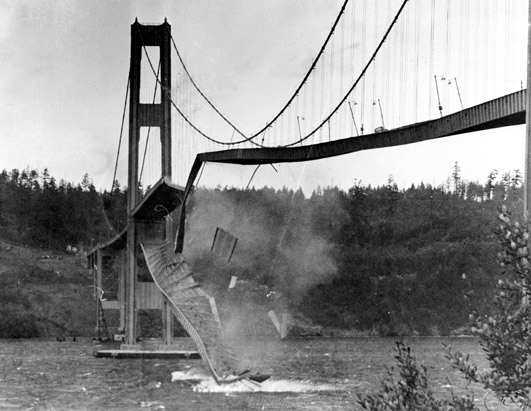
    1940 Tacoma Bridge. Not what they used to be.

  20. #45
    Believe. Hermey's Avatar
    My Team
    San Antonio Spurs
    Join Date
    Dec 2007
    Post Count
    50
    Agloco must be masturbating to this topic.

  21. #46
    Veteran
    My Team
    San Antonio Spurs
    Join Date
    Mar 2009
    Post Count
    97,536
    Engineering competence, esp mass production engineering, is less of a problem than the bean-counters (working for mgmt and investors, not for customrs) cutting corners (quality).

  22. #47
    selbstverständlich Agloco's Avatar
    My Team
    San Antonio Spurs
    Join Date
    Jan 2007
    Post Count
    9,019
    I struggle to look at a complete set of plans for a ing starbucks so the thought of them actually designing to completion a nuke plant that doesn't require 3 million RFI's and even more change orders doesn't sound very realistic to me.
    Not surprising considering that you struggle to look through design plans for Starbucks. It's an entirely different scope as you point out. How many engineers does it take to......


    Agloco must be masturbating to this topic.
    I don't tend to mix work and private life tbh. Thanks for your concern though.

  23. #48
    selbstverständlich Agloco's Avatar
    My Team
    San Antonio Spurs
    Join Date
    Jan 2007
    Post Count
    9,019
    Not surprising considering that you struggle to look through design plans for Starbucks. It's an entirely different scope as you point out. How many engineers does it take to......
    Whoops JS, this was poorly worded. Apologies.

    My intent was to say: I can understand why it seems unrealistic to you if looking at Starbucks plans gives you that much grief. for the record though, I don't see most issues as a fault of engineering.

  24. #49
    Moss is Da Sauce! mouse's Avatar
    My Team
    Dallas Mavericks
    Join Date
    Mar 2003
    Post Count
    26,358
    Agloco must be masturbating to this topic.
    The man wont be happy until everyone's piss is glowing.

  25. #50
    Veteran
    My Team
    San Antonio Spurs
    Join Date
    Mar 2009
    Post Count
    97,536
    Nuclear Regulatory Commission's Vogtle Reactor Approval Should Blow Lid Off Nuclear Finance Scam

    Coming almost exactly two years after the Obama administration granted the project $8.33 billion in federal loan guarantees, the NRC’s OK for the project did not signal a groundbreaking at Vogtle. Thanks to a redefinition of what cons utes construction [5], drafted under a former NRC commissioner who now works for the nuclear industry, Southern started building on the site long before the AP1000 reactor design was finally approved by the NRC last December. And foundations were poured into the Georgia earth before environmental impact surveys were even required to be filed. So, Thursday’s move did not actually start construction, but it did start the roulette wheel turning on a massive financial gamble where Southern Company is pretty much assured of winning, and US taxpayers and Georgia utility customers are guaranteed to lose.

    To date, DOE has produced heavily censored do ents that have provided little or no information in an effort to frustrate any analysis that would be useful to taxpayers. Based on the limited information produced to date, it appears that the power companies had to put almost no “skin in the game,” only promising to pay a token credit subsidy fee of what could be as little as 0.5 or 1.5 percent of the total loan principal.

    DOE claims that the loan guarantee terms and credit subsidy fee estimates are confidential and may only be viewed by Georgia Power and its utility partners. Let’s hope DOE is wrong. For such information to be withheld as confidential, it must have been obtained from the utilities themselves. If the power companies are literally writing their own guarantees and credit subsidy fee estimates, the Loan Guarantee Program is more flawed than anyone could have imagined.

    http://www.truth-out.org/print/12465

Thread Information

Users Browsing this Thread

There are currently 1 users browsing this thread. (0 members and 1 guests)

Posting Permissions

  • You may not post new threads
  • You may not post replies
  • You may not post attachments
  • You may not edit your posts
  •