Reply With Quote
You stopped posting them.

Where are all those tasteless radiation jokes now?

You stopped posting them.
I think the topics speak for themselves.
All anyone has to do is look back to when the Japan disaster took place and you and your Agloco TRolls had a field day downplaying it with tasteless remarks and schoolyard insults.
You really want to see the quotes?
As do your posts.
As yours also.

60 Minutes Report: Fukushima Now Radiating Everyone: Will Impact All Of Humanity
As Agloco drinks champagne

Japan is switching off its last working nuclear reactor, as part of the safety drive since the March 2011 tsunami triggered a meltdown at the Fukushima plant.
The third reactor at the Tomari plant, in Hokkaido prefecture, is shutting down for routine maintenance.
It leaves Japan without energy from atomic power for the first time for more than 40 years.
Until last year, Japan got 30% of its power from nuclear energy.
Hundreds of people marched through Tokyo, waving banners to celebrate what they hope will be the end of nuclear power in Japan...http://www.bbc.co.uk/news/world-asia-17967202Since the Fukushima disaster, all the country's reactors have been shut down for routine maintenance. They must withstand tests against earthquakes and tsunamis, and local authorities must give their consent in order for plants to restart.
So far, none have.
Two reactors at the Ohi plant in western Japan have been declared safe. The government says they should be restarted to combat looming shortages.
However, regional authorities would still have to give their approval.
Ministers have warned Japan faces a summer of power shortages.
The BBC's Roland Buerk, in Tokyo, says the government could force the issue, but so far has been reluctant to move against public opinion.
Tokyo soil so contaminated with radiation it would be considered nuclear waste in US
Radioactive fallout from the Fukushima Daiichi nuclear disaster continues to show up at dangerously high levels in the city of Tokyo, which is located roughly 200 miles from the actual disaster site. According to an analysis of five random soil samples recently taken by nuclear expert Arnie Gundersen, the soil around Tokyo is so contaminated with Fukushima radiation that it would be considered nuclear waste here in the U.S.
During a recent trip to Tokyo, Gundersen collected soil samples from a sidewalk, a children's playground, a rooftop, a patch of moss by the side of a road, and the lawn of a judicial building. After sending those samples in for testing, it was revealed that each one had high levels of radioactive cesium-134 (CS134) and cesium-137 (CS137), while three of the samples contained high levels of cobalt-60 (CO60). One of the samples also tested positive for uranium-235 (U235).
"[W]hen I was in Tokyo, I took some samples [...] and sent them to the lab," said Gundersen in a recent video report. "And the lab determined that all of them would be qualified as radioactive waste here in the United States and would have to be shipped to Texas to be disposed of."
http://www.naturalnews.com/035963_To...#ixzz1vmS3mW58
http://online.wsj.com/article/SB1000...383403854.htmlThe Japanese government is likely to decide to eliminate all nuclear power over the next two decades in a new long-term energy plan that comes amid strong public opposition to atomic energy and ahead of national elections expected in the next few months, said government officials familiar with policy discussions.

o Germany.

NIMBY
Germans Confront The Costs Of A Nuclear-Free Future
After Japan's Fukushima disaster last year, Germany announced a groundbreaking energy plan: It would phase out all of its domestic nuclear power in a decade and make a transition to safer, carbon neutral energy.
The goal is to have solar, wind and other renewables account for nearly 40 percent of the energy for Europe's largest economy in a decade, and 80 percent by 2050.
But already the revolutionary plan and its ambitious timeline are in doubt. There are deep concerns about rising energy costs, and some citizens are mobilizing against fast-track plans for an expanded power grid.
Horst Leithoff, a 57-year-old dairy farmer in the northern German village of Ellhoeft, was hoping for some July sun to harvest the hay in his fields. He got rainy, windy weather instead.
Wind turbines near Ellhoeft, in northern Germany, close to the Danish border. The challenge for Germany's new energy plan is how to transmit power generated in the north to the population centers in the south.
But that's OK with Leithoff, too. His other job is helping to manage four community wind farms in the North Frisia region near the Danish border. The massive, 500-foot-tall wind turbines have blades that weigh 22 tons apiece. Every rotation is marked by a rhythmic sound, like some enormous metronome.
This slice of northwest Germany is one of the country's best on-shore places to harvest the wind. And this northern state is rapidly expanding its wind production. But the problem today is transporting that energy — generated in this rural area — south to Germany's population centers.
"You have to invest in the grids," says Leithoff. "We need about 200 million euros to invest to collect the energy from the wind farms on the west coast to Hamburg. The capacity is not big enough. We need a better grid."
Expanding the north-south grid is essential if the country is to meet its target of phasing out German nuclear power and more than doubling its renewable energy in just 10 years.
In May, the country's four private electricity grid operators — the big power companies — handed Chancellor Angela Merkel a plan to build roughly 2,800 miles of new power lines from northern to southern Germany.
But that plan for new high-capacity overhead lines is running into the familiar backlash.
Quality Of Life Concerns
Malte Graf lives in the village of Preetz in the picturesque northern state of Schleswig-Holstein. A field of waist-high wheat grows next to his house. A forest protected by the EU frames the field on two sides. By law, the new power lines can't go into the woodlands. They'd have to come through his field.
Power Grid Must Adapt To Handle Renewable Energy
"Between these two forests are just hundred of meters for the fields," Graf says. "This electricity line has to cross this field, then they have to go directly over our houses. And that's a really big problem."
Graf lives with his wife and two kids, alongside his brother and his family. Graf runs a small business supplying horse farms. But he spends more and more of his time these days crusading against plans for an expanded power grid. He has posted signs, and printed pamphlets and bumper stickers. He holds monthly meetings, where attendance is growing.
Graf's neighbors are joining in his fight. Marco Franzen lives a few miles away. His home abuts rolling farmlands, fields where horses, cows and sheep graze. The Schwentine river flows nearby through a protected forest. Standing on a sloping field, Franzen whips out binoculars and points out an osprey flying low over the river.
"We built our house here 10 years ago. We've started a family, and the power lines are a threat to our very existence. We're worried about our kids' lives, their health," he says. "And we're financially invested in the area. We have a 30-year mortgage to pay off. If these power lines are built, and they rip up the natural environment and run through our houses, our quality of life will be ruined."
Franzen, a forestry conservation consultant, says he worries, too, about possible health risks including leukemia and lung problems. Numerous studies, however, have shown no significant health risks from power lines or discernible links to cancer.
The Price Of A Nuclear Phaseout
The rise of the "Not In My Backyard," or NIMBY, movement was perhaps inevitable. But if the German power giant TenneT has its way, opponents will not thwart the German dream of building a better grid to meet the nuclear phaseout goals.
A TenneT spokeswoman stresses that the planned route of new lines is not yet finalized. She adds that the company is working with citizens throughout the affected areas to hear their concerns.
But Graf, Franzen and many others in the north aren't convinced yet. Franzen says he's sounding a wake-up call to a public he says is just starting to realize the problems of more high-tension power lines stretching across the German landscape.
"Many city dwellers come here and think, 'Oh, how lovely,' and an hour later, they are back in the city, switch on their lights and think nothing more of it," he says. "We're the ones that have to live with electricity overhead. We are the ones who will have to deal with the daily strains. It's all well and good to build more wind farms, but we have to live with the power lines."
Back at the wind farm on the North Sea near the Danish border, former air force pilot Holger Arntzen says the future of renewable energy in Germany is bright — if people can adapt.
Arntzen is now project manager of Wind Comm, a nonprofit that supports wind farm development. For him, the key to stopping the backlash against the power lines is to do more to inform Germans that the nuclear phaseout comes with a price and changes in lifestyle.
"To show what is possible, and how I, as a citizen, can influence the load on the grid, like putting on my dishwasher only when the sun shines, because we have a lot of photovoltaics. Or waiting on my dishwasher if we have no wind," he says. "People must accept that the post-nuclear phase has a direct impact on how I live, how they live."
That may be a hard sell, even to the practical-minded Germans. The fact is, the post-Fukushima consensus in Germany has given way to growing concerns about rising energy costs. The debate is intensifying over just who will pay for the transition to renewable energy, how it will happen, how fast — and through whose backyards.
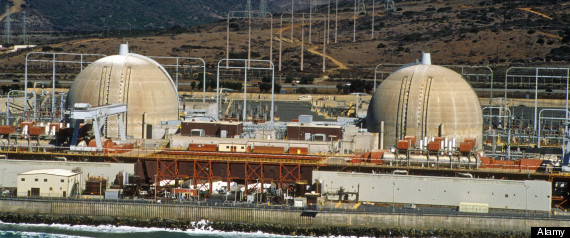
San Onofre Power Plant Layoffs: Troubled Utility To Let 730 Employees Go
The owner of the troubled San Onofre nuclear power plant in Southern California will lay off 730 employees during the fourth quarter of this year to cut costs, which the company said are well above the industry average for a facility of its size.
The San Onofre nuclear power plant, or SONGS, has not produced electricity since Jan. 31, when a radiation leak was discovered in one of the plant's two units.
Even without the shutdown, Edison International's Southern California Edison (SCE) utility would be announcing the layoffs, which will reduce the plant workforce to 1,500 employees, a spokeswoman said.
"SCE has concluded that SONGS' staffing and costs are significantly higher than other similar dual unit, non-fleet nuclear power plants," the company said in a statement.
But the shutdown, stemming from premature wear to the plant's steam generators, didn't help, the company said.
"The steam generator issues at SONGS also require that SCE be prudent with its future spending while SCE and regulators review the long-term viability of the nuclear plant," it said.
"The reality is that the Unit 3 reactor will not be operating for some time," it said, referring to the unit where the leak was discovered earlier this year.
http://www.huffingtonpost.com/2012/0...n_1817128.html
If SO doesn't fire up again, I guess the taxpayers will be stuck with $10Bs of decommissioning costs.


Looks like a comprehensive review with good historical contexts for reference. The use of H3 and I129 as short and long term oceanographic transport indicators is most appropriate. Thank you for the update into current research findings.
you BigCarbon sucking right-wingers piss on Germany as dreamy "greens" and resist the slightest possible impingement on your lives for the "socialistic" common good, but I deeply respect Germany's serious commitments (Germany isn't dominated, owned by BigCarbon) to renewables
Is Renewable Energy's Biggest Problem Solved?
German researchers have found a way to overcome one of the problems with renewable energy -- the fact that it is not always available -- by linking different options in a unified system.
http://www.alternet.org/environment/...problem-solved
Last edited by boutons_deux; 04-14-2013 at 08:31 AM.
There are currently 1 users browsing this thread. (0 members and 1 guests)
 Posting Permissions