He didn't disprove Malthus. He just expanded the wiggle room before the thresholds for death checks. You don't really think that we can just breed unchecked can you?
East Africa is proving to be a proving ground. Border conflict over water between Kenya, Ethipoia, Eritrea and Sudan has been rising and will stand to grow worse considering the region is experiencing a drought worse than the one seen in the early 80s. Malaria, AIDS and a whole slew of parasitic waterborn diseases that are not much talked about are rampant. Measles came back.
We can pat ourselves on the back for being so wonderful by importing food and staving off the worst of the disaster because of the groundwork Michael Jackson and friends put in but it's not sustainable. There was a whole bunch of famine and death last year. How about we put up one of the articles about the East African famines?
As the price for fuel rises then it is going to be more problematic for nitrogen production domestically as well as transportation required to get the food necessary to feed the millions that do not have the domestic production. We going to build the desalination plants they already don't have to handle seasonal variations? All guys like this guy and Sarin Haber did was push it back and present this illusion that current and technologies of the future will stave off famine and disease in infinitum.
Our natgas boom has already changed the plans of a lot of companies who want to build chemical plants of one sort or another, and a lot of planned plants for overseas have been brought back here because of the cheap natgas as feed hydrocarbons.
We don't need to stave off these things forever, just long enough for urbanization and industrialization to catch hold and naturally cut back on population growth rates, which is happening globally.
Flatter population growth rates buy us even more time to bump up yields, and this will happen with mechanization and modern farming methods as they get introduced to more and more arable land globally.
Humanity will be fine, we just need to work on distribution and capital investment for food. There is enough food now, even with biofuel diversion. Famines tend to be because of civil wars and breakdowns in local distribution channels.
If my understanding of this is correct, natgas is about as good as oil for use as feedstock for making fertilizer. Have to double check on that, as I am not really certain though. If so, fertilizer is about to get wicked cheap as the US cranks up its natgas production.
Yep. We've got at least another century of cheap energy ahead, and the global population is expected to top off around 9 billion and then start to decline.
There are still sustainability challenges out there, like water. And handling the entry of 2 billion people into the middle class.
Our natgas boom has already changed the plans of a lot of companies who want to build chemical plants of one sort or another, and a lot of planned plants for overseas have been brought back here because of the cheap natgas as feed hydrocarbons.
We don't need to stave off these things forever, just long enough for urbanization and industrialization to catch hold and naturally cut back on population growth rates, which is happening globally.
Flatter population growth rates buy us even more time to bump up yields, and this will happen with mechanization and modern farming methods as they get introduced to more and more arable land globally.
Humanity will be fine, we just need to work on distribution and capital investment for food. There is enough food now, even with biofuel diversion. Famines tend to be because of civil wars and breakdowns in local distribution channels.
If my understanding of this is correct, natgas is about as good as oil for use as feedstock for making fertilizer. Have to double check on that, as I am not really certain though. If so, fertilizer is about to get wicked cheap as the US cranks up its natgas production.
And here we have the technology will solve all our problems argument.
Calling the population curves flatter does not make them flat nor does attributing the decline in population growth to "urbanization and industrialization" make it so. I don't like the "Let it grow and we're sure to find a way' plan.
For a US population policy it's not so much a problem but considering the living conditions in East and Central Africa, India and Bangladesh's of the world I don't see the bomb has been defused. India is a wonderful example of your industrialization and urbanization and their industrialized urban centers sport slums that are the envy of the world.
Other than a warzone, where do you think the worst place in the world to live is right now? The Ethipoia-Somali border? A Sau Palo or New Dehli slum? The places where this 'population bomb' was supposedly defused?
Better get flattening and urbanizing because while Darrin likes to label people that have concerns about negative outcomes as doomsayers and dismiss 'alarmists' because the world didn't end, that doesn't mean that the world isn't already pretty ty and getting worse all the time. That's in a whole lot of places. May not be here but giving East Africa and the Indian peninsula more capacity for population growth wasn't doing them any favors.
And here we have the technology will solve all our problems argument.
Calling the population curves flatter does not make them flat nor does attributing the decline in population growth to "urbanization and industrialization" make it so. I don't like the "Let it grow and we're sure to find a way' plan.
The UN has had to adjust its forcasts downward.
Europe, China, Japan all have and a few other countries have negative growth rates. The only reason the US doesn't is primarily because of Mexican immigrants, Mexico has a negative population growth rate at the moment, if I remember correctly.
There is a century long trend globally in almost every single country on the planet for smaller and smaller family sizes.
This happens because of a host of reasons that go hand in hand with industrialization. I am not "just saying" anything, other than I have no reason to think that 200 year old trends will change somehow.
China has seen a massive shift, the greatest human migration in the history of our species, equal to the population of the entire United States, shift from rural to urban and industrialized.
Population growth curves are flatter because that is what is happening. If you don't think this is happening, I will be happy to give you the data.
There is a wonderful series of youtubes by Hans Rosling you should watch, his data is actually pretty darn good, and forms the basis for my assertions on this.
Don't take my word for it. Go digging, watch Hans' lectures, they are quite engaging. The 70 year old swedish economist even famously ends his second lecture by swallowing a sword.
If you want, give me some time this weekend, and I will compile a list of supporting links to articles about the economic and demographic data that support this.
For a US population policy it's not so much a problem but considering the living conditions in East and Central Africa, India and Bangladesh's of the world
Respectfully:
Your thinking is outdated. Each of those countries and regions are seeing, and have seen increases in living standards. They are still poor relatively, and there is much misery, but each of them has clear trend lines that would surprise you.
It is happening now, and will likely continue. It doesn't take much of a bump up to make for huge increases in well-being. (look for the "magic washing machine" lecture)
I am more than aware of population growth models. I have studied systemic flow and population models are a major topic in the subject. Most all of the projections have diminishing returns but the nature and quan y of the limiting effect is not some agreed upon phenomenon. The practice much like economics uses what are at best approximations to account for trends.
Ethiopia is going to follow the same socioeconomic route that England did 200 years ago? You sure about that? I think you are dismissing the arguments made by the jesterhat youtube global warming risk assessment person you like to link.
China has a massive decades old program to limit population growth and migration was forced. Since you are using China in your supporting arguments are you supporting China's policies?
I think it's great that French and German populations are diminishing but the people that are the worst off right now are experiencing the highest growth rates. Life already sucks there. They are already the most miserable places to live on Earth with all the fatality and quality of life figures to support that notion. Sustaining the status quo in my mind is unacceptable much less when it's getting worse.
Your thinking is outdated. Each of those countries and regions are seeing, and have seen increases in living standards. They are still poor relatively, and there is much misery, but each of them has clear trend lines that would surprise you.
It is happening now, and will likely continue. It doesn't take much of a bump up to make for huge increases in well-being. (look for the "magic washing machine" lecture)
Respectfully, I have done a lot of looking into the regions beyond a description of a graph's 'trend lines.' I have been trying to talk about the East African droughts of 2010 and 2011 but you keep talking about graphs. 'Bumps' work both ways it seems.
I am more than aware of population growth models. I have studied systemic flow and population models are a major topic in the subject. Most all of the projections have diminishing returns but the nature and quan y of the limiting effect is not some agreed upon phenomenon. The practice much like economics uses what are at best approximations to account for trends.
Ethiopia is going to follow the same socioeconomic route that England did 200 years ago? You sure about that? I think you are dismissing the arguments made by the jesterhat youtube global warming risk assessment person you like to link.
China has a massive decades old program to limit population growth and migration was forced. Since you are using China in your supporting arguments are you supporting China's policies?
I think it's great that French and German populations are diminishing but the people that are the worst off right now are experiencing the highest growth rates. Life already sucks there. They are already the most miserable places to live on Earth with all the fatality and quality of life figures to support that notion. Sustaining the status quo in my mind is unacceptable much less when it's getting worse.
Wonderingmind simply says that we should take some action to avoid the worst case scenarios. I agree. I am also fairly confident that we will cope, overall.
China's one child policy has been made irrelevant by its industrialization, and that industrialization has added to the effects of that policy. No, I don't support forced abortions, or other draconian measures.
As for "The people that are worst off" as well as Ethopia=England:
Rosling has compiled as much data as is available, and the trends in EVERY country are fairly clear. You will have reversals depending on what is going on in a country, i.e. The Great Leap Forward, and Ethiopia's implosion.
Further, Rosling breaks things down even further to do some interesting analysis on segments of population, as compiled by the UN.
The overall trends, as supported by the data available, do not show any coming cataclysm. Improvements in health proceed improvements in income, and we are improving health globally, as well as improving the overall lot of women.
and China's recent migration was not forced, it was an economically driven one as people were lured out of the countryside by the chance to triple their incomes. No one had to make them come. Many of them are more than a bit unwelcome and essentially illegal immigrants in the cities they work. This was not quite officially sanctioned or pushed.
the people that are the worst off right now are experiencing the highest growth rates. Life already sucks there. They are already the most miserable places to live on Earth with all the fatality and quality of life figures to support that notion. Sustaining the status quo in my mind is unacceptable much less when it's getting worse.
My point isn't that living conditions in many places aren't bad, they are. But, they are getting better, and are better than many in the West yet realize.
Wonderingmind simply says that we should take some action to avoid the worst case scenarios. I agree. I am also fairly confident that we will cope, overall.
China's one child policy has been made irrelevant by its industrialization, and that industrialization has added to the effects of that policy. No, I don't support forced abortions, or other draconian measures.
As for "The people that are worst off" as well as Ethopia=England:
Rosling has compiled as much data as is available, and the trends in EVERY country are fairly clear. You will have reversals depending on what is going on in a country, i.e. The Great Leap Forward, and Ethiopia's implosion.
Further, Rosling breaks things down even further to do some interesting analysis on segments of population, as compiled by the UN.
The overall trends, as supported by the data available, do not show any coming cataclysm. Improvements in health proceed improvements in income, and we are improving health globally, as well as improving the overall lot of women.
I was talking about China's cultural revolution not forced abortion. All the forced migration and whatnot.
When you start talking about macro attempts at reductionist approaches and quantification with stuff like "made irrelevant by its industrialization," it makes it hard to take you seriously. Your quan y of 'industrialization' --and I suspect you are thinking of the idea in general terms and not a correlated contribution-- is only an approximation. It's even less fleshed out than the 'invisible hand' and that has not exactly been a forecasting dynamo.
Did you pay attention to the part where your youtube said the rich poor gap is widening and the poorest segment of the population is the one that will be growing most by a large margin? But hey they get bicycles!
And of course your 'trends' are not going to jive with what happens in an individual country. That how it works but for all of your diminishing regression ie the rate of decrease is slowing down India's population growth is a very real concern for for good real reasons.
And when did I say that a cataclysm was going to happen? Are you channeling Darrin or something. I have to say its disappointing to see you use the same ty strawman that he uses against both of us in the climate argument. Logical consistency is important.
And when did I say that a cataclysm was going to happen? Are you channeling Darrin or something. I have to say its disappointing to see you use the same ty strawman that he uses against both of us in the climate argument. Logical consistency is important.
???
Uh, whut?
Don't confuse deliberate strawmen, with good faith restatements based on my understanding of what I am reading. If I have erred in representing your views, by all means clarify and correct.
I accept that we are affecting our climate, and will continue to do so, but don't think the very worst of anything is the most likely outcome. There is a huge amount of uncertainty out there about exact future outcomes, but enough certainty to warrant some prudent steps to avoid what we can, and manage what we cannot. I have faith that we will get better and better at determining what the outcomes will be, though. HOpe that helps.
Don't confuse deliberate strawmen, with good faith restatements based on my understanding of what I am reading. If I have erred in representing your views, by all means clarify and correct.
I accept that we are affecting our climate, and will continue to do so, but don't think the very worst of anything is the most likely outcome. There is a huge amount of uncertainty out there about exact future outcomes, but enough certainty to warrant some prudent steps to avoid what we can, and manage what we cannot. I have faith that we will get better and better at determining what the outcomes will be, though. HOpe that helps.
And whoever said anything about it being the worst possible outcome? I am not saying that you are intentionally trying to smear me; I think i know you better than that. A strawman does not have to be intentional. All I am saying is that you are doing the same thing that Darrin does. You are trying to say that I am predicting a 'cataclysm' and using that as excuse to dismiss my position. That is exactly what they do with the whole 'alarmists' schtick. If you are doing it unconsciously then that is disconcerting.
All I am saying is that unchecked increasing population worsens things. You don't even argue that but try and say that population growth will stop. Maybe it will and maybe it won't but we both know that there are legitimate projections that don't have the population at a static 9b in 40 years with cheap available resources.
You outlined a projection of technology compensating for resource scarcity until such time that urbanization negates population growth. That sounds nice if it actually comes true. On the other hand what if you are wrong? what are the impacts if we cannot compensate for scarcity or the population growth doesn't get mitigated by migration? I have read articles talking about population growth and national security and there is a direct and obvious correlation between high growth states and instability.
You like bringing up France and Japan but I counter that with everything in between. the Indochina peninsula, the Indian peninsula, all of the middle east and most of Africa are all experiencing 2% growth rate or more. Sure stories like the large Arab states going from the 7%'s to the 2%'s is great but what if your macro attribution is incorrect or lacking precision.
What are the most unstable areas in the world? Outside of China which is still pushing the mid 2's but has a massive amount of social control the rest of the growing population world is a cluster . India and Pakistan have backed off of each other in no small part because we have a 100k troops right on their doorstep but having to babysit unstable nuclear nation states is not fun. 5 Middle East nations have seen revolutions due in no small part to the population being 50% under the age of 35 and not having a place to call their own. We are going to get that again but with an extra 2%. Africa is an eternal cluster with the crown jewel of the East end where Rwanda and the consistent famine haunt. You have places like Bangladesh and Haiti that are ass poor, overpopulated and absolutely devastated by natural disaster. The people in Haiti are still living in cholera pits masquerading as tent villages. Bangladesh is wiped out by monsoon every other year.
All of that stands to get worse if the infinite energy supply doesn't pan out long enough or you are wrong on your projections. We get up to our ass in all of that and while isolationism sounds just like fun a trading nation such as our own has to be out there guarding our interests. Preventative measures make sense.
i don't think that you will have a cataclysm but I do think that you will see more famine, disease, rioting, insurrection, deplorable rich poor gaps and the miring in poverty. We see all of that right now and it's happening right now in all of the overpopulated areas experiencing net growth. Treading water and hoping help is coming out the other end just doesn't sit well with me at all.
Was the OP a puff piece paid for by BigOil, BigChem, BigAg?
Sent by the Rockefeller Ins ute in answer to a plea for help from the Mexican government, Borlaug was on a mission to create new varieties of wheat that would not only be resistant to the diseases that had plagued cereal grains since biblical times, but would produce yields far greater than the varieties in current use. Many times greater. And then he would have to persuade Mexican farmers to forsake traditional farming methods for modern ones, which required pesticides and copious amounts of fertilizers along with plenty of water from irrigation.
Vietmeyer chooses not to address the burgeoning criticisms leveled at Borlaug and his farming methods. Particularly the damage being done by chemical runoff from tons of synthetic fertilizers that pollute waterways around the globe, the excess nutrients resulting in algae blooms that create huge “dead zones,” poisoning aquatic life.
http://www.psmag.com/environment/how-norman-borlaug-went-with-the-grain-39922/ In Borlaug’s Green Revolution paradigm, farmers are urged to specialize in one or two commodity crops — say, corn or wheat. To grow them, they were to buy hybridized seeds and ample doses of synthetic fertilizers, pesticides, and irrigation. (Borlaug’s celebrated “dwarf” varieties can thrive only with plenty of water and lots of synthetic nitrogen, and face serious pest pressure, requiring heavy pesticide doses.) One of the most ironic things I see in Borlaug obits is the idea that his innovations made countries like Mexico and India “self-sufficient” in food production. Actually, these nations became perilously dependent on foreign input suppliers for their food security. Today in India’s grain belt, less than 40 years after Borlaug’s Nobel triumph, the water table has been nearly completely tapped out by massive irrigation projects, farmers are in severe economic crisis, and cancer rates, seemingly related to agrichemical use, aretragically high.
to generate the massive yield gains that won Borlaug his Nobel, the nation sacrificed its most productive farmland and a generation of farmers. Meanwhile, as in Mexico, urban poverty and malnutrition in India’s urban centers remained stubbornly persistent. http://grist.org/article/2009-09-14-...orman-borlaug/ So while Borlaug seemed to be a prodigious worker and innovator, he could easily be seen as point man, perhaps unwittingly, for US corporations to colonize and suck wealth out of independent, poor farmers, keeping them poor AND making them dependent on imported corporate seeds and fertilizer. Lots of water, now in crisis worldwide, and Ms tons of synthetic fertilizer produce huge outputs of Borlaug's varieties ? duh I don't need Borlaug's help for that.
Last edited by boutons_deux; 11-30-2012 at 09:26 AM.
And whoever said anything about it being the worst possible outcome? I am not saying that you are intentionally trying to smear me; I think i know you better than that. A strawman does not have to be intentional. All I am saying is that you are doing the same thing that Darrin does. You are trying to say that I am predicting a 'cataclysm' and using that as excuse to dismiss my position. That is exactly what they do with the whole 'alarmists' schtick. If you are doing it unconsciously then that is disconcerting..
No, my second paragraph was more to illustrate my own thinking, not really trying to speak to what I think you were saying.
You seemed to think that Wondering mind might have said that, and I was merely trying to clarify that.
What are the most unstable areas in the world? Outside of China [whose population] is still [growing around the mid 2% mark] but has a massive amount of social control the rest
Again, factually incorrect. Not sure where you are getting your information on this.
Chinese overall net fertility rate is 1.4, meaning that the average woman is producing 1.4 babies in her lifetime. It takes 2 for a stable growth rate, meaning their population growth rate is going to shrink.
The demographics are that quite a few of the younger women are still having kids, but as they finish, they are not being replaced. Net growth rate is .5% about now, not 2%, nor will that rate go up to the mid 2% range in the future.
All I am saying is that unchecked increasing population worsens things. You don't even argue that but try and say that population growth will stop. Maybe it will and maybe it won't but we both know that there are legitimate projections that don't have the population at a static 9b in 40 years with cheap available resources.
You outlined a projection of technology compensating for resource scarcity until such time that urbanization negates population growth. That sounds nice if it actually comes true. On the other hand what if you are wrong? what are the impacts if we cannot compensate for scarcity or the population growth doesn't get mitigated by migration? I have read articles talking about population growth and national security and there is a direct and obvious correlation between high growth states and instability.
Resource scarcity is not as big of a problem as you seem to think it is.
Once the price for anything gets bid up, countries, companies, and individuals react. Bid up the price for oil, and a LOT of money get put into oil production, as well as alternatives. This is exactly what is happening now with oil, and everything else due to Chinese demand.
It is a self-correcting mechanism.
Not only that, but the technologies we are developing are making any given amount of any resource go farther. Make copper more expensive, and we find ways of doing things that use less copper.
Technology and the free market exchange will drive money to places where demand outpaces supply to get to an equilibrium.
Further, knowledge and technological advance is ulative and ac ulates on the same kind of exponential progression as population. Still further, the sun puts out more energy in 2 seconds than humanity has EVER used in its history. Our advances will allow us to leverage this at some point.
This is not to say that rich-poor gaps don't exist or are not a problem, they are.
I just don't see all this as intractable and automatically causing war/famine/negative effects. It is certainly possible, but by no means certain, or, in my estimation, even probable.
If you increase population by 2% and come up with industrial processes that use 2% less energy, you have not affected living standards.
Africa is, overall, at about the same income and health level as Europe was at the turn of the 19th century. Again, the data does not support this "always bad, never better" theory.
Africa has a lot of bad problems, to be sure, but given where it started in terms of development, it is progressing along a lot of measures faster than Europe did, partly because the technology is there to leap frog along the way. Africa gets to not spend money on copper-based landwire telephone networks, for example.
You outlined a projection of technology compensating for resource scarcity until such time that urbanization negates population growth. That sounds nice if it actually comes true. On the other hand what if you are wrong?
Then we will have problems that we will have to deal with, and should work toward making sure it doesn't happen.
I could very well be wrong, as could Mr. Rosling, who I put a good deal of stock in. If the data starts pointing to this current trend changing or this not being the case I will be among those who are working to make sure it does change.
I plan on spending the last decade or two of my life either on Mars, or in Africa doing microlending-type development, as I view those things as making sure humanity's lot gets better overall.
A more recently updated bit from the economist who studies these things:
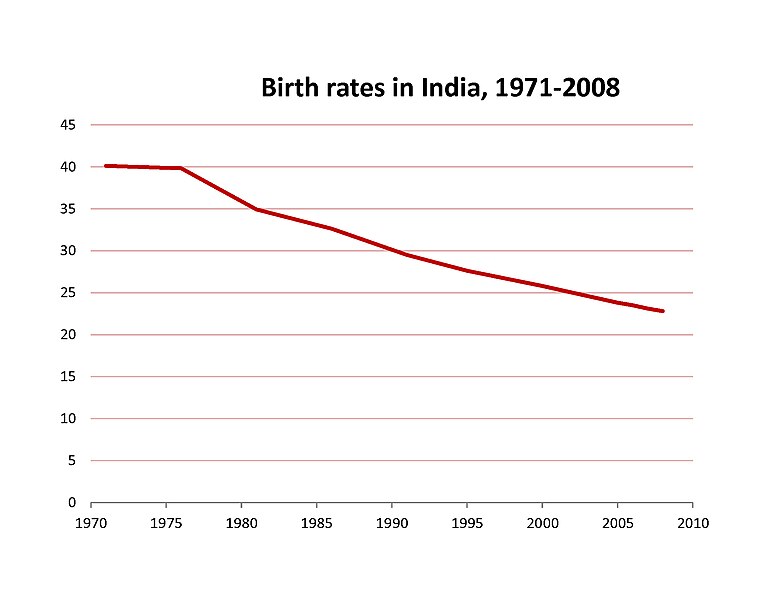
India is at pretty much "break even" in terms of population growth.
85% of the worlds population lives in countries with fertility rates below stable rates, meaning fewer babies are being born than old people are dying.
Pattern is "health first" then income.
We are at the stage where health is getting better and gotten better. Income will follow rather shortly.
If you are being an ideologue regarding macro ideas then there is really no point in discussing this with you tbh. You have selected a couple of authors and a couple of their buzz notions and wrapped it up in a tidy box. You then present it as 'new' thinking and anything else as 'outdated.' You even have your statistician 'messiah' that you 'put a lot of stock into.' His macro ideas are used as dogma.
Examples of macro wrap packages of dismissal include:
Africa = 19th century Europe
health = income
oil prices only rise due to china and will remain stable
You also apparently think that Mars will have land tracts for sale in the next 40 years. I will say that health = money coming from a medical doctor makes for an interesting source. Especially one that is making the same argument as CO2 lags temperature. The EXACT SAME ARGUMENT! Temperature increase PROCEEDS CO2 increase. Health PROCEDES income.
While it may seem convenient to say that Africa especially East Africa and the ME is going to follow the same socioeconomic plot of Europe from 1800 to today I can feel anthropologists the world around cringing. It seems like a lazy economist talking personally: "they are just like we were before the industrial revolution!"
First, the economies in question that did follow your projections were dominated by British colonialists and Americans. Those include India, Japan and SE Asia. Thailand was a British colony. Singapore was the US trading port of choice throughout the 18th and 19th centuries. India was a British colony until the 1940s and even after that ownership of banks and major industry was littered with the white man. Korea was staunchly isolationist before we literally planned their post war economy.
Now you want to say that SA, Iran, Ethiopia, Kenya, Sudan, Yemen et al will do the same thing. Hopefully places that we have much more control over due to centuries of the Monroe doctrine like Brazil, Columbia or Mexico will hold true to your hoped projection but even then that is hardly guaranteed. The aforementioned places are nothing remotely resembling a guarantee. We cannot administer the 'white man's burden' anymore. They reject it quite forcefully in fact.
I agree I was wrong on China but I raise you that and raise you being wrong on India. China is a red herring really though as they not only recognize the problem of overpopulation but have done so much above and beyond any other country to correct it. Whether you find the cultural revolution to be immoral or not it stands as the single greatest feat of social engineering in human history.
India OTOH is not 'almost break even'
India saw a 17.6% increase in population over the decade.
"According to the recently conducted Census of India, our population stands at 1.21 billion. As per the projections, India's population would be 1.40 billion by 2026. With only 2.4% of the entire world's landmass to support 17% of the global population; India's need for population stabilization can hardly be overemphasized," the minister said.
The measures that have contributed to the lowering of fertility rate, the minister cited, includes improving literacy levels, empowerment of women, discouraging adolescent marriages, delaying of the first child birth, enhancement in the compensation package for sterilization, encouraging male participation in sterilization and involving village-level community health workers in promoting family planning.
India is likely to miss its target of reaching population stabilization by 2045. Now, the Union health ministry is looking at 2060 as a plausible target.
Far from it in fact. And it's a of a good thing that the Indian government doesn't take your approach. That particular article demonstrates two other things. First that projections in population dynamics are often wrong and also that population growth is uneven growing the poorest segments the most. In stressed and vulnerable populations that severely exacerbates the problem. Haiti and Bangladesh do not need more people yet they will get them nonetheless.
You do not even argue that the unstable third world but you do build another strawman. It sounds like more of your dogma tbh because you appear to be beating up arguments that you heard beat up in a lecture. I never said 'always bad, never better.' I just didn't. I said East Africa and Bangladesh are ed but I also know places like Brazil and India have gotten better. I also know that Ethiopia had not a straight down arrow but can you honestly say that they are better off than they were 25 years ago?
If you are being an ideologue regarding macro ideas then there is really no point in discussing this with you tbh. You have selected a couple of authors and a couple of their buzz notions and wrapped it up in a tidy box. You then present it as 'new' thinking and anything else as 'outdated.' You even have your statistician 'messiah' that you 'put a lot of stock into.' His macro ideas are used as dogma.
Not really. I simply haven't seen any data that contradicts his.
What I present as new thinking is new because it incorporates new data. Outdated then becomes thinking based on old data.
Do you have a better definition of "new" thinking versus "old" thinking?
Don't get pissy, because it challenges your existing worldview. Take it for what it is. Feel free to present contravening data.



 Reply With Quote