Page 4 of 5 FirstFirst 12345 LastLast
Results 76 to 100 of 105
  1. #76
    I am that guy RandomGuy's Avatar
    My Team
    San Antonio Spurs
    Join Date
    Jun 2005
    Post Count
    51,121
    You've been ridiculing my arguments as outdated but come the on. Just a hint: don't come with 2009 youtubes when you want to make the 'your take is outdated' argument.
    I haven't been "ridiculing" your out of date thinking.

    I have corrected you when you are factually incorrect, and have, for the most part, tried rather hard to do so in as neutral a manner as possible.

    I am aware that the videos are (gasp) three years old, but they are outlining long term trends of 50 to 100 years.

    To be fair and intellectually honest:
    We have no guarantee these trends of rising incomes and rising health will continue.

    So far though, we have a lot of reason to think they will, as well as some reasoning to think they will not and change for the worse.

  2. #77
    I am that guy RandomGuy's Avatar
    My Team
    San Antonio Spurs
    Join Date
    Jun 2005
    Post Count
    51,121

    I can cherry pick stats from 2011 too, its a wikipedia special but at least it's up to date. These are countries from what i will 'call regions of concern':

    Countries over 3% growth or doubling in less that 23 years:

    Uganda
    UAE
    Gaza
    Ethiopia

    Countries at over 2% growth or doubling between 23 and 35 years:

    Congo
    Rwanda
    Kenya
    Sudan
    Iraq
    Afghanistan
    Sierra Leone
    West Bank
    Oman

    and mind you those are only the one that have had major instability in recent history from off the top of my head. There are well over 100 countries at over a 1% growth rate. Now while it may seem fun to say that they will all be under .5% in 35 years, but I am not buying it especially with the last decades deviation from projection. You know with the 2011 dataset.
    1) The last decade has not really deviate that much from past trends in terms of urbanization and total fertility rate.

    2) The grand total population in your list is 274M.

    3) Your calculations for growth rates do not control for immigration. If you are using them to support arguments based on human population growth, double counting is a no-no.


    Population growth in the United Arab Emirates is among the highest in world, mostly due to immigration.
    4) The number of countries having high growth rates means less than the total populations that are having high growth rates. Tiny Gaza with 500,000 people having a high growth rate is a local hiccup at best.

    You would be far better off looking at fertility rates, and larger, more comprehensive datasets, especially with a wider view of things.

  3. #78
    I am that guy RandomGuy's Avatar
    My Team
    San Antonio Spurs
    Join Date
    Jun 2005
    Post Count
    51,121
    Developing countries require more consumption too. Rosling and his 'twoofer-esque' Galileo-special storage container theory is going to take some serious fossil fuel consumption to go from the toy bicycle to the model car. Remember the guy with the cardboard cutouts representing tiers from the WTC? At least Rosling went to the Container Store and Toy R Us for his presentation. I can't believe you took that seriously. Updated thinking, huh? The latest trends in shuffling boxes.
    More Appeal to Ridicule fallacies.

    The twoofer twit was representing physical objects and trying to use them as analogues. Rosling was simply using the props as placeholders for numbers.

    I'm sure even your dumb ass is familiar with things like graphs.

    You know, those visual representations of numbers?

  4. #79
    I am that guy RandomGuy's Avatar
    My Team
    San Antonio Spurs
    Join Date
    Jun 2005
    Post Count
    51,121
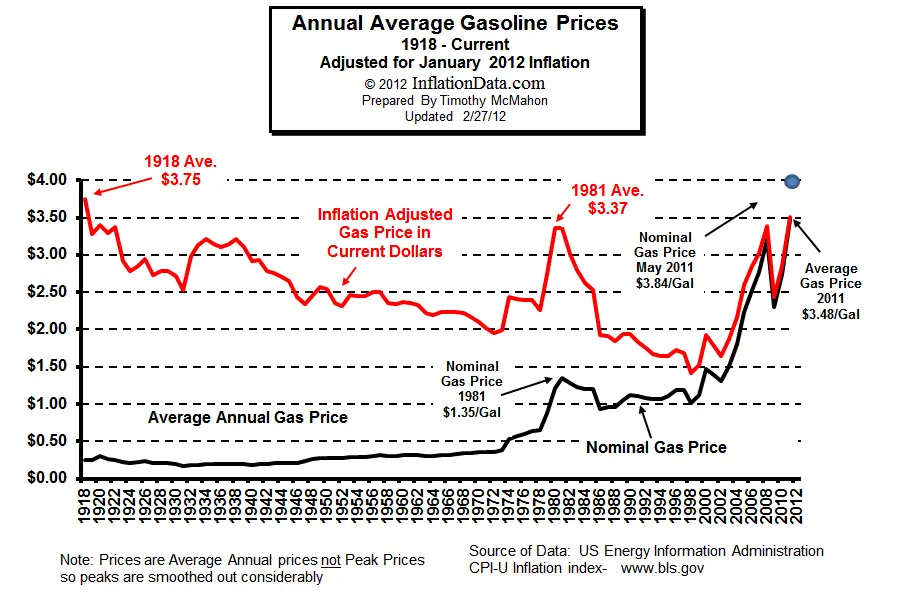
    As for the price of oil. This was the same argument from the 1980s from oilcos. This was from after finding the northern oil reserves in alaska and canada. That's when the 'technology will find a way' argument came about. This was after the OPEC trust fixed prices muchhigher but after the discoveries it rose/remained steady for a portion of the 80s. From the later half of the eighties up 20 years to 2008 supplies went down down down and prices went up, up, up. We saw gas go from under $2 to upwards of $4. Crude prices are still high today.

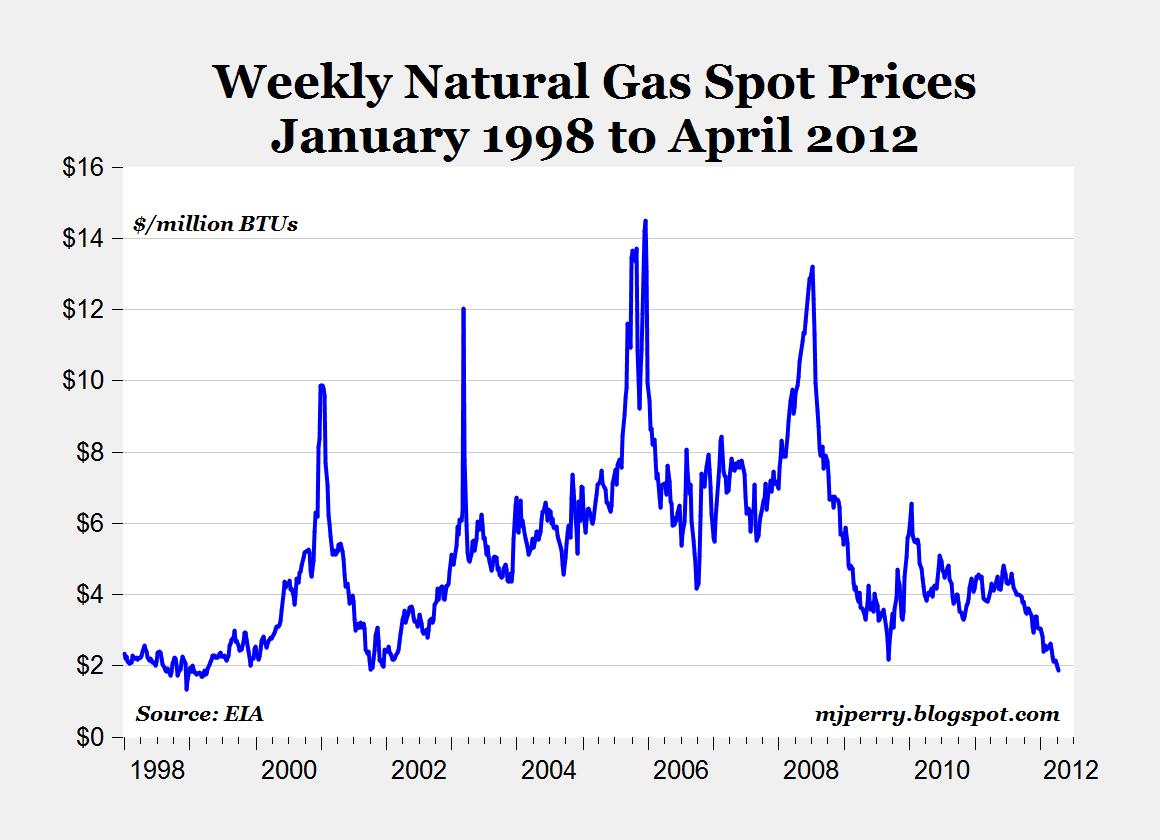
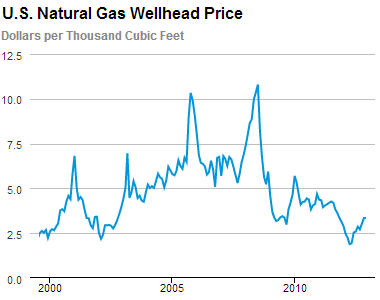
    Natural gas is cheap domestically and has seen prices drop to what they were a decade ago. That is significant. Europe and our other allies such as Japan did not see nearly as much of a drop and we did and well we can both guess how much we gave to the likes of Rwanda. Since 2008 though prices have started to inch back up. Mind you in the interval of 'technology will finding a way' from the 80s to recent gas prices tripled. Technology better start looking again cause I imagine the next 25 year interval is not going to be as pleasant.

    Then there is everything else from rare earths to water. Water is a huge concern. That the Colorado River hasn't reached the ocean in decades is one thing but the regional droughts in Africa are just brutal. The middle East is so arid that they already have to use power intensive reverse osmosis. Boutox is spot on in that regard. When Ethiopia and Palestine have some of the highest growth rates that should be a concern.

    And then of course there is climate change which makes it a nice triangle of scarcity, population and climate shifts. Feedback is a .

    Population growth needs to be more in the public focus. We as a people need to start giving a about what things are going to be like 25 or 50 years from now and stop repeating the mistakes of our forebears. Climate change and population growth who go hand in hand need more priority. A lot more priority than our current focus on finding more fossil fuels.

    I have pointed out, as does Rosling, that resource scarcity will be a problem as developing countries move up in income. He outright says that a lot of current trends in energy and resource use are on unsustainable long term trends. He tempers that with the statement that overall it takes very little income rise to make a huge difference in living standards. This is the kind of thing that you get out of doing real data analysis, instead of relying on flawed logic and confirmation bias filtering.

    Oil companies were right, and new technology did find rather large amounts of oil. They became victims of their own success in the mid-90's because of it, and you would know this if your information sources were a bit broader, and your filtering of information not quite so pronounced.

    Still won't make a huge difference in the long run, but it does mean we have a longer tail to the trailing off of hydrocarbon energy. The natgas discoveries in the US do the same. Delay only, but not prevent. That is why we need to develop alternative efficiency and renewable energy technologies now, I think we can both agree on that.

    Oil prices are high, not because supply has been limited, but because demand has grown a lot. While we have used far more oil than we have discovered, and will continue to do so, demand has been a much greater driver of oil prices.

    Natgas prices, globally, will fall as US export LNG terminals get up and running. This will force US prices up a bit until they equalize with global markets. Ah fungibility.

    Anyhoo, you and I would both agree that we need to move away from depleting sources, but your limited thinking on the issue misses the wider picture that the tail of the peak will be a bit flatter due to technological developments.

    Again, all this does is add more time for economic growth to catch up to population growth.

    Rare earths, water, oil are all problems. I agree. Water will be a particularly important issue, and require a lot of restructuring of how we use it.

    That said, market mechanisms are things you seem to be missing in your thinking.

    If oil remains high for a long time, you will see movement to alternatives, as well as more efficient use of it.
    If natgas remains high for a long time, you will see movement to alternatives, as well as more efficient use of it.
    If rare earth remains high for a long time, you will see movement to alternatives, as well as more efficient use of it.
    If water remains high for a long time, you will see development of new capture methods, as well as more efficient use of it.

    All of this will act to alleviate a lot of what you think will be problems.

    High prices for oil in a world that doesn't use much oil, don't mean much.

    Some of the solutions to these problems will not be easy, but they are all solvable problems. Yes, negative feedback is a . Climate change will not make things better either and create its own set of problems, and make others worse.

    But then, positive feedbacks exist as well. That is what you are missing.
    Last edited by RandomGuy; 12-07-2012 at 03:07 PM.

  5. #80
    I am that guy RandomGuy's Avatar
    My Team
    San Antonio Spurs
    Join Date
    Jun 2005
    Post Count
    51,121
    Mind you in the interval of 'technology will finding a way' from the 80s to recent gas prices tripled.


    The table below isn't even adjusted for inflation.


  6. #81
    I am that guy RandomGuy's Avatar
    My Team
    San Antonio Spurs
    Join Date
    Jun 2005
    Post Count
    51,121
    I have now addressed everything you have posted to some degree or another.

    Ball's in your court, Lumpy.

    I would note though, we are just quibbling over how bad things are and how bad they might get.

    Generally we agree that we need to move away from depletable hydrocarbon sources of energy for a variety of reasons.

    Generally we agree that we need to reduce CO2 and other GHG emissions, in order to mitigate risks of some potentially really bad outcomes in terms of climate change.

    We probably also agree that we face some pretty steep challenges for both. Wars, famine, population growth are all real and pressing concerns. Please don't take anything I have said as being overly dismissive of these problems.

    Free markets for all their flaws, still provide a remarkably flexible, and synergetic response to these problems. Do not underestimate the power and innovativeness of billions of human beings looking at complex problems.
    Last edited by RandomGuy; 12-07-2012 at 05:08 PM. Reason: trying to win the war against my lower self.

  7. #82
    Believe.
    My Team
    San Antonio Spurs
    Join Date
    Jul 2005
    Post Count
    22,886
    You have not addressed everything. You still cherrypick and grandstand on two supposed fallacies and trying to characterize my arguments as such in totality though. I believe that your term for your actions is 'hand waving.'

    I ridicule you sure because your approach to arguing is classic cheap tricks so I deride you. That is what I do. I am not kidding that your presentation and arguments are straight from the AGW denier/twofer playbook. OTOH, what I do not do is leave that as the total of my argument.

    Just to extend some of my arguments that you in no way address well other than stopping the repeat of the health = wealth stupidity:

    1) The 'dataset' and predictive plots were wrong. Population growth especially in India with the new census information completed since 2009 have shown they have not slowed as they thought and they were going to need to make more of an effort than their sterilization programs and whatnot.

    2) The assertion about population growth trends from your not 'outdated' dataset have proven to not match what has actually happened. Other than making predictions on data a few years before or at best while major nations are taking a decadal census in and of itself should be specious.

    3) There is no consideration of the political differences between the emerging countries of 50 years ago and those of today. Making predictions on a macro level is tricky at best, just ask Milton Friedman, but discounting governance past and present of the regions.

    Now for a rebuttal of your most recent stuff.

    1) The following comment is especially ignorant:

    If oil remains high for a long time, you will see movement to alternatives, as well as more efficient use of it.
    If natgas remains high for a long time, you will see movement to alternatives, as well as more efficient use of it.
    If rare earth remains high for a long time, you will see movement to alternatives, as well as more efficient use of it.
    If water remains high for a long time, you will see development of new capture methods, as well as more efficient use of it.

    All of this will act to alleviate a lot of what you think will be problems.
    if you want me to expound on this but I will say this for now. These trends are not in a vacuum and you need to look up the relationship between the alternatives to fossil fuels and rare earth elements. Quite frankly, we do not have enough of the latter for our own domestic use and the world is much worse off.

    2) Trying to show a trend in natural gas prices using a graph of a short period is straight out of the AGW denier handbook. It reminded me of


    instantly. Additionally, showing US domestic prices when we are talking about a world situation is fun I guess. What do you think

    3) Twofer twit indeed was using cardboard cutouts as analogues of the towers. You messiah random namedropped twit used plastic storage tubs and toys as analogues of population and technological development. Its the same approach. Just like saying that health proceeds wealth ad nauseum and implying causality is the same thing that the Koch thinktanks use in making claims about CO2 lagging temperature. They are literally the same ty techniques and logic.

    4) The countries on my list were just from the list of well over 100 that I found that I felt were particularly at risk. That it is only 5% of the world's population is besides the point. What it should demonstrate is that even a small rapidly growing population has profound global effects.

    5) Further, while it's fun to say that the China's and India's of the world are approaching population stagnation --and your messiah of the technocrats was wrong on that notion in 2009-- but looking at the internal demographics paints a more troubling reality. You apprently did not read the Idia Times article I linkid earlier. It is the most at risk populations that are growing while the more affluent are not increasing in population. When the population of the poor grows and the elite shrinks then that is expanding the rich poor gap.

    6) While the figures I gave 'don't account' for migration that is nonsequitor so far. Prima facia arguing that people are migrating to Afghanistan or Ethiopia is specious. You really need to stop applying your canned Rosling assertion on developed countries here. People tend to leave when there are famines and wars, they do not go there en masse.

    7) Free market for all of its flaws is a ing macro idea that is pie in the sky nonsense. You can have your faith in some ephemeral, nebulous rational contruct but myself I want specific policies and projects. You want me to stop worrying about it then you give me some idea how we are going to replace the current photovoltaics now and not some hope for efficiency from oxides 20 years from now after the populations have already doubled. I want to see how we are going to get water to people that already don't have enough. Specifics not the 'God will find a way' approach.

    8) Building a strawman like

    This is the kind of thing that you get out of doing real data analysis, instead of relying on flawed logic and confirmation bias filtering.

    Oil companies were right, and new technology did find rather large amounts of oil. They became victims of their own success in the mid-90's because of it, and you would know this if your information sources were a bit broader, and your filtering of information not quite so pronounced.
    is a waste of your and my time.

    I never disputed the first although it is more masturbation to his 'health = wealth' sales job but as for the latter statement. I specifically said:

    As for the price of oil. This was the same argument from the 1980s from oilcos. This was from after finding the northern oil reserves in alaska and canada. That's when the 'technology will find a way' argument came about. This was after the OPEC trust fixed prices muchhigher but after the discoveries it rose/remained steady for a portion of the 80s. From the later half of the eighties up 20 years to 2008 supplies went down down down and prices went up, up, up. We saw gas go from under $2 to upwards of $4. Crude prices are still high today.
    Your graph from above shows prices go from $1.50 to the $3.50 is that it is today. Your graph is also a myopic, culturally naive US domestic price graph. The rest of the world for the most part pays much higher prices. Don't be a CC with the 'we got ours so everyone else' approach.

    http://mjperry.blogspot.com/2012/05/...y-country.html

    9) I will ask you a question that I really do not know the answer to as it is your personal opinion. Is it fair to treat representatives of Exxon or Citigroup with a bit of skepticism when they discuss US energy and finance regulation policy?

  8. #83
    I am that guy RandomGuy's Avatar
    My Team
    San Antonio Spurs
    Join Date
    Jun 2005
    Post Count
    51,121
    I am not kidding that your presentation and arguments are straight from the AGW denier/twofer playbook. OTOH, what I do not do is leave that as the total of my argument.
    That would be a lot more convincing if your arguments were logically sound, kid.

    Smearing a source for some perceived, but entirely unproven bias, when asked for some justification of that is exactly the kind of thing one would expect from a conspiracy nut.

    I have outlined your failures very clearly.


    Fallacy: Cir stantial Ad Hominem
    ________________________________________
    Description of Cir stantial Ad Hominem
    A Cir stantial ad Hominem is a fallacy in which one attempts to attack a claim by asserting that the person making the claim is making it simply out of self interest. In some cases, this fallacy involves subs uting an attack on a person's cir stances (such as the person's religion, political affiliation, ethnic background, etc.). The fallacy has the following forms:
    1. Person A makes claim X.
    2. Person B asserts that A makes claim X because it is in A's interest to claim X.
    3. Therefore claim X is false.


    Person A: Hans Rosling
    Claim X: Health improvements tend to precede and may be required for improvements of income for many countries not in the industrialized West.
    Person B: FuzzyLumpkins

    1. Hans Rosling (Person A) makes the claim that Health improvements tend to precede improvements of income for many countries not in the industrialized West. (claim X)
    2. Fuzzy Lumpkins (Person B) asserts Hans Rosling’s (person A) non-profit organization takes money from Big Pharma, it is in his interest to play up links between improvements in health and improvements of income. (claim X)
    3. Therefore Hans Rosling’s (Person A) claim of health improvements proceeding or being required for improvements of income (claim X) is false.

  9. #84
    I am that guy RandomGuy's Avatar
    My Team
    San Antonio Spurs
    Join Date
    Jun 2005
    Post Count
    51,121

    1) The 'dataset' and predictive plots were wrong. Population growth especially in India with the new census information completed since 2009 have shown they have not slowed as they thought and they were going to need to make more of an effort than their sterilization programs and whatnot.
    Indias fertility rate is still falling, just a bit more slowly. Change happens, and I won't deny their population will grow.

    Time will tell whether this is ultimately a problem, but their economy is still growing faster than their population, and this will tend to accelerate the trend towards urbanization, as the cities become the economic engines that we know them to be, and people get drawn there for jobs.

    You have presented no evidence that the urbanization trend in India will change, have you?

  10. #85
    I am that guy RandomGuy's Avatar
    My Team
    San Antonio Spurs
    Join Date
    Jun 2005
    Post Count
    51,121
    2) The assertion about population growth trends from your not 'outdated' dataset have proven to not match what has actually happened. Other than making predictions on data a few years before or at best while major nations are taking a decadal census in and of itself should be specious.
    You base this entirely on one news article detailing Indian politicians estimates about India without looking at source data? Really? That is what you are going with?

    You should be reading things like this, and maybe then you might start thinking in terms of fertility rates instead of "population growth".

    http://www.prb.org/pdf07/futurepopulationofindia.pdf
    Last edited by RandomGuy; 12-13-2012 at 12:37 PM. Reason: toned down a bit

  11. #86
    I am that guy RandomGuy's Avatar
    My Team
    San Antonio Spurs
    Join Date
    Jun 2005
    Post Count
    51,121
    2) Trying to show a trend in natural gas prices using a graph of a short period is straight out of the AGW denier handbook. It reminded me of

    Not comparable at all.

    We have vast amounts of past data for global temperature.

    We have, at best, a few decades worth of prices for natgas, and even then, great regional variability, and given technological and demand changes, little value in comparing present prices to that of 50 years ago. The kind of data you seem to think would not be cherry picking doesn't exist, dumb ass.

    Were you not a lazy dishonest , you would attempt to prove the cherry picking by showing the entire dataset, and you might be able to figure that out for yourself, instead of posting the global warming graph and prancing.

    Globally, it varies greatly between regions as it is difficult to transport without large, capital intensive pipelines.

    In the US however, prices have remained remarkably stable, up until the recent e in energy prices, primarily from Chinese demand:
    http://geology.com/articles/natural-gas-prices/

    The best data we have is for US prices:


    Feel free to present long term global price data that isn't "cherry picking". Good luck with that. You and I both know you won't even try.

    In that you are far closer to twoofer moon fakers than you would like to admit.

    If you try to do it, you will realize how it isn't comparable, because natural gas price data and global temperature data are not at all similar, give up, knowing I am right, and your "cherry picking" charge is bull . If you don't try, you prove my point about you being a dishonest lazy . For you to prove your point, you have to show that a conclusion drawn from the data might change, given more data. You can't, without being even more dishonest. Not that I would put it past you, given the ad hominem fallacies.

    I don't mind you having an opinion, however uninformed, but your ignorance does not make me wrong. Sorry.


    7) Free market for all of its flaws is a ing macro idea that is pie in the sky nonsense. You can have your faith in some ephemeral, nebulous rational contruct but myself I want specific policies and projects. You want me to stop worrying about it then you give me some idea how we are going to replace the current photovoltaics now and not some hope for efficiency from oxides 20 years from now after the populations have already doubled. I want to see how we are going to get water to people that already don't have enough. Specifics not the 'God will find a way' approach.
    Free markets have their places, and part of that is moving capital to where demand increases. This is neither magical, nor nebulous. Sorry you have no education in economics to understand it, but again, your ignorance does not make me wrong.

    I don't want you to stop worrying, quite the opposite, as I have said. I have said we should be concerned. We should be spending money now on solving these problems. You and I are not too far off, but for some reason, you seem bound and determined to talk past that, and ignore what I am really saying.

    If you keep looking there are no few number of people working on solving energy, water, and other problems. No guarantee they will solve everything perfectly, and we do need to put more support into those efforts.

    I do not have a "God will find a way" approach. I have stated what my "approach" is, repeatedly. Criticize that "God will find a way approach" all you want, I will not defend it, as that is not what I believe, nor the approach I think we should take.
    Last edited by RandomGuy; 12-13-2012 at 12:52 PM.

  12. #87
    I am that guy RandomGuy's Avatar
    My Team
    San Antonio Spurs
    Join Date
    Jun 2005
    Post Count
    51,121
    3) Twofer twit indeed was using cardboard cutouts as analogues of the towers. You messiah random namedropped twit used plastic storage tubs and toys as analogues of population and technological development. Its the same approach. Just like saying that health proceeds wealth ad nauseum and implying causality is the same thing that the Koch thinktanks use in making claims about CO2 lagging temperature. They are literally the same ty techniques and logic.
    Meh. Doubling down on the ad hominem, and a rather childish attempt to get my goat.

    I have come to realize that is the best you can do, so I will stop.

    Let me know when you decide to stop being dishonest and/or lazy.

    At this point, I don't see much point in continuing. You are a waste of effort.

    You may now engage in whatever chest-thumping makes you happy, kid. I cede the field.

    You are too much for me.
    Last edited by RandomGuy; 12-13-2012 at 12:30 PM.

  13. #88
    Believe.
    My Team
    San Antonio Spurs
    Join Date
    Jul 2005
    Post Count
    22,886
    You base this entirely on one news article detailing Indian politicians estimates about India without looking at source data? Really? That is what you are going with?

    You should be reading things like this, and maybe then you might start thinking in terms of fertility rates instead of "population growth".

    http://www.prb.org/pdf07/futurepopulationofindia.pdf
    They just had a census in 2011. You are going to show me a study from 2007 and try and make claims that it is more telling than him quoting figures of what their census said just this year?

    This shows me two things:

    1) You have no clue about population modeling and the subsequent projections. Look into non deterministic flow. And just to be clear; migration and urbanization fertility rates both get a coefficient in the equation. It's just too bad that there is no reductionist take on it like there is with the thermodynamic flux and it's PDE's.

    2) You are completely unaware that India just now is completing the most massive census undertaking in human history and you are STILL showing me from 6 years ago. The reason I am being a to you is literally like that. How many times did you call me outdated? More on that in a minute.

    Literally as we speak they are combing through a mountain of data and the 'politician' quoting disproportionate growth figures is the health minister of the country involved in the undertaking. We was quoting decadal growth rates of provinces that had certain social service figures ie the poor ty places. One thing is becoming very clear though: the population projections that we have been being told for the last few years saying "India is almost break even" such as you have been channeling have been wrong. You really need to stop with the outdated when I am citing brand spanking new Indian census figures. Stick your 'source data' up your ass.

    3) You really like your urbanization coeffecient. Geographic data is an important distinction when modeling but quite frankly how they model projections right now is flawed and your urbanization coefficient is jsut as much in question as anythig else. And lets make it clear. Arbitrarily calling a certain geographic type urban and measuring fertility rates on that that arbitrary bifurcation is at best clunky when you are trying to make projections as to how hundreds of millions or more of people are living. This gets back to the entire macro approximation discussion that I was trying to have but you have been too busy trying to pigeonhole me into ad hominems. That the guy is an economist who have their own neat macro concept based models and why that is funny may be lost on you but it is not for me. Precision counts but I'll give a pass just on effort.

    4) You avoided the question and I know in your mind that avoiding a question is admissive so that is telling: " I will ask you a question that I really do not know the answer to as it is your personal opinion. Is it fair to treat representatives of Exxon or Citigroup with a bit of skepticism when they discuss US energy and finance regulation policy?"

  14. #89
    I am that guy RandomGuy's Avatar
    My Team
    San Antonio Spurs
    Join Date
    Jun 2005
    Post Count
    51,121
    They just had a census in 2011. You are going to show me a study from 2007 and try and make claims that it is more telling than him quoting figures of what their census said just this year?

    This shows me two things:

    1) You have no clue about population modeling and the subsequent projections. Look into non deterministic flow. And just to be clear; migration and urbanization fertility rates both get a coefficient in the equation. It's just too bad that there is no reductionist take on it like there is with the thermodynamic flux and it's PDE's.

    bla bla bla, more diatribe bla
    If you read closely, I didn't make any claims.

    What I did say, is that you should look at underlying reports instead of news articles about the reports.

    You should be reading things like this [statistical demographic analysis], and maybe then you might start thinking in terms of fertility rates instead of "population growth".
    Sokay. I already know you are not, for whatever reason really reading or understanding what I say. Any case makes further discussion pointless, other than to point out your obvious mistakes, because that is mildly amusing.
    Last edited by RandomGuy; 12-13-2012 at 05:35 PM. Reason: dammit. i gotta quit doing that.

  15. #90
    I am that guy RandomGuy's Avatar
    My Team
    San Antonio Spurs
    Join Date
    Jun 2005
    Post Count
    51,121
    4) You avoided the question and I know in your mind that avoiding a question is admissive so that is telling: " I will ask you a question that I really do not know the answer to as it is your personal opinion. Is it fair to treat representatives of Exxon or Citigroup with a bit of skepticism when they discuss US energy and finance regulation policy?"
    Yes. One should be skeptical.

    Easy peasey.


    See how that goes? That is what intellectual honesty should look like.

    (edit)

    That said "skepticism" should not include blanket dismissals, simply because they have an interest. Their claims should be subjected to some scrutiny, but automatically assuming anything they say about energy policy is wrong would be a grave error.

    I would ask in return:
    Would anything they say be automatically wrong or false?
    Last edited by RandomGuy; 12-13-2012 at 05:38 PM.

  16. #91
    I am that guy RandomGuy's Avatar
    My Team
    San Antonio Spurs
    Join Date
    Jun 2005
    Post Count
    51,121
    They just had a census in 2011. You are going to show me a study from 2007 and try and make claims that it is more telling than him quoting figures of what their census said just this year?

    This shows me two things:

    1) You have no clue about population modeling and the subsequent projections. Look into non deterministic flow. And just to be clear; migration and urbanization fertility rates both get a coefficient in the equation. It's just too bad that there is no reductionist take on it like there is with the thermodynamic flux and it's PDE's.

    2) You are completely unaware that India just now is completing the most massive census undertaking in human history and you are STILL showing me from 6 years ago. The reason I am being a to you is literally like that. How many times did you call me outdated? More on that in a minute.

    Literally as we speak they are combing through a mountain of data and the 'politician' quoting disproportionate growth figures is the health minister of the country involved in the undertaking. We was quoting decadal growth rates of provinces that had certain social service figures ie the poor ty places. One thing is becoming very clear though: the population projections that we have been being told for the last few years saying "India is almost break even" such as you have been channeling have been wrong. You really need to stop with the outdated when I am citing brand spanking new Indian census figures. Stick your 'source data' up your ass.

    3) You really like your urbanization coeffecient. Geographic data is an important distinction when modeling but quite frankly how they model projections right now is flawed and your urbanization coefficient is jsut as much in question as anythig else. And lets make it clear. Arbitrarily calling a certain geographic type urban and measuring fertility rates on that that arbitrary bifurcation is at best clunky when you are trying to make projections as to how hundreds of millions or more of people are living. This gets back to the entire macro approximation discussion that I was trying to have but you have been too busy trying to pigeonhole me into ad hominems. That the guy is an economist who have their own neat macro concept based models and why that is funny may be lost on you but it is not for me. Precision counts but I'll give a pass just on effort.

    4) You avoided the question and I know in your mind that avoiding a question is admissive so that is telling: " I will ask you a question that I really do not know the answer to as it is your personal opinion. Is it fair to treat representatives of Exxon or Citigroup with a bit of skepticism when they discuss US energy and finance regulation policy?"
    As for the rest of it, as I said, you win. I see very little value in attempting to challenge your underlying assumptions, because you obviously wouldn't change your mind about anything even if shown to be wrong. You are, at this point, more interested in showing me up than the truth, and that makes for a boring conversation, quite frankly.

    That is probably a bit my fault, so you have my apologies, but you are a prickly type though, so I doubt getting to that point could have been avoided.

    Prosit.

  17. #92
    Believe.
    My Team
    San Antonio Spurs
    Join Date
    Jul 2005
    Post Count
    22,886
    I just brought up fertility rates in the above post, Mr. Intellectually Honest. A simple ctrl-f and you can be honest too!

    I have worked with population models mathematically. Don't tell me your favorite coefficients and act like youre special. Fertility rate is just a coefficient you multiply by the current population. I like the death rate and youre a noob for not discussing that!

    On a final note, you admit that a man's professional associates are a legitimate reason for skepticism. Thus the ad hominem does have some validity in an argument according to you. The only one using a blanket dismissal regarding this is you. Bold me some more syllogisms.

  18. #93
    Veteran DarrinS's Avatar
    My Team
    San Antonio Spurs
    Join Date
    Jun 2005
    Post Count
    42,561
    You two girls still fighting? Damn.

  19. #94
    I am that guy RandomGuy's Avatar
    My Team
    San Antonio Spurs
    Join Date
    Jun 2005
    Post Count
    51,121
    On a final note, you admit that a man's professional associates are a legitimate reason for skepticism.
    No, actually, I didn't.

    You also didn't really prove a conflict of interest exists. I'm sure you think you did, but really you were VERY far from it.

    Lastly, even if you were to get off your lazy ass and supply enough data to support your assertion of a conflict of interest, you still would have to show that any work might have been affected by a conflict of interest, as I have asked you to do.

    Honestly, most of what you say and assert here seems to be based on a lack of understanding of what the guy said, and of what I said. I rather highly doubt you really watched most of the lectures, and am certain you didn't quite understand them.

    I don't think you are being intentionally dishonest, mostly. I think it is because you think you understand what is being presented far better than you actually do. The fact that you have repeatedly misstated/interpreted what I am saying speaks very strongly to this. FWIW, you do this with everyone you get into it with here. Nuance is waaaay not your strong point.

  20. #95
    I am that guy RandomGuy's Avatar
    My Team
    San Antonio Spurs
    Join Date
    Jun 2005
    Post Count
    51,121

    I have worked with population models mathematically. Don't tell me your favorite coefficients and act like youre special. Fertility rate is just a coefficient you multiply by the current population. I like the death rate and youre a noob for not discussing that!
    Meh. We could have gotten around to a lot of things, but we aren't going to get there. As I have said we seem to be talking past each other, and that is hard to fix, especially when one person seems to consistantly misunderstand the other. I don't think you quite understand the points I have been making, nor do you seem to really get what Rosling was saying.

    I have not worked with mathmatical population models, in that you are probably more familiar with how such models work. I will accede that much.

    My job involves thinking about broad issues, idenitfying risks, analysing risks, analysing risk mitigation strategies, and assessing the sufficiency of evidence to support claims made. I let experts do the modeling when that is required.

    It is, quite literally, my job to be skeptical, dig for evidence to support claims/assertions, and evaluate that evidence against those assertions, which makes me an enormous pain in the ass to conspiracy nuts and conservatives here and elsewhere who seem to really suck at that skill group in my experience.

  21. #96
    I am that guy RandomGuy's Avatar
    My Team
    San Antonio Spurs
    Join Date
    Jun 2005
    Post Count
    51,121
    You two girls still fighting? Damn.
    Yes, ma'am.


  22. #97
    Believe.
    My Team
    San Antonio Spurs
    Join Date
    Jul 2005
    Post Count
    22,886
    Meh. We could have gotten around to a lot of things, but we aren't going to get there. As I have said we seem to be talking past each other, and that is hard to fix, especially when one person seems to consistantly misunderstand the other. I don't think you quite understand the points I have been making, nor do you seem to really get what Rosling was saying.

    I have not worked with mathmatical population models, in that you are probably more familiar with how such models work. I will accede that much.

    My job involves thinking about broad issues, idenitfying risks, analysing risks, analysing risk mitigation strategies, and assessing the sufficiency of evidence to support claims made. I let experts do the modeling when that is required.

    It is, quite literally, my job to be skeptical, dig for evidence to support claims/assertions, and evaluate that evidence against those assertions, which makes me an enormous pain in the ass to conspiracy nuts and conservatives here and elsewhere who seem to really suck at that skill group in my experience.
    I am well aware of what macro risk categorization is underwriter. Population models are the discrete sums of what boils down to x[n] = (BR-MR)*x[n-1] +/- migration. It feedsback on itself and leads to some interesting output when you chain in multiple populations. There have been all manner of thesis about the lorenz attractor and simple population difference equations.

    I understand perfectly what you are trying to say. People around the world are migrating to cities and the difference in birth rates and death rates in the city as opposed to rural areas is going to cause the growth trend to mitigate and thus we will be able to cope. The coping mechanism will include enriching the impoverished because as I should remember only a little bit of wealth creates a proportionately high rise in standard of living.

    Through are vaccination and other entrepreneurial ventures my colleagues and I have been able to raise the health standard in urban areas and health has been shown to proceed wealth so various UN en ies should continue to fund us doing so.

    My 'underlying assumption' is that various censuses taken lately and the various approximations of population data --and lets keep in mind the population demographics of a place like Ethiopia or Iran are at best guesswork on their part-- have shown themselves to be wrong. Most egregiously has been India where health ministers are saying that they are not doing enough and the predictive models were wrong about rate of change of growth.

    For example: HERE is a study done detailing the inaccuracy and imprecision of projections from 15 years ago. Yes, I understand that the information is 'outdated.' That is part of the Rosling sales job entails. With his new software and dataset they are now getting it right......

    The problem is that they are not. India now as it was 15 years ago proves that their modeling is wrong. Do you disagree that the population projections underprojected current growth rates?

    Now I don't know if you are a claims handler --or another frontline underwriter-- or something more hands on actuarially. But there is a difference between categorizing risk and correlating said categories to claims made versus creating arbitrary populations and trying to make projection models.

    At best, geographical population density models --which is what your 'urbanization' is-- are oversimplified. Also they are not some new mode of approach. They are blending together with poor understanding at the 'forces' at work as most macro models are doing.

    My point is that when assholes make claims about how population growth is going to trend, they lack both the precision and the accuracy necessary to make informed policy decisions. They have shown it once again and just because you have some new asshole like Rosling claiming to have transcended 'outdated' thinking, it's bull . They still have no idea what they are talking about and I am not going to bother watching them continue to throw against the wall and maybe one day it will stick. I am not going to bother looking at the categorization du jour over and again.

    You want me to look at fertility rates. I want you to look at how they choose their categories and population segmentation. Now if you would like we can talk about macro analysis versus a reductionist approach ie the difference between looking at the population of a Dehli slum or a rural area in Uganda versus a continuous temperature gradient such as used in climate science then great but you acting like I am not understanding simple macro concepts is insulting. If anything your youtube education has brought you no clue about their methodology.

    For me, until population models move past poorly understood, tentatively accepted generalizations, I will forgo giving a about the Roslings of the world and their datasets. Soft science indeed.

    Last edited by FuzzyLumpkins; 12-14-2012 at 04:17 PM.

  23. #98
    I am that guy RandomGuy's Avatar
    My Team
    San Antonio Spurs
    Join Date
    Jun 2005
    Post Count
    51,121
    I am well aware of what macro risk categorization is underwriter. Population models are the discrete sums of what boils down to x[n] = (BR-MR)*x[n-1] +/- migration. It feedsback on itself and leads to some interesting output when you chain in multiple populations. There have been all manner of thesis about the lorenz attractor and simple population difference equations.

    I understand perfectly what you are trying to say. People around the world are migrating to cities and the difference in birth rates and death rates in the city as opposed to rural areas is going to cause the growth trend to mitigate and thus we will be able to cope. The coping mechanism will include enriching the impoverished because as I should remember only a little bit of wealth creates a proportionately high rise in standard of living.

    Through are vaccination and other entrepreneurial ventures my colleagues and I have been able to raise the health standard in urban areas and health has been shown to proceed wealth so various UN en ies should continue to fund us doing so.

    My 'underlying assumption' is that various censuses taken lately and the various approximations of population data --and lets keep in mind the population demographics of a place like Ethiopia or Iran are at best guesswork on their part-- have shown themselves to be wrong. Most egregiously has been India where health ministers are saying that they are not doing enough and the predictive models were wrong about rate of change of growth.

    For example: HERE is a study done detailing the inaccuracy and imprecision of projections from 15 years ago. Yes, I understand that the information is 'outdated.' That is part of the Rosling sales job entails. With his new software and dataset they are now getting it right......

    The problem is that they are not. India now as it was 15 years ago proves that their modeling is wrong. Do you disagree that the population projections underprojected current growth rates?

    Now I don't know if you are a claims handler --or another frontline underwriter-- or something more hands on actuarially. But there is a difference between categorizing risk and correlating said categories to claims made versus creating arbitrary populations and trying to make projection models.

    At best, geographical population density models --which is what your 'urbanization' is-- are oversimplified. Also they are not some new mode of approach. They are blending together with poor understanding at the 'forces' at work as most macro models are doing.

    My point is that when assholes make claims about how population growth is going to trend, they lack both the precision and the accuracy necessary to make informed policy decisions. They have shown it once again and just because you have some new asshole like Rosling claiming to have transcended 'outdated' thinking, it's bull . They still have no idea what they are talking about and I am not going to bother watching them continue to throw against the wall and maybe one day it will stick. I am not going to bother looking at the categorization du jour over and again.

    You want me to look at fertility rates. I want you to look at how they choose their categories and population segmentation. Now if you would like we can talk about macro analysis versus a reductionist approach ie the difference between looking at the population of a Dehli slum or a rural area in Uganda versus a continuous temperature gradient such as used in climate science then great but you acting like I am not understanding simple macro concepts is insulting. If anything your youtube education has brought you no clue about their methodology.

    For me, until population models move past poorly understood, tentatively accepted generalizations, I will forgo giving a about the Roslings of the world and their datasets. Soft science indeed.
    TLDR.

    Stopped reading after the first sarcastic remark ("underwriter"). Not going to address anything. You win.


  24. #99
    Believe.
    My Team
    San Antonio Spurs
    Join Date
    Jul 2005
    Post Count
    22,886
    TLDR.

    Stopped reading after the first sarcastic remark ("underwriter"). Not going to address anything. You win.

    Sarcastic? Dude you really need to relax.

    You say that you work in the insurance industries and deal with risk data. Underwriters assess risk. How is calling you what is an honorable profession sarcastic? I don't know what you do really, I was just trying to relate.

  25. #100
    dangerous floater Winehole23's Avatar
    My Team
    San Antonio Spurs
    Join Date
    Nov 2008
    Post Count
    113,791
    In Borlaug’s Green Revolution paradigm, farmers are urged to specialize in one or two commodity crops — say, corn or wheat. To grow them, they were to buy hybridized seeds and ample doses of synthetic fertilizers, pesticides, and irrigation. (Borlaug’s celebrated “dwarf” varieties can thrive only with plenty of water and lots of synthetic nitrogen, and face serious pest pressure, requiring heavy pesticide doses.)

    One of the most ironic things I see in Borlaug obits is the idea that his innovations made countries like Mexico and India “self-sufficient” in food production. Actually, these nations became perilously dependent on foreign input suppliers for their food security.

    Today in India’s grain belt, less than 40 years after Borlaug’s Nobel triumph, the water table has been nearly completely tapped out by massive irrigation projects, farmers are in severe economic crisis, and cancer rates, seemingly related to agrichemical use, aretragically high.

    to generate the massive yield gains that won Borlaug his Nobel, the nation sacrificed its most productive farmland and a generation of farmers. Meanwhile, as in Mexico, urban poverty and malnutrition in India’s urban centers remained stubbornly persistent.
    As Amartya Sen’s now famous work has shown, food and population growth rates cannot be compared directly. Food availability has to be refracted through the element of price. There may be a mountain of food available, but access to food is only based on the en lements that people have, to be able to exchange for food. This is one of the reasons, among others, that explains the bitter irony that Indians have remained food insecure despite all this bumper wheat production. Malnutrition levels in 2005 continued to remain horrific – three out of five children under five, or nearly 60%, were found to be chronically malnourished (two standard deviations below normal) by the National Family Health Survey. Moreover, the per capita availability of coarse cereals, gram and pulses had fallen by 42 kg per person per year, while the gains from wheat were only 28 kg per person per year between 1961 and 2006
    http://thewire.in/76956/green-revolu...food-security/

Thread Information

Users Browsing this Thread

There are currently 1 users browsing this thread. (0 members and 1 guests)

Posting Permissions

  • You may not post new threads
  • You may not post replies
  • You may not post attachments
  • You may not edit your posts
  •