Page 9 of 36 FirstFirst ... 567891011121319 ... LastLast
Results 201 to 225 of 900
  1. #201
    Veteran Th'Pusher's Avatar
    My Team
    San Antonio Spurs
    Join Date
    Feb 2010
    Post Count
    6,130
    And a bit more on inequality from a book I read a while back and recommend if you're interested. Sorry for the length...

    How does inequality affect economic efficiency? We care about inequality, or perhaps we care mostly about inequality, because we believe that it affects some important economic phenomena—notably, economic growth: Do more unequal countries grow faster or slower? Historically, the pendulum has swung from a rather unambiguous answer that inequality is good for growth to a much more nuanced view that favors the opposite conclusion.


    Why has this been the case? To understand it, look at inequality, as far as economic efficiency is concerned, as cholesterol: There is “good” and “bad” inequality, just as there is good and bad cholesterol. 4 “Good” inequality is needed to create incentives for people to study, work hard, or start risky entrepreneurial projects. None of that can be done without providing some inequality in returns (for the effects of “unreasonable” leveling of incomes, see Vignette 1.5 on inequality under socialism). But “bad” inequality starts at a point—one not easy to define—where, rather than providing the motivation to excel, inequality provides the means to preserve acquired positions. This happens when inequality in wealth or income is used to forestall an economically positive political change for the society (e.g., agrarian reform or abolition of slavery), or to allow only the rich to get education, or to ensure that the rich keep the best jobs. All of this undercuts economic efficiency. If one’s ability to get a good education strongly depends on one’s parents’ wealth, this is equivalent to depriving society of the skills and knowledge of a large segment of its members (the poor). Discrimination according to inherited income is not, in that sense, different from any other discrimination, such as gender or race. In all cases, society decides that the skills of a certain group of people will not be used. Economically, such societies are unlikely to be successful. Depending on which kind of inequality—“positive,” needed for incentives, or “negative,” ensuring monopoly of the rich—is dominant in a given country and time, inequality may be regarded as either beneficial or harmful.


    The benevolent view of economic inequality—that it provides incentives for individuals to excel—dominated when economists believed that only the very rich save and that without them, there would be no investments and no wealth creation. Workers (or the poor) were thought apt to spend everything they earned. If everybody then had the same (relatively) low income, there would be no saving, no investment, and no economic growth. The rich per se were not important, but it was important to have them around so that they would save, augment capital, and provide the wherewithal for feeding the engine of economic growth. The rich were supposed to be receptacles for the individualization of savings. They would spend and enjoy themselves no more than the others. All the excess would be simply saved and invested. Asceticism, as Max Weber wrote, was the key ingredient of such a “spirit of capitalism”: “The summum bonum of this ethic, the earning of more and more money, combined with the strict avoidance of all spontaneous enjoyment of life, is above all completely devoid of any ... hedonistic admixture. It is thought of so purely as an end in itself, that from the point of view of happiness of, or utility to, the single individual, it appears entirely ... irrational.”5


    It is in the passage written in 1920 by John Maynard Keynes, famous English economist and founder of modern macroeconomics, that this slightly rose-tinted view of the justification of inequality of incomes under the condition that high incomes be used for investment finds perhaps its best expression:


    Society [of pre-1914 Europe] was so framed as to throw a great part of the increased income into the control of the class least likely to consume it. The new rich of the nineteenth century were not brought up to large expenditures, and preferred the power which investment gave them to the pleasures of immediate consumption. In fact, it was precisely the inequality of the distribution of wealth which made possible those vast ac ulations of fixed wealth and of capital improvements which distinguished that age from all others. Herein lay, in fact, the main justification of the Capitalist System. If the rich had spent their new wealth on their own enjoyments, the world would long ago have found such a régime intolerable. But like bees they saved and ac ulated, not less to the advantage of the whole community because they themselves held narrower ends in prospect.


    This was the view of capitalists as “saving machines” and entrepreneurs.


    But the world was also full of another type of capitalist rentiers who would do very little but sit back, relax, and let money “do the work” for them. For a literary description of rentiers we can go to Stefan Zweig’s beautiful book about the “world of yesterday,” pre-World War I Europe, a world where the most cherished compliment (as Zweig writes) was “solid,” the highest value bourgeois respectability, and reasonableness and progress seemed destined to go on forever. For the rich, the living was easy:


    Thanks to the constant ac ulation of profits, in an era of increasing prosperity in which the State never thought of nibbling off more than a few percent of income of even the richest, and in which ... State and industrial bonds bore high rates of interest, to grow richer was nothing more than a passive activity for the wealthy.


    From this perspective, the rich looked less indispensable as “receptacles” for savings and as possible investors; they appeared much more like parasites living well while clipping coupons and doing little else. Yet the view of inequality as harmful, which began to dominate in the past couple of decades, did not develop from that ethical perspective. Curiously, it shares the same starting point with the view of inequality as a benevolent force—namely, that there should be people who are willing to invest—yet it reaches very different conclusions. Here’s how the argument flows:


    People (rich, middle class, and poor) vote for how high they want their taxes to be, taking into account that the advantages from government spending (funded from taxes) accrue mostly to the poor. Very unequal societies will tend to vote for high taxation simply because there are a lot of people who benefit from government transfers, pay nothing or little in taxes, and would always outvote the few rich (see Vignette 1.7). Now, such high taxation reduces the incentives to invest and to work hard, and this lowers the rate of economic growth. The mechanism is similar to the nineteenth-century fear that people without property, if given half a chance to vote,would expropriate the wealthy. Here the same thing happens except that the expropriation is a bit gentler: It operates not through outright nationalization but through taxation.


    In both cases—the benign and the malevolent views of economic inequality—the important thing is to have people who are willing to invest. But in the first case, rich investors require high inequality. In the second case, the introduction of political democracy is the monkey wrench that makes high inequality politically unsustainable. Even if the rich could somehow promise the poor that they would not consume but invest surplus income, and that the rich are thus indispensable for economic growth, there is no way that this promise could be enforced. It will not be credible, either. Consequently, the capitalist system must generate on its own a pre-tax income distribution that is sustainable and will not encourage people to choose extortionary tax rates. For this to happen, assets among people need to be distributed relatively evenly. We cannot, over the short or medium term, affect the distribution of financial assets much, but we can affect the distribution of education (what economists call “human capital”)—hence the emphasis on better access to education for everybody. This is not only because education may be thought desirable in itself, not even because higher education may be directly helpful for economic growth, but also because wider distribution of that asset would equalize distribution of pre-tax income and make even those relatively poor think twice before deciding to vote for high taxes.


    Does a change in economic development also produce a change in our view of the usefulness of inequality? Quite likely. In the early stages of development, physical capital is scarce. It is then important to have rich people who are ready not to consume their entire income but to invest it so that more machines and roads can be built. As the economy develops, physical capital becomes less scarce, and relative to it, human capital (education) becomes more valuable. It is then crucial to spread education. But if the spread of education is constrained because talented children of the poor cannot pay for education, the growth rate will sputter. Thus, even without the introduction of universal voting rights and democracy, we reach a similar conclusion: For growth to be fast, at higher stages of economic development, education must be widespread, and widespread education is tantamount to less inequality.


    The empirical evidence of the effect of inequality on economic growth is mixed. Perhaps this is inevitable because in some places and times, inequality may hamper economic growth (through its monopoly element) and in others help it (through its incentive element). Suffice it to say that our view regarding the positive versus negative effects of inequality on economic efficiency will always depend on how much weight we put on one or the other element in the essential dilemma: social monopoly versus incentives. In those cases where we believe that the monopoly of power and wealth exercised by the rich threatens social stability, and with it economic development and even the viability of a state, we would, as Plato did 2,400 years ago, see income or wealth inequality as a social evil to be combated. Asked whether his laying down of austerity as a desirable feature of his ideal state would not expose it to the danger of conquest from richer neighbors, Socrates (in Plato’s words) replies:
    “But what should we call the others [communities that are not an ideal state]?,” he asked.11 “We ought to find a grander name for them,” [Socrates] replied. “Each of them is, as the proverb says, not so much a single state as a collection of states. For it always contains at least two states, the rich and the poor, at enmity with each other.... Treat them as plurality, offer to hand over the property ... of one section [of population] to another, and you will have allies in plenty and very few enemies.”


    But in those cases where we think that the leveling of incomes—the absence both of the carrot of success and of the stick of failure—has gone so far that people will not try harder unless allowed to keep the fruits of their labor or investment more fully, we should, as odd as it may seem, opt out and call forth greater inequality.


    Milanovic, Branko (2010-12-28). The Haves and the Have-Nots: A Brief and Idiosyncratic History of Global Inequality (pp. 12-18). Basic Books. Kindle Edition.

  2. #202
    I am that guy RandomGuy's Avatar
    My Team
    San Antonio Spurs
    Join Date
    Jun 2005
    Post Count
    51,121
    Stats:
    http://www.statisticbrain.com/welfare-statistics/

    Assuming they are accurate:
    Total amount of time spent on Aid to Families with Dependent Children for five years or less:
    80.4%

    Kind of hard to say that people spend their whole lives on this program when 80% use it, as I have mentioned for less than 5 years.

    35% are on for less than a year.

  3. #203
    I am that guy RandomGuy's Avatar
    My Team
    San Antonio Spurs
    Join Date
    Jun 2005
    Post Count
    51,121
    Contrary to "En lement Society" Rhetoric, Over Nine-Tenths of En lement Benefits Go to Elderly, Disabled, or Working Households
    http://www.cbpp.org/cms/?fa=view&id=3677

  4. #204
    I am that guy RandomGuy's Avatar
    My Team
    San Antonio Spurs
    Join Date
    Jun 2005
    Post Count
    51,121
    Five Media Myths About Welfare

    1. Poor women have more children because of the "financial incentives" of welfare benefits.
    Repeated studies show no correlation between benefit levels and women's choice to have children. (See, for example, Urban Ins ute Policy and Research Report, Fall/93.) States providing relatively higher benefits do not show higher birth rates among recipients.
    In any case, welfare allowances are far too low to serve as any kind of "incentive": A mother on welfare can expect about $90 in additional AFDC (Aid to Families with Dependent Children) benefits if she has another child.
    Furthermore, the real value of AFDC benefits, which do not rise with inflation, has fallen 37 percent during the last two decades (The Nation, 12/12/94). Birth rates among poor women have not dropped correspondingly.
    The average family receiving AFDC has 1.9 children -- about the same as the national average.

    http://fair.org/extra-online-article...about-welfare/

  5. #205
    I am that guy RandomGuy's Avatar
    My Team
    San Antonio Spurs
    Join Date
    Jun 2005
    Post Count
    51,121
    2. We don't subsidize middle-class families.
    Much of the welfare debate has centered around the idea of "family caps"--denying additional benefits to women who have children while receiving aid. This is often presented as simple justice: "A family that works does not get a raise for having a child. Why then should a family that doesn't work?" columnist Ellen Goodman wrote in the Boston Globe (4/16/92).
    In fact, of course, families do receive a premium for additional children, in the form of a $2,450 tax deduction. There are also tax credits to partially cover childcare expenses, up to a maximum of $2,400 per child. No pundit has suggested that middle-class families base their decision to have children on these "perks."


    http://fair.org/extra-online-article...about-welfare/

  6. #206
    I am that guy RandomGuy's Avatar
    My Team
    San Antonio Spurs
    Join Date
    Jun 2005
    Post Count
    51,121
    3. The public is fed up with spending money on the poor.
    "The su ion that poorer people are getting something for nothing is much harder to bear than the visible good fortune of the richer," wrote columnist Mary McGrory (Washington Post, 1/15/95). But contrary to such claims from media pundits, the general public is not so hard-hearted. In a December 1994 poll by the Center for the Study of Policy At udes (CSPA), 80 percent of respondents agreed that the government has "a responsibility to try to do away with poverty." (Fighting Poverty in America: A Study of American At udes, CSPA)
    Support for "welfare" is lower than support for "assistance to the poor," but when CSPA asked people about their support for AFDC, described as "the federal welfare program which provides financial support for unemployed poor single mothers with children," only 21 percent said funding should be cut, while 29 percent said it should be increased.

  7. #207
    I am that guy RandomGuy's Avatar
    My Team
    San Antonio Spurs
    Join Date
    Jun 2005
    Post Count
    51,121
    be interesting to see that updated. It is, admitted old. Most of the studies available are from the late nineties with few follow ups done post 2005.

  8. #208
    I am that guy RandomGuy's Avatar
    My Team
    San Antonio Spurs
    Join Date
    Jun 2005
    Post Count
    51,121
    And a bit more on inequality from a book I read a while back and recommend if you're interested. Sorry for the length...
    No need to apologize. I am a quick reader.

  9. #209
    I am that guy RandomGuy's Avatar
    My Team
    San Antonio Spurs
    Join Date
    Jun 2005
    Post Count
    51,121
    Distribution of Tax Expenditure Benefits Differs Greatly, and Is Much Less Favorable to the Middle Class and Low-Incomes Families
    The distribution of en lement benefits stands in sharp contrast to the distribution of benefits for tax expenditures, which former Federal Reserve Chairman Alan Greenspan has called “tax en lements.” The Tax Policy Center finds that under current tax policy:a
    • The top fifth of the population receives 66 percent of tax-expenditure benefits (compared to 10 percent of en lement benefits).
    • The middle 60 percent of the population receives a little over 31 percent of tax-expenditure benefits (compared to 58 percent of en lement benefits).
    • The bottom fifth receives just 2.8 percent of tax-expenditure benefits (compared to 32 percent of en lement benefits).b
    • The top 1 percent of the population receives 23.9 percent of tax-expenditure benefits — more than eight times as much as the bottom fifth of the population, and nearly as much as the middle 60 percent of the population.


    a These TPC figures refer to 2011 tax policy. The figures are for individual tax expenditures and do not include corporate tax expenditures. If corporate tax expenditures were included, the results would be skewed even more heavily to the top of the income spectrum.
    b The TPC figures are based on tax filing units, rather than entire households (thus, the “bottom fift
    h” means the 20 percent of tax units with the lowest incomes). If our analysis had been based on smaller units similar to tax units rather than on households, it would have shown that the bottom fifth of the population received a somewhat smaller share of the en lement benefits (about 25 percent rather than 32 percent) and the middle slightly more (64 percent rather than 58 percent).
    http://www.cbpp.org/cms/?fa=view&id=3677

    or put into graphic form:


    Here is the en lement bit:


  10. #210
    I am that guy RandomGuy's Avatar
    My Team
    San Antonio Spurs
    Join Date
    Jun 2005
    Post Count
    51,121
    Obviously the tax code encourages unearned income over earned income which is ridiculous. You don't need to convince me of the economic argument for investment in human capital and the need for a social safety net. I'm just dumbfounded by the fact that you actually have people who still deny hyper inequality is a problem.
    Pretty much. Labor, earned income, is penalized through a higher tax rate than capital gains. You can't tell me that is not a subsidy.

    That very, very disproportionately benefits the hyperweathy.

  11. #211
    Veteran
    My Team
    San Antonio Spurs
    Join Date
    Mar 2009
    Post Count
    97,536
    Randian Ryan's massive budget cuts to the "dishonestly framed" "en lements", while cutting taxes on business and wealthy so that Ryan's budget actually INREASES the deficit over a decade, approved at least 3 times by the House Repugs, is, like ALL Repug policies, is based on LIES baiting their white, old, rural, low-information, low-wage male base into a spittle-flying rage. What Repugs don't have, and won't have, in voter demographics is replaced, they hope, with emotional intensity.

    CBPP is of course dismissed as "socialist" and "left leaning" for not sucking up to the criminal, predatory 1% and welfare-queen corporations.

  12. #212
    I am that guy RandomGuy's Avatar
    My Team
    San Antonio Spurs
    Join Date
    Jun 2005
    Post Count
    51,121
    I'm all for helping the temporarily disabled or involuntary layoffs--but I'm also not naive enough to assume they represent the majority of those receiving FS.
    It isn't "naive", it is what the data show. Cynicism is a poor way to formulate public policy, IMO.

  13. #213
    I am that guy RandomGuy's Avatar
    My Team
    San Antonio Spurs
    Join Date
    Jun 2005
    Post Count
    51,121
    RG, do you think poor people who can't support themselves or provide a certain quality of life for others have children? I want your personal opinion, preferably a succinct yes or no.
    Not sure you formed your question the way you intended.

    Yes, it is a certainty that these people have kids, that is not a matter of opinion.

    If you want to know if I think they should, I have stated I don't think people should have children if they can't afford it. This has been happening, however, since our species has existed. It is naive to think that we can wave a magic wand and legislate this absent forced sterilization programs.

  14. #214
    I am that guy RandomGuy's Avatar
    My Team
    San Antonio Spurs
    Join Date
    Jun 2005
    Post Count
    51,121
    Why should I give a about your or any other bottom feeder who sees me as a ticket to providing them with money
    Who decides what sacrifice from whom?

    ... I don't believe in living to provide for the mass of human filth that is the poor.
    Poor = people on the government dole (i.e., TANF and SNAP) = filth
    them. Let them starve. Social Darwinism is my solution.
    http://www.cbpp.org/cms/?fa=view&id=3677


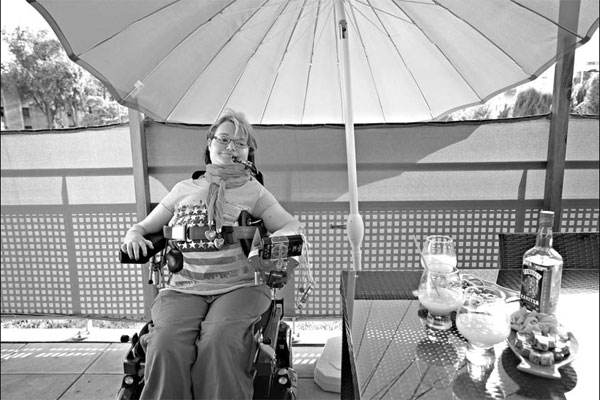
    53% is spent on people who look like this:


    Look at that filthy lazy woman, just sitting there taking my money. She should be starving in the streets, right vy?

    20% is spent on people who look like this:


    Yet another worthless human being making bad choices like sitting in that ing chair all day.

    18% is spent on people who look like this:


    Look at that! She obviously needs to be tossed out in the trash as well. Too lazy to look for a better job with all that spare time I bet she has.

    So now we have the real s bags, the 9% is spend on people who don't fall into those categories...

    I bet they stay on these programs for their entire lives, just soaking up my hard earned tax money, just having kids year after year that they can't afford...

    http://www.statisticbrain.com/welfare-statistics/

    Total % of people who spent five years or less on Aid to Families with Dependent Children:
    80.4%
    Last edited by RandomGuy; 11-15-2013 at 01:03 PM. Reason: readability and clarity

  15. #215
    I am that guy RandomGuy's Avatar
    My Team
    San Antonio Spurs
    Join Date
    Jun 2005
    Post Count
    51,121
    Why should I give a about your or any other bottom feeder who sees me as a ticket to providing them with money
    Who decides what sacrifice from whom?

    ... I don't believe in living to provide for the mass of human filth that is the poor.
    Poor = people on the government dole (i.e., TANF and SNAP) = filth
    them. Let them starve. Social Darwinism is my solution.
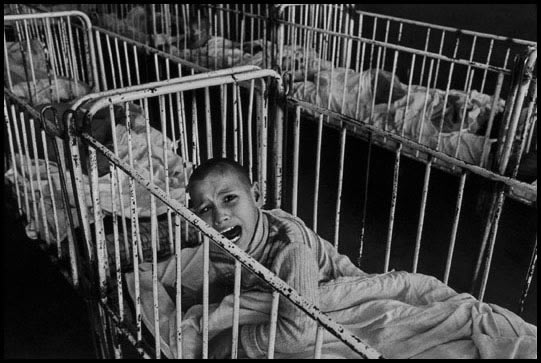
    Of course, I don't even have to speculate what your choice of social policy looks like for the children of this filth. It is fully in place in parts of eastern europe.


    Go ahead. Respond with some more glib callousness, and tell me how stupid liberals are taking your precious money.

    Regards,
    Bleeding Heart Liberal who thinks people are more important than money.

  16. #216
    I am that guy RandomGuy's Avatar
    My Team
    San Antonio Spurs
    Join Date
    Jun 2005
    Post Count
    51,121
    I'm waiting.

  17. #217
    I am that guy RandomGuy's Avatar
    My Team
    San Antonio Spurs
    Join Date
    Jun 2005
    Post Count
    51,121
    Thread Information
    There are currently 3 users browsing this thread. (3 members and 0 guests)
    RandomGuy, vy65, Th'Pusher

  18. #218
    Veteran
    My Team
    San Antonio Spurs
    Join Date
    Mar 2009
    Post Count
    97,536
    And a bit more on inequality from a book I read a while back and recommend if you're interested. Sorry for the length...
    "But in those cases where we think that the leveling of incomes—the absence both of the carrot of success and of the stick of failure—has gone so far that people will not try harder unless allowed to keep the fruits of their labor or investment more fully, we should, as odd as it may seem, opt out and call forth greater inequality."

    what bull propaganda for the 1%


  19. #219
    I am that guy RandomGuy's Avatar
    My Team
    San Antonio Spurs
    Join Date
    Jun 2005
    Post Count
    51,121
    "But in those cases where we think that the leveling of incomes—the absence both of the carrot of success and of the stick of failure—has gone so far that people will not try harder unless allowed to keep the fruits of their labor or investment more fully, we should, as odd as it may seem, opt out and call forth greater inequality."

    what bull propaganda for the 1%

    I will ask you a question or two though in all fairness:

    You do acknowledge there is some fraud in the system?

    Do you agree that we should encourage those who can work to do so?

    Do you agree that we should try to minimize such fraud, yes?


    I will admit:
    Yes.
    Yes. and
    Yes.

    I am comfortable with the cost of some fraud in these programs, if the benefit is generally that people who really need help, either permanently, or temporarily, get that help.

  20. #220
    Veteran Th'Pusher's Avatar
    My Team
    San Antonio Spurs
    Join Date
    Feb 2010
    Post Count
    6,130
    "But in those cases where we think that the leveling of incomes—the absence both of the carrot of success and of the stick of failure—has gone so far that people will not try harder unless allowed to keep the fruits of their labor or investment more fully, we should, as odd as it may seem, opt out and call forth greater inequality."

    what bull propaganda for the 1%


    In those cases...he's simply saying that some inequality is good and necessary. There is a balance. Do you disagree?

  21. #221
    Veteran
    My Team
    San Antonio Spurs
    Join Date
    Mar 2009
    Post Count
    97,536
    In those cases...he's simply saying that some inequality is good and necessary. There is a balance. Do you disagree?
    straw man. nobody is arguing for perfect income equality. The objective is everybody paying their fair share to run society smoothly, reliably. There will always be inequality. What's been proven bad is extreme inequality with the 1% gaming the system to be highly regressive, to pay a much lower tax rate than the 99%.

  22. #222
    Veteran vy65's Avatar
    My Team
    San Antonio Spurs
    Join Date
    Apr 2008
    Post Count
    8,916
    We have long denounced the capitalistic, economic exploitation of the poverty of the'other half of the world' [['autre monde]. We must today denounce the moral and sentimental exploitation of that poverty - charity cannibalism being worse than oppressive violence. The extraction and humanitarian reprocessing of a des ution whichhas become the equivalent of oil deposits and gold mines. The extortion of the spectacle of poverty and, at the same time, of our charitable condescension: a worldwide appreciated surplus of fine sentiments and bad conscience. We should, in fact, see this not as the extraction of raw materials, but as a waste-reprocessing enterprise. Their des ution and our bad conscience are, in effect, all part of the waste-products of history-the main thing is to recycle them to produce a new energy source.We have here an escalation in the psychological balance of terror. World capitalist oppression is now merely the vehicle and alibi for this other, much more ferocious, form of moral predation. One might almost say, contrary to the Marxist analysis, that material exploitation is only there to extract that spiritual raw material that is the misery of peoples, which serves as psychological nourishment for the rich countries and media nourishment for our daily lives. The 'Fourth World' (we are no longer dealing with a 'developing' Third World) is once again beleaguered, this time as a catastrophe-bearing stratum. The West is whitewashed in the reprocessing of the rest of the world as waste and residue. And the white world repents and seeks absolution - it, too, the waste-product of its own history. The South is a natural producer of raw materials, the latest of which is catastrophe. The North, for its part, specializes in the reprocessing of raw materials and hence also in the reprocessing of catastrophe. Bloodsucking protection, humanitarian interference,Medecins sans frontieres, international solidarity, etc. The last phase of colonialism: the New Sentimental Order is merely the latest form of the New World Order. Other people's des ution becomes our adventure playground. Thus, the humanitarian offensive aimed at the Kurds - a show of repentance on the part of the Western powers after allowing Saddam Hussein to crush them - is in reality merely the second phase of the war, a phase in which charitable intervention finishes off the work of extermination. We are the consumers of the ever delightful spectacle of poverty and catastrophe, and of the moving spectacle of our own efforts to alleviate it (which, in fact, merely function to secure the conditions of reproduction
    of the catastrophe market )
    ; there, at least, in the order of moral profits, the Marxist analysis is wholly applicable: we see to it that extreme poverty is reproduced as a symbolic deposit, as a fuel essential to the moral and sentimental equilibrium of the West.In our defence, it might be said that this extreme poverty was largely of our own making and it is therefore normal that we should profit by it
    Last edited by vy65; 11-15-2013 at 02:34 PM.

  23. #223
    Veteran vy65's Avatar
    My Team
    San Antonio Spurs
    Join Date
    Apr 2008
    Post Count
    8,916
    There can be no finer proof that the distress of the rest of the world is at the root of Western power and that the spectacle of that distress is its crowning glory than the inauguration, on the roof of the Arche de la Defense, with a sumptuous buffet laid on bythe Fondation des Droits de l'homme, of an exhibition of the finest photos of world poverty. Should we be surprised that spaces are set aside in the Arche d' Alliance. for universal suffering hallowed by caviar and champagne? Just as the economic crisis of the West will not be complete so long as it can still exploit the resources of the rest of the world, so the symbolic crisis will be complete only when itis no longer able to feed on the other half's human and natural catastrophes (Eastern Europe, the Gulf, the Kurds, Bangladesh, etc.). We need this drug, which serves us as anaphrodisiac and hallucinogen. And the poor countries are the best suppliers - as, indeed,they are of other drugs. We provide them, through our media, with the means to exploi tthis paradoxical resource, just as we give them the means to exhaust their natural resources with our technologies. Our whole culture lives off this catastrophic cannibalism,relayed in cynical mode by the news media, and carried forward in moral mode by ourhumanitarian aid, which is a way of encouraging it and ensuring its continuity, just as economic aid is a strategy for perpetuating under-development. Up to now, the financial sacrifice has been compensated a hundredfold by the moral gain. But when thecatastrophe market itself reaches crisis point, in accordance with the implacable logic of the market, when distress becomes scarce or the marginal returns on it fall from overexploitation, when we run out of disasters from elsewhere or when they can no longer be traded like coffee or other commodities, the West will be forced to produce its own catastrophe for itself, in order to meet its need for spectacle and that voracious appe e for symbols which characterizes it even more than its voracious appe e for food. It will reach the point where it devours itself. When we have finished sucking out the destiny of others, we shall have to invent one for ourselves. The Great Crash, the symbolic crash, will come in the end from us Westerners, but only when we are no longerable to feed on the hallucinogenic misery which comes to us from the other half of theworld. Yet they do not seem keen to give up their monopoly. The Middle East, Bangladesh, black Africa and Latin America are really going flat out in the distress and catastrophe stakes,and thus in providing symbolic nourishment for the rich world. They might be said to be overdoing it: heaping earthquakes, floods, famines and ecological disasters one uponanother, and finding the means to massacre each other most of the time. The 'disaster show' goes on without any let-up and our sacrificial debt to them far exceeds theireconomic debt. The misery with which they generously overwhelm us is something weshall never be able to repay. The sacrifices we offer in return are laughable (a tornado or two, a few tiny holocausts on the roads, the odd financial sacrifice) and, moreover, by some infernal logic, these work out as much greater gains for us, whereas our kindnesses have merely added to the natural catastrophes another one immeasurably worse: the demographic catastrophe, a veritable epidemic which we deplore each day in pictures. In short, there is such distortion between North and South, to the symbolic advantage of the South (a hundred thousand Iraqi dead against casualties numbered in tens on ourside: in every case we are the losers), that one day everything will break down. One day,the West will break down if we are not soon washed clean of this shame, if an international congress of the poor countries does not very quickly decide to share out this symbolic

  24. #224
    Veteran vy65's Avatar
    My Team
    San Antonio Spurs
    Join Date
    Apr 2008
    Post Count
    8,916
    privilege of misery and catastrophe. It is of course normal, since we refuse to allow the spread of nuclear weapons, that they should refuse to allow the spread of the catastrophe weapon. But it is not right that they should exert that monopoly indefinitely.

    In any case, the under-developed are only so by comparison with the Western system and its presumed success. In the light of its assumed failure, they are not under-developed at all. They are only so in terms of a dominant evolutionism which has always been the worst of colonial ideologies. The argument here is that there is a line of objective progress and everyone is supposed to pass through its various stages (we find the same eyewash with regard to the evolution of species and in that evolutionism which unilaterally sanctions the superiority of the human race). In the light of current upheavals, which put an end to any idea of history as a linear process, there are no longer either developed or under-developed peoples. Thus, to encourage hope of evolution - albeit by revolution - among the poor and to doom them, in keeping with the objective illusion of progress, to technological salvation is a criminal absurdity. In actual fact, it is their good fortune to be able to escape from evolution just at the point when we no longer know where it is leading. In any case, a majority of these peoples, including those of Eastern Europe, do not seem keen to enter this evolutionist modernity, and their weight in the balance is certainly no small factor in the West's repudiation of its own history, of its own utopias and its own modernity. It might be said that the routes of violence, historical or otherwise, are being turned around and that the viruses now pass from South to North, there being every chance that, five hundred years after America was conquered, 1992 and the end of the century will mark the comeback of the defeated and the sudden reversal of that modernity. The sense of pride is no longer on the side of wealth but of poverty, of those who - fortunately for them - have nothing to repent, and may indeed glory in being privileged in terms of catastrophes. Admittedly, this is a privilege they could hardly renounce, even if they wished to, but natural disasters merely reinforce the sense of guilt felt towards them by the wealthy– by those whom God visibly scorns since he no longer even strikes them down. One day it will be the Whites themselves who will give up their whiteness. It is a good bet that repentance will reach its highest pitch with the five-hundredth anniversary of the conquest of the Americas. We are going to have to lift the curse of the defeated - but symbolically victorious - peoples, which is insinuating itself five hundred years later, byway of repentance, into the heart of the white race.No solution has been found to the dramatic situation of the under-developed, and none will be found since their drama has now been overtaken by that of the overdeveloped, of the rich nations. The psychodrama of congestion, saturation, super abundance, neurosis and the breaking of blood vessels which haunts us - the drama of the excess of means over ends – calls more urgently for attention than that of penury, lack and poverty. Tha tis where the most imminent danger of catastrophe resides, in the societies which have run out of emptiness. Artificial catastrophes, like the beneficial aspects of civilization,progress much more quickly than natural ones. The underdeveloped are still at the primary stage of the natural, unforeseeable catastrophe. We are already at the second stage, that of the manufactured catastrophe - imminent and foreseeable - and we shall soon be at that of the pre-programmed catastrophe, the catastrophe of the third kind,deliberate and experimental. And, paradoxically, it is our pursuit of the means for averting natural catastrophe - the unpredictable form of destiny - which will take us there. Because it is unable to escape it, humanity will pretend to be the author of its destiny. Because it cannot accept being confronted with an end which is uncertain or governed by fate, it will prefer to stage its own death as a species.
    Last edited by vy65; 11-15-2013 at 02:39 PM.

  25. #225
    Veteran vy65's Avatar
    My Team
    San Antonio Spurs
    Join Date
    Apr 2008
    Post Count
    8,916
    - Jean Baudrillard, The Illusion of the End.

Thread Information

Users Browsing this Thread

There are currently 1 users browsing this thread. (0 members and 1 guests)

Posting Permissions

  • You may not post new threads
  • You may not post replies
  • You may not post attachments
  • You may not edit your posts
  •