Reply With Quote
Fake?
My instinct tells me no, that it's real. Why wouldn't China, or any other industrialized nation not be able to achieve what we did over 40 years ago?

http://www.space.com/23786-china-moo...e3-lander.html
is this fake?


Fake?
My instinct tells me no, that it's real. Why wouldn't China, or any other industrialized nation not be able to achieve what we did over 40 years ago?
Some believe we never landed on the moon. Will China find the evidence we've been there?

Looks like that wasn't shot in a studio
I was thinking that myself, that it would be great if they landed close to ours, and drove the rover there.
Looks plenty real to me too.
Problem is, back in the 60's and early 70's, we know the missions were real. We didn't have the technology to fake the results we see today. It would be possible to fake it today, though I do believe china is perfectly capable of such a mission.

are the chinese going to claim the moon as theirs? like what they are doing in south china sea with neighboring countries over some fkn islands and maritime issues?
Probable.
Maybe it will get us back in the picture, and build a moon base before they do.
at least the s wouldn't claim sun, since the japs already claimed it centuries ago (their country's name means "home of the sun" in Japanese, tbh)
s probably don't have such technology to shoot a film that looks so real tbh, so I don't have no doubt about the genuineness of this pic. Next they'll send human to the moon and plant their five-star red banner there... they're without the doubt the richest country of the world right now (by foreign exchange reserve), and they've found a good way to blow their money, congrats to them:
I want them to explore where Apollo missions landed.

Been there! done that! since 1970
Sincerely : USSR

If you look at the Apollo moon landing topics we post in you will notice no one disputes rovers landing on the moon...
it's a Human landing on the Moon that we disagree on.
You ever ask yourself why China didn't send a Human to the Moon?
it's called Radiation

They are working towards it dumbass.
Once a dumbass, always a dumbass. They took a course around the outer edges.it's called Radiation

Seems most people agree this is legit. So this is Chang'e we can believe in?

whatever. all that needed to happen was to stool all over the place. then the s brink it back and they can DNA test it.

look who back Fraudfreddy!
I see by your postings your taint is still a little raw after that ass waxing you endured from cosmored in the Apollo moon topic.
Don't be so bitter at least you landed a role in American Horror story!Once a dumbass, always a dumbass.

You notice a difference in the terrain and the color of the ground?
The US had landed people on the moon decades ago, no reason a rising superpower couldn't do it today.
And you have proof of this?
Then why haven't they?no reason a rising superpower couldn't do it today.

Why hasn't Russia ever disputed that the USA landed on the moon? They had more reason to debunk the moon landing than anybody else.
Russians Still Skeptical About U.S. Moon Landing
http://www.huffingtonpost.com/2009/0..._n_239982.html
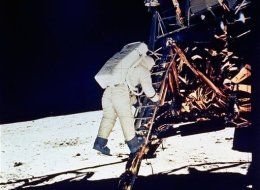
MOSCOW — When Neil Armstrong stepped onto the surface of the moon, it was a first for the Soviet Union – the first time the U.S. had beaten the U.S.S.R in the space race. Forty years later, the memory of that loss of primacy still seems to sting the Russian soul. When state TV channel Rossiya reported last week on the restoration of video footage of the Apollo 11 moon landing, the account gave a lot of attention to dubious conspiracy theories that the landing was faked.
"In the United States, more than anywhere else, they are sure of the believability of the steps on the moon," the report said, adding that Armstrong keeps a very low profile. "This also seems strange to many people."
For a dozen years before the July 20, 1969, moon landing, Moscow racked up an extraordinary array of superlatives. It was the first to send a craft into orbit, with the Sputnik satellite in 1957. The first human to go into outer space was Russian Yuri Gagarin in 1961. Moscow sent the woman into space, Valentina Tereshkova in 1963; and Alexei Leonov was the first person to venture outside a spacecraft into the endless cosmos, in 1965.
Russia even got to the moon first when the unmanned Luna 2 crashed in 1959. But the drama of the first human footprint on an extraterrestrial body eclipsed everything the Soviets had worked so hard to achieve.
"Beginning with the first flight with a primitive capsule, and then getting to the moon, it was a great achievement for humanity," Russian astronaut Sergei Krikalev said.
"Of course, we would have liked to see the first man on the moon be Soviet, Russian, but that's life ... Our own achievements were very many," he told Associated Press Television News.
In the 40 years since the Apollo 11 landing, the USSR and Russia, which inherited the Soviet legacy, shot ahead of the United States occasionally only to fall further behind.
The Soviet Union put the first space station into orbit with the Salyut 1 in 1971. However, the first crew couldn't get aboard because of docking problems. Another three-man crew later got aboard, but died when a valve failed on the capsule bringing them back to Earth.
Then there was the Mir -- the first space station fit for long-term habitation. It achieved early glory. But that quickly faded after 1991, when the Soviet collapse choked off funding for the space program and the Mir suffered a series of accidents, including a collision and fires that tuned it into a symbol of danger and decay.
Earthlings scanned the sky nervously on the day in 2001 when the 140-ton craft plunged to its fiery end. Luckily, it landed in the Pacific Ocean.
In recent years, Russia's space program has earned as a workhorse rather than a racehorse – reliable, cooperative, even stolid.
Its cramped Soyuz manned capsules and unmanned Progress cargo ships had already served as the lifeline to the International Space Station for more than two years when the United States grounded its space shuttles in 2003, after the Columbia disintegrated on re-entry. The Russian space program will once again be the gatekeepers to the orbiting laboratory in 2010, when the shuttle fleet is grounded for good.
That doesn't mean Russia has lost its ambitions for primacy in space.
The U.S. is busy planning to replace the shuttles. But last year, Russia awarded contracts for design of its own next-generation spaceship to replace the Soyuz. The competing efforts could trigger a new space race.
Russian space officials meanwhile still seem to be dreaming about winning the next stage of the space race.
They keep talk in tantalizing terms about mounting a manned mission to Mars, although they say that would take at least another 20 years to get off the ground.
"I think this is fine. It's like sports – at one stage one person wins, at another it's somebody else," said Krikalev.
Why didn't the Russians dispute the moon landing?
The Americans didn't dispute Gagarin's flight
Guess why the Russians got all that wheat from the US also the scientist in both counties had secrets they kept from the public and shred information you forget the space station was a joint effort.
Soviets Planned to Accept JFK's Joint Lunar Mission Offer
http://www.spacedaily.com/news/russia-97h.html
Soviets Planned to Accept JFK�s Joint Lunar Mission Offer
by Frank Sietzen "SpaceCast News Service"
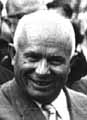
Washington DC - October 2, 1997 - Soviet Premiere Nikita S. Khrushchev reversed himself in early November, 1963 and had at the time, decided to accept U.S. President John F. Kennedy's offer to convert the Apollo lunar landing program into a joint project to explore the Moon with Soviet and U.S. astronauts, SpaceCast learned Wednesday from one of the last remaining participants in the decision still alive.
On the eve of the 40th anniversary of the world's first space satellite, the Soviet Sputnik 1, Sergei Khrushchev, eldest son of the former Premiere and Soviet Union Communist Party General Secretary said that his father made the decision in November 1963 following a renewed Kennedy initiative to sell the Soviets on a joint manned lunar program.
"My father decided that maybe he should accept (Kennedy's) offer, given the state of the space programs of the two countries (in 1963)", Khrushchev told SpaceCast following a talk before a NASA conference in Washington on the effects of the historic Sputnik launch on Oct. 4, 1957. Sputnik was the world's first artificial satellite of the Earth, and its autumn 1957 launch into orbit is widely credited with starting the superpower space race that lasted until the end of the Cold War in 1991.
Kennedy had made the offer of a joint manned lunar program to the Russians on several occasions, but his most aggressive effort was made in a speech before the United Nations General Assembly on Sept. 20, 1963 in New York.
At the end of that address, Kennedy said: "In a field where the United States and the Soviet Union have a special capacity - space - there is room for new cooperation, for further joint efforts."
"I include among these possibilities," he added, "a joint expedition to the Moon." Why, the President asked, should the United States and the Soviet Union conduct parallel efforts that would include "duplication, of research, construction, and expenditure?"
He laid out a proposal for a joint series of space missions, which if enacted, he said "will require a new approach to the Cold War." But like his earlier proposals to the Russians on joint manned spaceflight, this one also was rejected by the Khrushchev government.
But Sergei Khrushchev told SpaceCast, that in the weeks after the rejection, his father had second thoughts. While the Premiere had agreed with Russian military leaders that said any joint Moon flight would provide an opportunity for the U.S. military to learn more about Russian rocket and missile programs, he now thought that it might be possible to learn more from the technology of the Americans.
"He thought that if the Americans wanted to get our technology and create defenses against it, they would do that anyway. Maybe we could get (technology) in the bargain that would be better for us, my father thought."
In late 1963, the Russian government was still designing their lunar launch vehicle, the N-1, and their manned spacecraft system, the Soyuz. Ultimately, the N-1 was abandoned following repeated launch failures. The Soviet manned lunar program would also be abandoned in the early 1970's following the U.S. landings in the Apollo program. The Soyuz was developed, however and became the spacecraft used in Russian space station programs, from the early 1970's right on through to today's MIR station.
Sergei Khrushchev also said his father viewed the prospects of new western cooperation linked with plans to cut back on the Russian Army size from its level of 2.5 million men in 1963 to possibly as low as 500,000 conscripts. And Khrushchev was also planning to begin diverting weapons complex design bureaus into more consumer and commercial, non-military production, a process started by the Yeltsin government that is still evolving in today's Russia.
If these newest revelations are correct, the prospects of a visit to the Soviet Union by President Kennedy during the 1964 Presidential campaign, suggested by several former Kennedy administration staffers or a visit to Russia early in a Kennedy second term might well have cemented the joint lunar plan. And such a Kennedy/Khrushchev initiative might have staved off the planning of a coup that eventually removed Khrushchev from office in October, 1964.
"I think," Sergei Khrushchev said, "if Kennedy had lived, we would be living in a completely different world." But a week after the reversal decision was allegedly made, Kennedy was assassinated in Dallas, Texas and the decision was dropped.
Although the Johnson administration made a similar offer for joint manned spaceflights early in 1964, the Russians were too su ious of the new administration, some analysts have suggested. And, Khrushchev said, much of the rationale for the acceptance of the joint mission plan was the "chemistry" built up between his father and John F. Kennedy, who had clashed repeatedly with the Soviet leader during the previous two years but seemed to be moving towards a new relationship and foreign policy following the 1962 Cuban Missile Crisis and Kennedy's speech before American University in the summer of 1963, proposing new U.S.-Soviet cooperation and a joint Nuclear Test Ban Treaty.
The Soviet government viewed the Kennedy initiative started at American University as a major turning point in U.S.-Soviet relations during the Kennedy Presidency.
Analysts, however, must be cautious about Khrushchev's new information. Both the Soviet Politburo and the U.S. Congress would have had to approve the bold plan, which would have abruptly ended the space compe ion started in 1957, and opened the U.S. space industry to direct Russian involvement, a radical idea in the 1960's Cold War environment.
Some have also suggested that, given the political atmosphere of the time, the U.S. Congress of 1963/64 would not have looked too favorably on dropping a space program sold primarily as "beating the Russians to the Moon" for one that would, in essence, bring them along on a spacecraft and booster paid for by the U.S. taxpayer.
But Kennedy fretted over the cost of the Apollo program almost literally until the day he died. A joint plan would have preserved the project while reducing the cost, further shifting its rationale onto foreign relations and superpower stability - goals now identified with the current US-Russian space partnership and a reason often given today for continuing the program. And had the President lived to conduct a 1964 campaign, U.S.-Soviet cooperation following years of tension may well have been a central element to the foreign policy espoused during that election effort. The available do entary evidence suggests that Kennedy was moving towards a new cooperative relationship with the Soviet government that he hoped to expand following a reelection in 1964.
But history will never know what possibilities existed in the space program that was not to be, in what Sergei Khrushchev called "those wonderful golden years" now long passed into the mists of history.
So the name of the spacecraft contains "Chang", does it have have anything to do with @amchang (the one using a chimpanzee avatar)?
None of what mouse posted addressed my question. The USSR had more reason than anybody to call the moon landing fraudulent, but they didn't.
Is mouse trying to imply that the space race, and by extent, the entire Cold War, was a fraud?
Last edited by redzero; 12-17-2013 at 11:50 PM.
There are currently 1 users browsing this thread. (0 members and 1 guests)
 Posting Permissions