
But you can't even speak ing English.

Is ducks an inbred redneck or he is french?
I'm pretty sure the illegals themselves are more fluent in English than ducks.

The article isn't saying that the policies are exactly the same - just that the Obama administration also placed travel restrictions on people from the same seven countries. The article also makes a good point that Trump likely picked those seven countries on purpose because Obama had already started restricting them.
Here's the actual text of the executive order:It seems like if you're a muslin, you cant come in.
https://www.scribd.com/do ent/3377...cutive-Order-1
The word "Muslim" doesn't even appear once.
Furthermore, here's the list of majority-Muslim countries that aren't affected by this policy: Mauritania, Afghanistan, Tunisia, Western Sahara, Morocco, Tajikistan, Mayotte, Turkey, Azerbaijan, Comoros, Niger, Algeria, Palestinian Territories, Saudi Arabia, Djibouti, Uzbekistan, Pakistan, Senegal, Kosovo, Gambia, Mali, Jordan, Turkmenistan, Egypt, Kyrgyzstan, Oman, Indonesia, Bangladesh, Guinea, Cocos, Qatar, United Arab Emirates, Kuwait, Sierra Leone, Bahrain, Kazakhstan, Brunei, Malaysia, Burkina Faso, Lebanon, Albania, Chad, and Bosnia and Herzegovina.
The "Muslim ban" narrative is fake news at its worst. But we all know how the left loves their "alternative facts" when it suits their purposes.

Typical knee-jerk outrage.

Jim Crow voting laws were applied to everybody but let's not pretend it was not intended to disenfranchise the majority of black voters.

I don't think it's a 'muslim ban', and ultimately you can give the benefit of the doubt that this was done, as DPG said, with natsec in mind.
But the way it's been done (not through Congress, and imposing a temporary ban instead of revoking visas) and the scope of the order (including legal residents) made the injunction pretty predictable and will likely force the administration to re-think it's strategy.
At least for Green Cards (which is not the case of these Iraquis, but they also appear to be covered by the EO), there's a high bar. You have to have multiple interviews, fingerprinted and photographed multiple times, go through FBI background checks, and must have a US person or company as your sponsor who is responsible for any possible ups you make while being a permanent resident. After 3-5 years, you can then apply for citizenship, that's the level we're talking about here. Heck, most of the H1B visa holders (temporary guest worker program) do not end up qualifying for a green card due to lack of sponsorship.
What really needs to happen here, is Congress needs to get their ass in gear with immigration reform, including potentially addressing this issue. An law straight from Congress has much more weight in a court of law.
NBA investigating potential impact of U.S. travel order has on league
The NBA, its players and its coaches have waded into political waters in the months before and since the November election. But this week politics bled into the NBA when President Donald Trump signed an executive order temporarily limiting immigration from seven Muslim-majority countries.
Milwaukee Bucks rookie Thon Maker and Los Angeles Lakers veteran Luol Deng both are natives of Sudan, one of the countries subject to the temporary ban along with Iran, Iraq, Libya, Somalia, Syria and Yemen.
The Bucks were concerned about Maker’s ability to travel freely with the team back to the United States from its game Friday in Toronto. The NBA released a statement saying it has contacted the State Department for information on how the restriction might affect personnel from the seven countries.
According to an ESPN report, there was no disruption to Maker’s or the Bucks’ itinerary back to Milwaukee:
Maker moved with his family to Australia in 2002, so he also has Australian citizenship and travels with an Australian passport. Still, there were concerns for Maker as the Bucks were returning from a Friday night game in Toronto just as Customs and Border Protection notified airlines about passengers whose visas had been canceled.
Bucks coach Jason Kidd, in announcing Saturday that Maker would start, confirmed that he had made it back to Milwaukee without incident. Maker had scored eight points and grabbed two rebounds in eight minutes of play in Friday night's 102-86 loss at Toronto, where Maker had lived for two years prior to being drafted in 2016 by Milwaukee. …
Deng was also born in Wau, Sudan, but like Maker has dual citizenship, having become a British citizen in 2006.
NBA spokesman Mike Bass issued the league’s statement to media outlets: "We have reached out to the State Department and are in the process of gathering information to understand how this executive order would apply to players in our league who are from one of the impacted countries. The NBA is a global league and we are proud to attract the very best players from around the world."
The NBA’s successful Basketball Without Borders program, for instance, has been credited with identifying and developing players from the Sudan. According to Yahoo! Sports The Vertical, several top Sudanese players “are attending American high scools and colleges on visas, and could become NBA draft picks.”
http://www.nba.com/article/2017/01/2...der-has-league
I dont get angry easily but the more I read about this the more disgusted and angry I feel. The whole thing is so outrageous.
Perfectly people with legal status have to now worry about doing any type of travel because they may not be allowed back in. Jesus

[[[The Obama Administration Stopped Processing Iraq Refugee Requests For 6 Months In 2011
NOVEMBER 18, 2015 By Sean Davis
Although the Obama administration currently refuses to temporarily pause its Syrian refugee resettlement program in the United States, the State Department in 2011 stopped processing Iraq refugee requests for six months after the Federal Bureau of Investigation uncovered evidence that several dozen terrorists from Iraq had infiltrated the United States via the refugee program.]]]
You didn't get disgusted and angry then, Recky.
Those are special cases, obviously.
We are talking about every day, normal folks who are just traveling and coming back home but cant.
I'll just bet they were.
Dont be obtuse.
You're comparing people who are on a watch list with every day people who are just away on vacation or whatever the case and are just coming back home.

Marriage eliminates this requirement though.
Malevolence Tempered by Incompetence: Trump’s Horrifying Executive Order on Refugees and Visas
The malevolence of President Trump’s Executive Order on visas and refugees is mitigated chiefly—and perhaps only—by the astonishing incompetence of its drafting and construction.
NBC is reporting that the do ent was not reviewed
by DHS,
the Justice Department,
the State Department, or
the Department of Defense, and that
National Security Council lawyers were prevented from evaluating it.
Moreover, the New York Timeswrites that Customs and Border Protection and U.S. Citizen and Immigration Services, the agencies tasked with carrying out the policy, were only given a briefing call while Trump was actually signing the order itself. Yesterday, the Department of Justice gave a “no comment” when asked whether the Office of Legal Counsel had reviewed Trump’s executive orders—including the order at hand.
(OLC normally reviews every executive order.)
This order reads to me, frankly, as though it was not reviewed by competent counsel at all.
CNN offers extraordinary details:
Administration officials weren't immediately sure which countries' citizens would be barred from entering the United States. The Department of Homeland Security was left making a legal analysis on the order after Trump signed it. A Border Patrol agent, confronted with arriving refugees, referred questions only to the President himself, according to court filings.
. . .
It wasn't until Friday -- the day Trump signed the order banning travel from seven Muslim-majority countries for 90 days and suspending all refugee admission for 120 days -- that career homeland security staff were allowed to see the final details of the order, a person with the familiar the matter said.
. . .
The policy team at the White House developed the executive order on refugees and visas, and largely avoided the traditional interagency process that would have allowed the Justice Department and homeland security agencies to provide operational guidance, according to numerous officials who spoke to CNN on Saturday.
Homeland Security Secretary John Kelly and Department of Homeland Security leadership saw the final details shortly before the order was finalized, government officials said.
Friday night, DHS arrived at the legal interpretation that the executive order restrictions applying to seven countries -- Iran, Iraq, Libya, Somalia, Syria, Sudan and Yemen -- did not apply to people who with lawful permanent residence, generally referred to as green card holders.
The White House overruled that guidance overnight, according to officials familiar with the rollout. That order came from the President's inner circle, led by Stephen Miller and Steve Bannon. Their decision held that, on a case by case basis, DHS could allow green card holders to enter the US.
As I shall explain, in the short term, the incompetence is actually good news for people who believe in visa and refugee policies based on criteria other than—let’s not be coy about this—bigotry and religious discrimination.
The President has created a target-rich environment for litigation that will make his policies, I suspect, less effective than they would have been had he subjected his order to vetting one percent as extreme as the vetting to which he proposes to subject refugees from Bashar al-Assad and the bombing raids of Vladimir Putin.
it is most emphatically not good news to have a White House that just makes decisions with no serious thought or interagency input into what those decisions might mean. In fact, it’s really dangerous.
in the rational pursuit of security objectives,
you don’t marginalize your expert security agencies and fail to vet your ideas through a normal interagency process.
You don’t target the wrong people in nutty ways when you’re rationally pursuing real security objectives.
On the underinclusive side, the order wouldn’t have blocked the entry of many of the people responsible for the worst recent terrorist attacks.
I don’t believe that the stated purpose is the real purpose
When do you do these things?
You do these things when you’re elevating the symbolic politics of bashing Islam over any actual security interest.
You do them when you’ve made a deliberate decision to burden human lives to make a public point. In other words, this is not a do ent that will cause hardship and misery because of regrettable incidental impacts on people injured in the pursuit of a public good.
It will cause hardship and misery for tens or hundreds of thousands of people because that is precisely what it is intended to do.
This do ent is the
implementation of a campaign promise to keep out Muslims moderated only by the fact that certain allied Muslim countries are left out because the diplomatic repercussions of including them would be too detrimental.
the implications of having an executive this inept are not small and won’t be short-lived.
https://lawfareblog.com/malevolence-tempered-incompetence-trumps-horrifying-executive-order-refugees-and-visas
ex-Goldman Sacks Steve Bannon is well known Breitbart asshole, white male nationalist, racist, bigot, misogynist, appearance of a street bum, but Stephen Miller is equally repugnant.
Last edited by boutons_deux; 01-29-2017 at 07:25 AM.

Malevolence Tempered by Incompetence: Trump’s Horrifying Executive Order on Refugees and Visas
By Benjamin Wittes
Saturday, January 28, 2017, 10:58 PM
The malevolence of President Trump’s Executive Order on visas and refugees is mitigated chiefly—and perhaps only—by the astonishing incompetence of its drafting and construction.
NBC is reporting that the do ent was not reviewed by DHS, the Justice Department, the State Department, or the Department of Defense, and that National Security Council lawyers were prevented from evaluating it. Moreover, the New York Times writes that Customs and Border Protection and U.S. Citizen and Immigration Services, the agencies tasked with carrying out the policy, were only given a briefing call while Trump was actually signing the order itself. Yesterday, the Department of Justice gave a “no comment” when asked whether the Office of Legal Counsel had reviewed Trump’s executive orders—including the order at hand. (OLC normally reviews every executive order.)
This order reads to me, frankly, as though it was not reviewed by competent counsel at all.
CNN offers extraordinary details:
Administration officials weren't immediately sure which countries' citizens would be barred from entering the United States. The Department of Homeland Security was left making a legal analysis on the order after Trump signed it. A Border Patrol agent, confronted with arriving refugees, referred questions only to the President himself, according to court filings.As I shall explain, in the short term, the incompetence is actually good news for people who believe in visa and refugee policies based on criteria other than—let’s not be coy about this—bigotry and religious discrimination. The President has created a target-rich environment for litigation that will make his policies, I suspect, less effective than they would have been had he subjected his order to vetting one percent as extreme as the vetting to which he proposes to subject refugees from Bashar al-Assad and the bombing raids of Vladimir Putin.
. . .
It wasn't until Friday -- the day Trump signed the order banning travel from seven Muslim-majority countries for 90 days and suspending all refugee admission for 120 days -- that career homeland security staff were allowed to see the final details of the order, a person with the familiar the matter said.
. . .
The policy team at the White House developed the executive order on refugees and visas, and largely avoided the traditional interagency process that would have allowed the Justice Department and homeland security agencies to provide operational guidance, according to numerous officials who spoke to CNN on Saturday.
Homeland Security Secretary John Kelly and Department of Homeland Security leadership saw the final details shortly before the order was finalized, government officials said.
Friday night, DHS arrived at the legal interpretation that the executive order restrictions applying to seven countries -- Iran, Iraq, Libya, Somalia, Syria, Sudan and Yemen -- did not apply to people who with lawful permanent residence, generally referred to as green card holders.
The White House overruled that guidance overnight, according to officials familiar with the rollout. That order came from the President's inner circle, led by Stephen Miller and Steve Bannon. Their decision held that, on a case by case basis, DHS could allow green card holders to enter the US.
Indeed, even as I write these words, the ACLU has already succeeded in pe ioning a federal court for a class-wide stay of deportations of immigrants and refugees trapped in airports by Trump’s order. And a federal judge in Virginia has issued a temporary restraining order preventing the removal of green card holders detained in Dulles International Airport and requiring that these legal residents of the United States have access to counsel.
In the broader sense, however, it is most emphatically not good news to have a White House that just makes decisions with no serious thought or interagency input into what those decisions might mean. In fact, it’s really dangerous.
Let’s start with the malevolence of the do ent, which Amira Mikhail summarizedand Adham Sahloul analyzed earlier today. I don’t use the word “malevolence” here lightly. As readers of my work know, I believe in strong counterterrorism powers. I defend non-criminal detention. I’ve got no problem with drone strikes. I’m positively enthusiastic about American surveillance policies. I was much less offended than others were by the CIA’s interrogations in the years after September 11. I have defended military commissions.
Some of these policies were effective; some were not. Some worked out better than others. And I don’t mean to relitigate any of those questions here. My sole point is that all of these policies were conceptualized and designed and implemented by people who were earnestly trying to protect the country from very real threats. And the policies were, to a one, proximately related to important goals in the effort. While some of these policies proved tragically misguided and caused great harm to innocent people, none of them was designed or intended to be cruel to vulnerable, concededly innocent people. Even the CIA’s interrogation program, after all, was deployed against people the agency believed (mostly correctly) to be senior terrorists of the most dangerous sort and to garner information from them that would prevent attacks.
I actually cannot say that about Trump’s new executive order—and neither can anyone else.
Here’s how the order describes its purpose:Section 1. Purpose. The visa-issuance process plays a crucial role in detecting individuals with terrorist ties and stopping them from entering the United States. Perhaps in no instance was that more apparent than the terrorist attacks of September 11, 2001, when State Department policy prevented consular officers from properly scrutinizing the visa applications of several of the 19 foreign nationals who went on to murder nearly 3,000 Americans. And while the visa-issuance process was reviewed and amended after the September 11 attacks to better detect would-be terrorists from receiving visas, these measures did not stop attacks by foreign nationals who were admitted to the United States.Color me skeptical that this is the real purpose. After all, if this is the real purpose, then the do ent is both wildly over-inclusive and wildly under-inclusive. On the over-inclusive side, it will keep tens of thousands of innocent refugees who have been subject to unspeakable violence outside of the protection of the United States on the vanishingly small chance that these people might be terrorists—indeed, to make it impossible for them even to apply for refugee admission if they are Syrian. It will prevent untold numbers of people about whom there is no whiff of su ion from coming here as students, as professionals, as tourists. It overtly treats members of a particular religion differently from other people.
Numerous foreign-born individuals have been convicted or implicated in terrorism-related crimes since September 11, 2001, including foreign nationals who entered the United States after receiving visitor, student, or employment visas, or who entered through the United States refugee resettlement program. Deteriorating conditions in certain countries due to war, strife, disaster, and civil unrest increase the likelihood that terrorists will use any means possible to enter the United States.
...
On the underinclusive side, the order wouldn’t have blocked the entry of many of the people responsible for the worst recent terrorist attacks. There is, in fact, simply no rational relationship between cutting off visits from the particular countries that Trump targets (Muslim countries that don’t happen to be close U.S. allies) and any expected counterterrorism goods. The 9/11 hijackers, after all, didn’t come from Somalia or Syria or Iran; they came from Saudi Arabia and Egypt and a few other countries not affected by the order. Of the San Bernardino attackers (both of Pakistani origin, one a U.S. citizen and the other a lawful permanent resident), the Orlando shooter (a U.S. citizen whose parents were born in Afghanistan), and the Boston marathon bombers (one a naturalized U.S. citizen, one a green card holder who arrived in Massachusetts from Kyrgyzstan), none came from countries listed in the order. One might argue, I suppose, that the do ent is tied to current threats. But come now, how could Pakistan not be on a list guided by current threat perception?
What’s more, the do ent also takes steps that strike me as utterly orthogonal to any relevant security interest. If the purpose of the order is the one it describes, for example, I can think of no good reason to burden the lives of students individually suspected of nothing who are here lawfully and just happen to be temporarily overseas, or to detain tourists and refugees who were mid-flight when the order came down. I have trouble imagining any reason to raise questions about whether green card holders who have lived here for years can leave the country and then return. Yes, it’s temporary, and that may lessen the costs (or it may not, depending on the outcome of the policy review the order mandates), but temporarily irrational is still irrational.
Put simply, I don’t believe that the stated purpose is the real purpose. This is the first policy the United States has adopted in the post-9/11 era about which I have ever said this. It’s a grave charge, I know, and I’m not making it lightly. But in the rational pursuit of security objectives, you don’t marginalize your expert security agencies and fail to vet your ideas through a normal interagency process. You don’t target the wrong people in nutty ways when you’re rationally pursuing real security objectives.
When do you do these things? You do these things when you’re elevating the symbolic politics of bashing Islam over any actual security interest. You do them when you’ve made a deliberate decision to burden human lives to make a public point. In other words, this is not a do ent that will cause hardship and misery because of regrettable incidental impacts on people injured in the pursuit of a public good. It will cause hardship and misery for tens or hundreds of thousands of people because that is precisely what it is intended to do.
To be sure, the executive order does not say anything as crass as: “Sec. 14. Burdening Muslim Lives to Make Political Point.” It doesn’t need to. There’s simply no reason in reading it to ignore everything Trump said during the campaign, during which he repeatedly called for a ban on Muslims entering the United States.
Even while he was preparing to sign the order itself, he declared, "This is the ‘Protection of the Nation from Foreign Terrorist Entry into the United States.’ We all know what that means." Indeed, we do. This do ent is the implementation of a campaign promise to keep out Muslims moderated only by the fact that certain allied Muslim countries are left out because the diplomatic repercussions of including them would be too detrimental.
Many years ago, the great cons utional law scholar Charles Black Jr., contemplating the separate but equal doctrine, asked:
does segregation offend against equality? Equality, like all general concepts, has marginal areas where philosophic difficulties are encountered. But if a whole race of people finds itself confined within a system which is set up and continued for the very purpose of keeping it in an inferior station, and if the question is then solemnly propounded whether such a race is being treated "equally," I think we ought to exercise one of the sovereign prerogatives of philosophers—that of laughter.I think we can, without drawing any kind of equivalence between this order and Jim Crow, make a similar point here: Is this do ent a reasonable security measure? There are many areas in which security policy affects innocent lives but within which we do not presumptively say that the fact that some group of people faces disproportionate burdens renders that policy illegitimate. But if an entire religious grouping finds itself irrationally excluded from the country for no discernible security benefit following a lengthy campaign that overtly promised precisely such discrimination and exactly this sort of exclusion, if the relevant security agencies are excluded from the policy process, and if the question is then solemnly propounded whether the reasonable pursuit of security is the purpose, I think we ought to exercise one of the sovereign prerogatives of philosophers—that of laughter.
So yes, the order is malevolent. But here’s the thing: Many of these malevolent objectives were certainly achievable within the president’s lawful authority. The president’s power over refugee admissions is vast. His power to restrict visa issuances and entry of aliens to the United States is almost as wide. If the National Security Council had run a process of minimal competence, it could certainly have done a lot of stuff that folks like me, who care about refugees, would have gnashed our teeth over but which would have been solidly within the President’s authority. It could have all been implemented in a fashion that didn’t create endless litigation opportunities and didn’t cause enormous diplomatic friction.
How incompetent is this order? An immigration lawyer who works for the federal government wrote me today describing the quality of the work as “look[ing] like what an intern came up with over a lunch hour. . . . My take is that it is so poorly written that it’s hard to tell the impact." One of the reasons there’s so much chaos going on right now, in fact, is that nobody really knows what the order means on important points.
Some examples:
- Sec. 3(c) bans "entry"—which to the best of my knowledge has had no meaning in the Immigration and Nationality Act (INA) since the passage of the Illegal Immigration Reform and Immigrant Responsibility Act (IIRIRA) in 1996. Pre-IIRIRA law did use the term “entry,” but that is no longer the case.
- Section 3(g) talks of waivers on a case-by-case basis for people who are otherwise denied visas or other benefits under the immigration laws pursuant to the order. If a person needs a waiver to obtain "other benefits," does that mean that nationals of the seven countries are denied any benefit under the INA without a waiver, benefits such as naturalization, adjustment of status, or temporary protected status, even if they are already in the US?
- On its face, the order bars entry of both immigrants and non-immigrants. Again, as entry is not defined, and no one was given any time to draft implementing guidance or to clarify any points, it’s no surprise that Customs and Border Protection doesn’t seem to know how to apply it to lawful permanent residents (LPRs). The INA, at section 101(a)(13)(C), says that green card holders will not be deemed as seeking admission absent the factors enumerated therein—factors that do not include an executive order banning entry. Yet Reuters and The Guardian are both reporting quotations from a DHS public relations official, stating that the order does apply to LPRs. If that interpretation lasts, look for DHS to get its ass handed to it on a platter in federal court—a defeat it will richly deserve.
- Another big mystery is how the order will apply to asylees. Will people even be allowed to apply? On the one hand, the right to seek asylum is right there in the INA. But to apply for asylum, you have to be interviewed by a U.S. Citizen and Immigration Services officer to determine if you have a credible fear of persecution. Is that interview a benefit under the act? And if so, is it barred? From what I hear, right now anyway, Customs and Border Protection is not allowing anyone to claim asylum and have a credible fear interview.
I could go on, but you get the point. This order is a giant birthday present to the ACLU and other immigration litigators. And godspeed to them in going after it—which, as I noted above, they are already succeeding in doing.
But the incompetence actually does not stop at running a process that causes legal chaos and probable manhandling by the federal courts.
Consider, for example, the likely diplomatic fallout. In his first week in office, Trump has managed to create a major rift with Mexico, our peaceable neighbor to the south with whom we have no earthly reason to be spatting and haven’t had bilateral problem this serious since Pancho Villa. Trump’s new order seems certain to raise tensions with other countries too—and not just the countries whose nationals it targets (Iran, for example, which today restricted travel by U.S. nationals in retaliation; a great many U.S. citizens have family in Iran and now can’t visit them).
Because the order applies to dual nationals, where a person is a citizen of one restricted country and one non-restricted country, it appears to bar entry to hundreds of thousands of citizens of the U.K. and Canada—including a British Member of Parliament and a Canadian-Iranian consultant who lives in the United States but now can no longer safely travel to her business’s headquarters in Toronto without being blocked from reentry. British Prime Minister Theresa May wasn’t showing a lot of spine today over the matter, but what happens when she starts getting political blowback at home for the not standing up to the U.S. over its treatment of her nationals?
And Canadian Prime Minister Justin Trudeau is already making noise. He tweeted today:
✔@JustinTrudeau
To those fleeing persecution, terror & war, Canadians will welcome you, regardless of your faith. Diversity is our strength #WelcomeToCanada
9:20 PM - 28 Jan 2017
...
I would wax triumphant about the mitigating effect of incompetence on this do ent, but alas, I can’t do it. The president’s powers in this area are vast, as I say, and while the incompetence is likely to buy the administration a world of hurt in court and in diplomacy in the short term, this order is still going take more than a few pounds of flesh out of a lot of innocent people.
Moreover, it’s a very dangerous thing to have a White House that can’t with the remotest pretense of competence and governance put together a major policy do ent on a crucial set of national security issues without inducing an avalanche of litigation and wide diplomatic fallout. If the incompetence mitigates the malevolence in this case, that’ll be a blessing. But given the nature of the federal immigration powers, the mitigation may be small and the blessing short-lived; the implications of having an executive this inept are not small and won’t be short-lived.
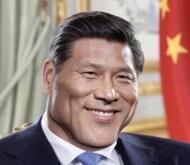
Oops Trump made a booboo fellas. Even I accept it
Still believe he is better than shillary but boy this up is embarrassing in the world stage
And"not a muslim ban" when he said this yesterday:
Not only a lie, but explicit acknowledgement that the ban only applies to Muslims.DAVID BRODY: “Persecuted Christians, we’ve talked about this, the refugees overseas. The refugee program, or the refugee changes you’re looking to make. As it relates to persecuted Christians, do you see them as kind of a priority here?”
PRESIDENT TRUMP: “Yes.”
DAVID BRODY: “You do?”
PRESIDENT TRUMP: “They’ve been horribly treated. Do you know if you were a Christian in Syria it was impossible, at least very tough to get into the United States? If you were a Muslim you could come in, but if you were a Christian, it was almost impossible and the reason that was so unfair, everybody was persecuted in all fairness, but they were chopping off the heads of everybody but more so the Christians. And I thought it was very, very unfair. So we are going to help them.”
The real question now is will he move the goalpost or will he double down
https://www.cato.org/blog/little-nat...er-immigrationJANUARY 25, 2017 3:31PM
Little National Security Benefit to Trump’s Executive Order on Immigration
By ALEX NOWRASTEH
Tomorrow, President Trump is expected to sign an executive order enacting a 30-day suspension of all visas for nationals from Iraq, Iran, Libya, Somalia, Sudan, Syria, and Yemen.
Foreigners from those seven nations have killed zero Americans in terrorist attacks on U.S. soil between 1975 and the end of 2015. Six Iranians, six Sudanese, two Somalis, two Iraqis, and one Yemini have been convicted of attempting or carrying out terrorist attacks on U.S. soil. Zero Libyans or Syrians have been convicted of planning a terrorist attack on U.S. soil during that time period.
Many other foreigners have been convicted of terrorism-related offenses that did not include planning a terrorist attack on U.S. soil. One list released by Senator Jeff Sessions (R-AL) details 580 terror-related convictions since 9/11. This incomplete list probably influenced which countries are temporarily banned, and likely provided justification for another section of Trump’s executive order, which directs the Department of Homeland Security (DHS) to release all information on foreign-born terrorists going forward, and requires additional DHS reports to study foreign-born terrorism.
I exhaustively evaluated Senator Sessions’ list of convictions based on publicly available data and discovered some startling details.
First, 241 of the convictions (42 percent) were not for terrorism offenses. Senator Sessions puffed his numbers by including “terrorism-related convictions,” a nebulous category that includes investigations that begin due to a terrorism tip but then end in non-terrorism convictions. My favorite examples of this are the convictions of Nasser Abuali, Hussein Abuali, and Rabi Ahmed. An informant told the FBI that the trio tried to purchase a rocket-propelled grenade launcher, but the FBI found no evidence supporting the accusation. The three individuals were instead convicted of receiving two truckloads of stolen cereal. That is a crime but it is not terrorism.
Second, only 40 of the 580 convictions (6.9 percent) were for foreigners planning a terrorist attack on U.S. soil. Seeking to join a foreign terrorist group overseas, material support for a foreign terrorist, and seeking to commit an act of terror on foreign soil account for 180 of the 580 convictions (31 percent). Terrorism on foreign soil is a crime, should be a crime, and those convicted of these offenses should be punished severely but the government cannot claim that these convictions made America safe again because these folks were not targeting U.S. soil.
Third, 92 of the 580 convictions (16 percent) were for U.S. born citizens. No change in immigration law, visa limitations, or more rigorous security checks would have stopped them.
The executive order includes national security exemptions to be made on a case-by-case basis. The President reserves the option to ban the entry of nationals from additional countries in the future based on a national security risk report written by DHS. Furthermore, the Secretaries of State and Homeland Security can recommend visa bans for nationals from additional countries at any time.
In addition to the visa restrictions above, Trump’s executive order further cuts the refugee program to 50,000 annually, indefinitely blocks all refugees from Syria, and suspends all refugee admissions for 120 days. This is a response to a phantom menace. From 1975 to the end of 2015, 20 refugees have been convicted of attempting or committing terrorism on U.S. soil, and only three Americans have been killed in attacks committed by refugees—all in the 1970s. Zero Americans have been killed by Syrian refugees in a terrorist attack on U.S. soil. The annual chance of an American dying in a terrorist attack committed by a refugee is one in 3.6 billion. The other 17 convictions have mainly been for aiding or attempting to join foreign terrorists.
President Trump tweeted earlier this week that executive orders were intended to improvenational security by reducing the terrorist threat. However, a rational evaluation of national security threats is not the basis for Trump’s orders, as the risk is fairly small but the cost is great. The measures taken here will have virtually no effect on improving U.S. national security.
Oh seems like he wont double down but triple down
Apparently he will sign an executive order to get all social media info AND cell phone contacts from all foreigners visiting US
Angela Merkel will have to give up her phone upon entry
Sec. 5. Realignment of the U.S. Refugee Admissions
(b) Upon the resumption of USRAP admissions, the
Secretary of State, in consultation with the Secretary of
Homeland Security, is further directed to make changes, to
the extent permitted by law, to prioritize refugee claims
made by individuals on the basis of religious-based
persecution, provided that the religion of the individual
is a minority religion in the individual's country of
nationality. Where necessary and appropriate, the
Secretaries of State and Homeland Security shall recommend
legislation to the President that would assist with such
prioritization.
(e) Notwithstanding the temporary suspension imposed
pursuant to subsection (a) of this section, the Secretaries
of State and Homeland Security may jointly determine to
admit individuals to the United States as refugees on a
case-by-case basis, in their discretion, but only so long
as they determine that the admission of such individuals as
refugees is in the national interest -- including when the
person is a religious minority in his country of
nationality facing religious persecution, when admitting
the person would enable the United States to conform its
conduct to a preexisting international agreement, or when
the person is already in transit and denying admission
would cause undue hardship -- and it would not pose a risk
to the security or welfare of the United States.

I can't believe we have turned the clock back from 2017 to 1933
You had nary problem believing it under Hussein:::
[[[The Obama Administration Stopped Processing Iraq Refugee Requests For 6 Months In 2011
NOVEMBER 18, 2015 By Sean Davis
Although the Obama administration currently refuses to temporarily pause its Syrian refugee resettlement program in the United States, the State Department in 2011stopped processing Iraq refugee requests for six months after the Federal Bureau of Investigation uncovered evidence that several dozen terrorists from Iraq had infiltrated the United States via the refugee program.]]]
There are currently 1 users browsing this thread. (0 members and 1 guests)
 Posting Permissions



 Reply With Quote