Reply With Quote
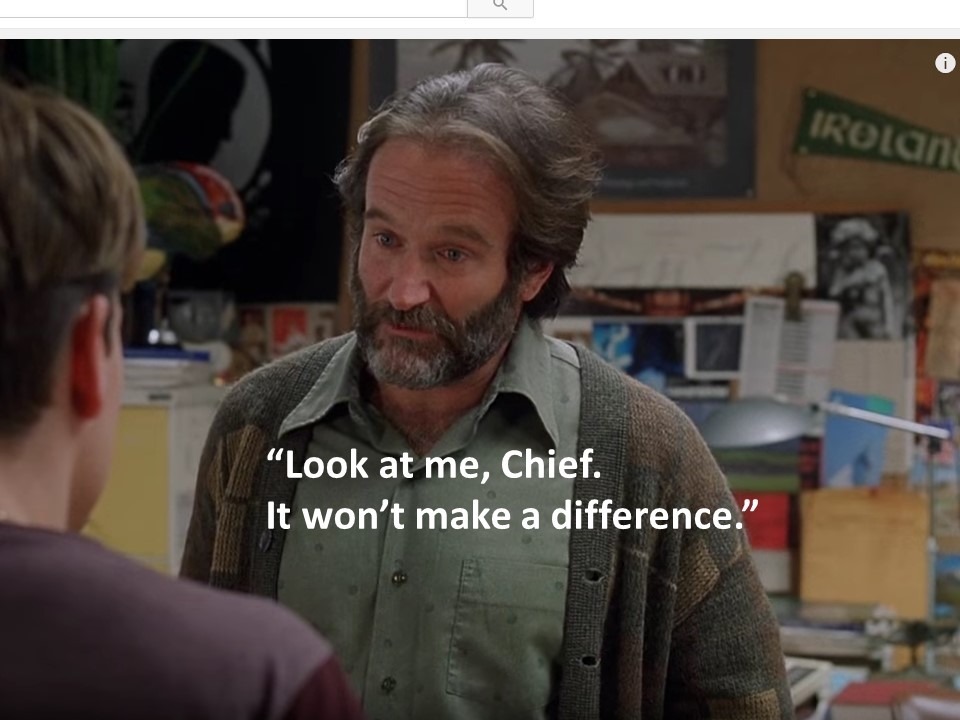
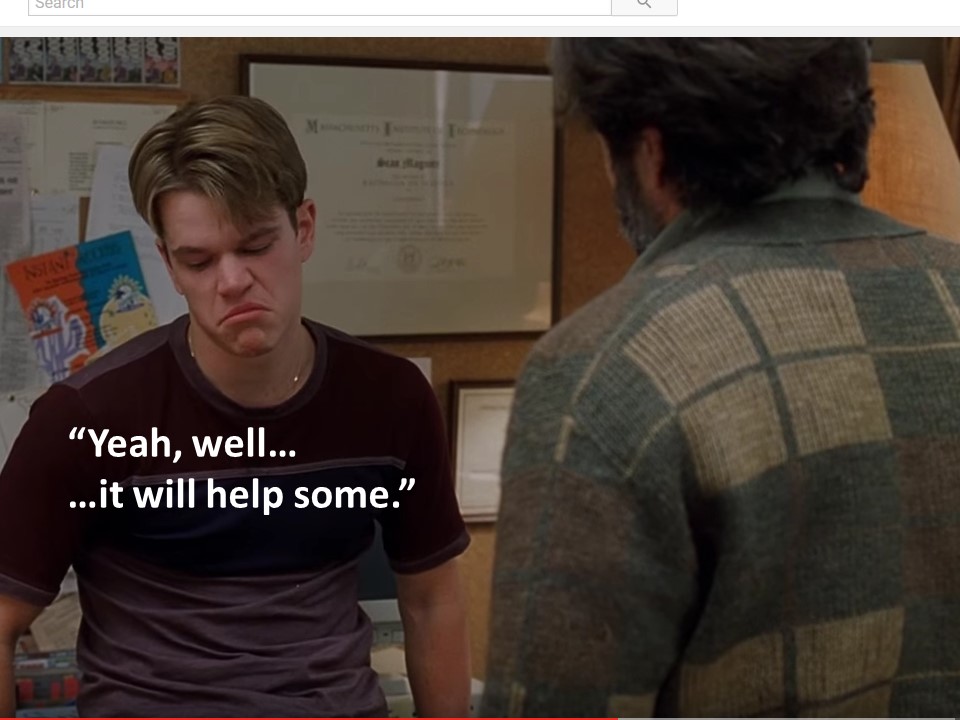
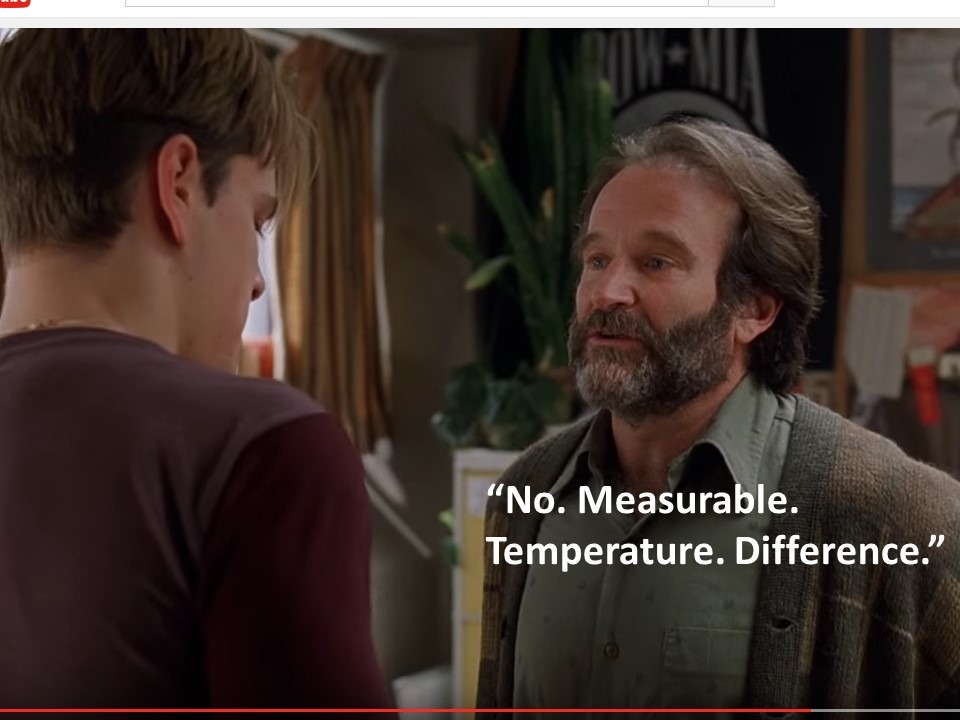
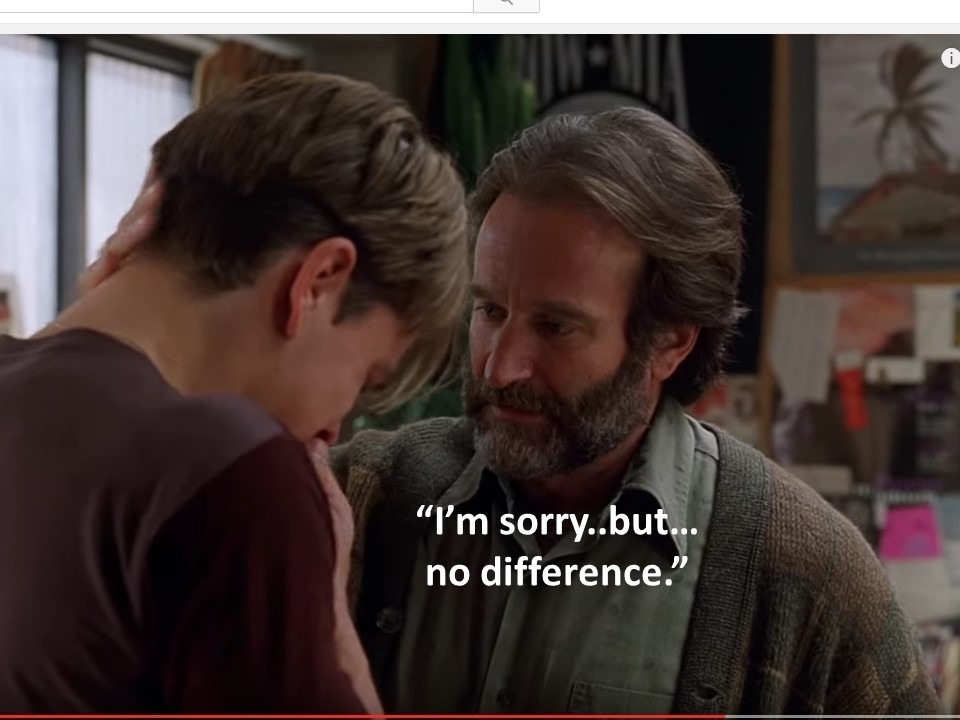
lol "Science"


lol "Science"
Last edited by SnakeBoy; 06-04-2017 at 04:58 PM.

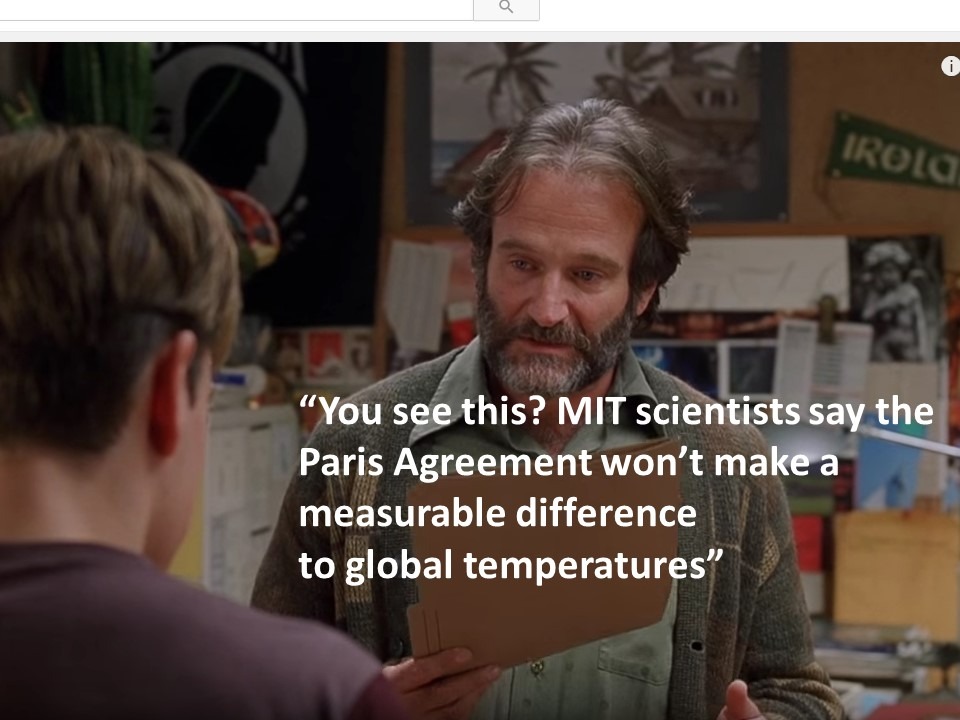
wow, memes. even though the lead author of that MIT study has been on record saying that Trump completely misunderstood their paper and that a lack of action could cause the temperature to shoot by over 5 degrees
MIT issued the following statement on Thursday, June 1 2017.
A set of talking points circulated in support of President Trump’s decision to withdraw the U.S. from the Paris Agreement included this statement:
“The [Paris] deal also accomplishes LITTLE for the climate
“According to researchers at MIT, if all member nations met their obligations, the impact on the climate would be negligible. The impacts have been estimated to be likely to reduce global temperature rise by less than 0.2 degrees Celsius in 2100.”
The researchers in MIT’s Joint Program on the Science and Policy of Global Change who led the relevant analysis find this statement to be misleading, for two reasons.
First, the 0.2 degree-figure used in the talking point reflects the incremental impact of the Paris Agreement compared with the earlier Copenhagen agreement. If you instead compare the impact of the Paris Agreement to no climate policy, then the temperature reduction is much larger, on the order of 1 degree Celsius — 1.8 degrees Fahrenheit — by 2100. This would be a significant reduction in the global temperature rise, though much more is needed if the world is to achieve its goal of limiting warming to 2 degrees Celsius or less.
Second, the analysis accounts only for countries’ pledges under the Paris Agreement, assuming no further strengthening of the commitments in years after 2030. The Paris Agreement is a milestone of the ongoing UN Framework Convention on Climate Change, which is committed to ongoing annual meetings to regularly revisit and ratchet up nations’ climate goals, making them more ambitious over time.
The relevant MIT researchers believe that the Paris Agreement is an unprecedented and vital effort by nearly 200 countries to respond to the urgent threat of global climate change.
His interpretation was a tiny, tiny bit wrong, according to the MIT professors who authored the research he cited.
Their April 2016 study found that global warming would slow by between 0.6°Cand 1.1°Cby 2100 as a result of the accord. The school noted yesterday that the number cited by Trump is “misleading” because it measures the Paris agreement’s incremental impact over a previous Copenhagen agreement, and that it assumes the countries will not strengthen their commitments to fighting climate change after 2030.
If nothing is done, the global temperature could shoot up by 5°C or more, according to John Reilly, the co-director of MIT’s Joint Program on the Science and Policy of Global Change, which produced the research. Reilly told Reuters the White House did not contact MIT scientists or offer them a chance to explain their work before Trump used it in his speech at the Rose Garden this week.
Study co-author Erwan Monier, a lead researcher at the joint program, said that the school’s climate researchers “certainly do not support the withdrawal of the US from the Paris agreement.”
MIT's 2016 press release regarding the study
their entire study operated under the presumption that new goals wouldn't be placed after 2030Signed in December by climate negotiators from around the globe, the Paris Agreement centers on pledges from 188 countries to reduce their human-made greenhouse gas emissions, with the ultimate goal of capping the rise in global mean surface air temperature (SAT) since preindustrial times at 2 degrees Celsius. Toward that end, these pledges, which cover the years 2020-2030, are expected to be reviewed and strengthened periodically, but do not commit nations to any course of action after 2030. As a result, projections of the long-term climate impact of the Paris Agreement vary widely. A useful way to assess that impact is to simulate the effects of policies that extend the Agreement’s 188 pledges (known as Nationally Determined Contributions, or NDCs) to the end of the century. In a new study that takes this approach, a team of climate scientists and economists from the MIT Joint Program on the Science and Policy of Global Change led by research scientist Andrei Sokolov finds that by 2100, the Paris Agreement reduces the SAT considerably, but still exceeds the 2 C goal by about 1 C.
One of the study’s co-authors, Joint Program Principal Research Scientist Erwan Monier, discussed the team’s results at the General Assembly of the European Geosciences Union on April 21 in a panel/press conference, “Historical Responsibilities and Climate Impacts of the Paris Agreement.”
Using the MIT Integrated Global System Modeling (IGSM) framework, which combines a human activity model with a climate model of intermediate complexity, the researchers project the climate impact of a “no climate policy” case and three scenarios that effectively extend the NDCs to 2100. The scenarios considered range from a pessimistic world where no further action is specified past 2030 to a world where the same level of commitment as in the Paris agreement is extended until the end of the century.
Assuming a climate system response to anthropogenic greenhouse gas emissions that’s of median strength, the three scenarios reduce the SAT in 2100 between 0.6 and 1.1 C relative to the “no climate policy” case. But because the climate system takes many years to respond to emissions reductions, in 2050 the SAT falls by only about 0.1 C in all three cases. Meanwhile, the rise in SAT since preindustrial times exceeds 2 C in 2053, and in 2100, reaches between 2.7 and 3.6 C — far exceeding the 2 C goal.
“The Paris agreement is certainly a step in the right direction, but it is only a step,” said Monier. “It puts us on the right path to keep warming under 3 C, but even under the same level of commitment of the Paris agreement after 2030, our study indicates a 95 percent probability that the world will warm by more than 2 C by 2100.”
The Joint Program on the Science and Policy of Global Change is MIT’s response to the research, analysis and communication challenges of global environmental change. The program combines scientific research with policy analysis to provide an independent, integrative assessment of the impacts of global change and how best to respond.
no but ur right, dank memes are more accurate

^ yah but the memes
...
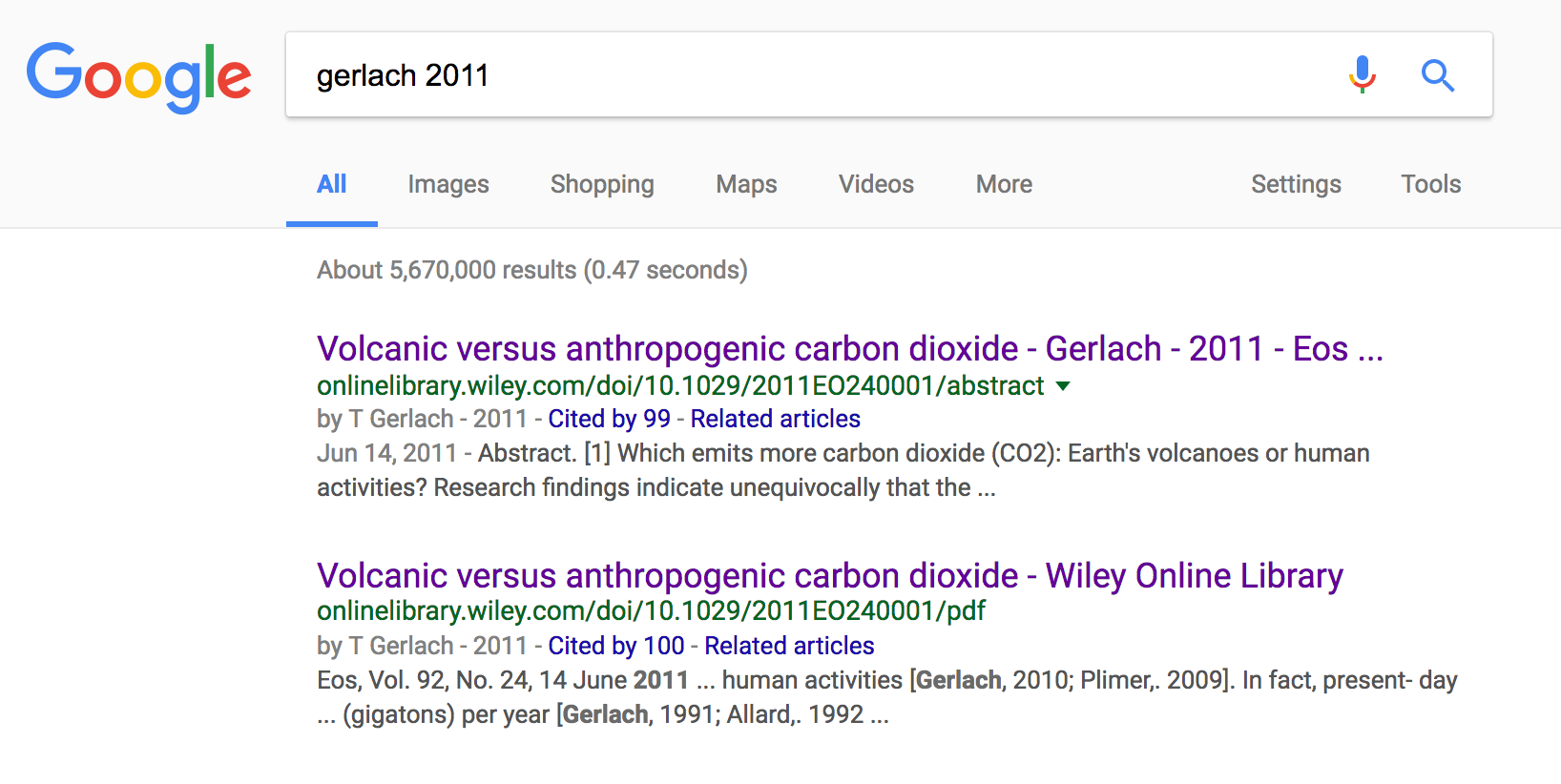
In fact, present-day volcanoes emit relatively modest amounts of CO2, about as much annually as states like Florida, Michigan, and Ohio.Global estimates of the annual present-day CO2 output of the Earth’s degassing subaerial and submarine volcanoes range from 0.13 to 0.44 billion metric tons (gigatons) per year [Gerlach, 1991]Anthropogenic CO2 emissions—responsible for a projected 35 gigatons of CO2in 2010
but muh memes!
edit: keep trying to link to the study and keeps showing up as broken. just google Gerlach 2011 and it's the 2nd link

It's a crock of pure .
there ya go. just make sure you stay at the surface level, dont get mired into the details
Nothing more than a scam to provide a revenue stream into the gov't.
exactly. keep whispering that to yourself as you try to get some sleep. just make sure you stay in the shallow end where you're safe
According to that scammer Gore we shouldn't even be here right now.
gore. he's not an authority on the matter, just a fat mouthpiece
How will I know that you're right & I'm wrong on this issue?
you'd have to make 2 concessions
1) that all the scientists from around the world... from different backgrounds, cultures, states, religions, creeds, are not all in one big conspiracy
2) be willing to take an open-minded, good-faith look at the merits
if you don't care to learn about the science behind it (as it can be tedious), you'd have to stop at step 1 and take it for granted. not the ideal option, but thats why some people are doctors, some people are lawyers, some people are architects. if i'm having my house built i dont tell the architects and contractors that they don't know what they're doing. i trust them to be experts in their fields...
No, not that, 21. What will happen that will make it plain & obvious that disaster is upon (me)?
in arizona? you'll be just fine, honestly. main thing you'd observe are more sustained droughts (though we had a great rain season this year)...
the easiest to ramification to understand i just the sea gradually rising.now we're not talking noah's ark, but enough to screw a bunch of coastal cities, which is why Miami Beach is already investing 500 million to prepare for immediate effects (http://www.homelandsecuritynewswire....-sealevel-rise)... and also why you've got insurance companies (who believe me, are all about the money) are projecting miami to have 30 billion in expected losses in 2030 alone, when in 2008 it was about 17 billion. (page 7 here http://www.miamidade.gov/planning/li...ate-change.pdf)
now miami's just one city, and the sea level change is one factor, but it's probably the most concrete example of one area's issues.

Florida was once underwater without any human involvement. The climate has changed (to extremes) without human intervention. We are currently in an interglacial (warm times). If we can stave off another ice age, kudos to humans.
oh , the climate has changed before? holy , bro, report this to the national academy of sciences and claim your nobel prize. you've cracked the case
yes, the climate has changed before without humans. everybody who is remotely interested in the issue is well aware of this, yet you keep bringing it up as though it were some novel idea or a eureka moment.
if i shoot someone in the face and they die, can i go to court and say "people died of natural causes plenty of times before without human involvement."
if we have good reason to understand that CO2 has played a large role in previous warmings, and we are now adding noticeable amounts of CO2, are we not just recreating the factors that caused those previous warmings? does the atmosphere give a if the CO2 is from an industrial source or a biological source? CO2 is CO2.
take a gander, darrin
https://xkcd.com/1732/
yes, i'm sure hunter gatherers were better able to adjust to shifting climates and sea levels, they didnt have to worry about moving cities harboring millions of people or maintaining a stable agricultural system
Last edited by spurraider21; 06-04-2017 at 10:10 PM.
darrins is like those dumb quote of the day calendars you get your mom for mothers day,
except instead of cute little love quotes its various global warming arguments that idiots make even though they dont know anything about science.
cant wait for tomorrows
i would bet a thousand dollars darrins has actually said this:
"if evolution is real and we evolved from monkeys why are there still monkeys?"
am i right darrin?
my bet would be "we haven't had significant warming since 1998" or "CO2 always lags temperature"

Can you really add CO2? I mean, aren't you just liberating it and it does what it wants to do? How is that wrong?
There are currently 1 users browsing this thread. (0 members and 1 guests)
 Posting Permissions