Page 180 of 2027 FirstFirst ... 801301701761771781791801811821831841902302806801180 ... LastLast
Results 4,476 to 4,500 of 50674
  1. #4476
    Veteran
    My Team
    San Antonio Spurs
    Join Date
    Oct 2008
    Post Count
    43,448
    Chris, this just show how bigoted and intolerant you are.

    Person A speaks negatively of Tump=ENEMY
    Person B speaks positively of Trump=AMAZING

    Just remember you got Ted ing Nugent on your corner.

  2. #4477
    non-essential Chris's Avatar
    My Team
    San Antonio Spurs
    Join Date
    May 2005
    Post Count
    39,908
    Chris, this just show how bigoted and intolerant you are.

    Person A speaks negatively of Tump=ENEMY
    Person B speaks positively of Trump=AMAZING

    Just remember you got Ted ing Nugent on your corner.
    Nugent would mop the floor with Dinero's ass. As for your projections, I will file them with the rest of the rubbish.

  3. #4478
    Independent DMX7's Avatar
    My Team
    San Antonio Spurs
    Join Date
    Jun 2008
    Post Count
    22,149
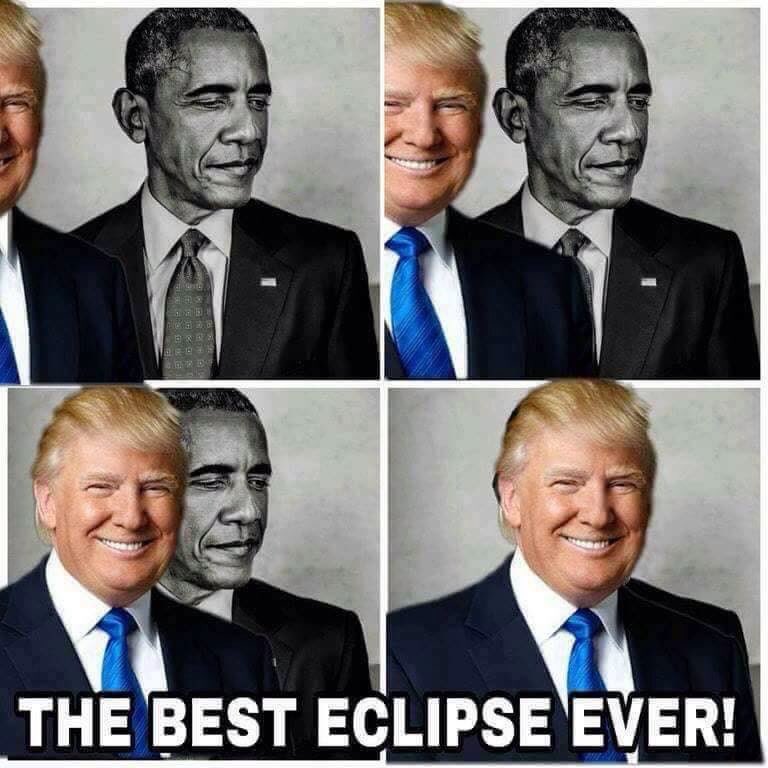
    LMAO, you know what happens at the end of an eclipse? I guess Obama returns!

  4. #4479
    "The ball don't lie." dbestpro's Avatar
    My Team
    San Antonio Spurs
    Join Date
    Feb 2005
    Post Count
    10,459
    Of course the 16th amendment was ratified. You're spreading fake news again.
    The 16th amendment had been sent out in 1909 to the state governors for ratification by the state legislatures after having been passed by Congress. There were 48 states at that time, and three-fourths, or 36, of them were required to give their approval in order for it to be ratified. The process took almost the whole term of the Taft administration, from 1909 to 1913.

    Knox had received responses from 42 states when he declared the 16th amendment ratified on February 25, 1913, just a few days before leaving office to make way for the administration of Woodrow Wilson. Knox acknowledged that four of those states (Utah, Conn, R.I. and N.H.) had rejected it, and he counted 38 states as having approved it. We will now examine some of the key evidence Bill Benson found regarding the approval of the amendment in many of those states.

    In Kentucky, the legislature acted on the amendment without even having received it from the governor (the governor of each state was to transmit the proposed amendment to the state legislature). The version of the amendment that the Kentucky legislature made up and acted upon omitted the words "on income" from the text, so they weren't even voting on an income tax! When they straightened that out (with the help of the governor), the Kentucky senate rejected the amendment. Yet Philander Knox counted Kentucky as approving it!

    In Oklahoma, the legislature changed the wording of the amendment so that its meaning was virtually the opposite of what was intended by Congress, and this was the version they sent back to Knox. Yet Knox counted Oklahoma as approving it, despite a memo from his chief legal counsel, Reuben Clark, that states were not allowed to change it in any way.

    Attorneys who have studied the subject have agreed that Kentucky and Oklahoma should not have been counted as approvals by Philander Knox, and, moreover, if any state could be shown to have violated its own state cons ution or laws in its approval process, then that state's approval would have to be thrown out. That gets us past the "presumptive conclusion" argument, which says that the actions of an executive official cannot be judged by a court, and admits that Knox could be wrong.

    If we subtract Kentucky and Oklahoma from the 38 approvals above, the count of valid approvals falls to 36, the exact number needed for ratification. If any more states can be shown to have had invalid approvals, the 16th amendment must be regarded as null and void.

    The state cons ution of Tennessee prohibited the state legislature from acting on any proposed amendment to the U.S. Cons ution sent by Congress until after the next election of state legislators. The intent, of course, is to give the proposed amendment a chance to become an issue in the state legislative elections so that the people can have a voice in determining the outcome. It also provides a cooling off period to reduce the tendency to approve an idea just because it happens to be the moment's trend. You've probably already guessed that the Tennessee legislature did not hold off on voting for the amendment until after the next election, and you'd be right - they didn't; hence, they acted upon it illegally before they were authorized to do so. They also violated their own state cons ution by failing to read the resolution on three different days as prescribed by Article II, Section 18. These state cons utional violations make their approval of the amendment null and void. Their approval is and was invalid, and it brings the number of approving states down to 35, one less than required for ratification.

    Texas and Louisiana violated provisions in their state cons utions prohibiting the legislatures from empowering the federal government with any additional taxing authority. Now the number is down to 33.

    Twelve other states, besides Tennessee, violated provisions in their cons utions requiring that a bill be read on three different days before voting on it. This is not a trivial requirement. It allows for a cooling off period; it enables members who may be absent one day to be present on another; it allows for a better familiarity with, and understanding of, the measure under consideration, since some members may not always read a bill or resolution before voting on it (believe it or not!). States violating this procedure were: Mississippi, Ohio, Arkansas, Minnesota, New Mexico, West Virginia, Indiana, Nevada, North Carolina, North Dakota, Colorado, and Illinois. Now the number is reduced to 21 states legally ratifying the amendment.

    When Secretary Knox transmitted the proposed amendment to the states, official certified and sealed copies were sent. Likewise, when state results were returned to Knox, it was required that the do ents, including the resolution that was actually approved, be properly certified, signed, and sealed by the appropriate official(s). This is no more than any ordinary citizen has to do in filing any legal do ent, so that it's authenticity is assured; otherwise it is not acceptable and is meaningless. How much more important it is to authenticate a cons utional amendment! Yet a number of states did not do this, returning uncertified, unsigned, and/or unsealed copies, and did not rectify their negligence even after being reminded and warned by Knox. The most egregious offenders were Ohio, California, Arkansas, Mississippi, and Minnesota - which did not send any copy at all, so Knox could not have known what they even voted on! Since four of these states were already disqualified above, California is now subtracted from the list of valid approvals, reducing it to 20.

    I bet you never thought that politicians of the past were as crooked at the criminals of their day. Now you are stuck justifying their actions.

  5. #4480
    notthewordsofonewhokneels Thread's Avatar
    My Team
    Los Angeles Lakers
    Join Date
    Mar 2010
    Post Count
    91,195

  6. #4481
    bandwagoner fans suck ducks's Avatar
    My Team
    San Antonio Spurs
    Join Date
    Apr 2003
    Post Count
    74,377
    SINS OF HER FATHER? Pelosi's dad once dedicated Confederate statues

  7. #4482
    non-essential Chris's Avatar
    My Team
    San Antonio Spurs
    Join Date
    May 2005
    Post Count
    39,908
    Of course the 16th amendment was ratified. You're spreading fake news again.
    The 16th amendment had been sent out in 1909 to the state governors for ratification by the state legislatures after having been passed by Congress. There were 48 states at that time, and three-fourths, or 36, of them were required to give their approval in order for it to be ratified. The process took almost the whole term of the Taft administration, from 1909 to 1913.

    Knox had received responses from 42 states when he declared the 16th amendment ratified on February 25, 1913, just a few days before leaving office to make way for the administration of Woodrow Wilson. Knox acknowledged that four of those states (Utah, Conn, R.I. and N.H.) had rejected it, and he counted 38 states as having approved it. We will now examine some of the key evidence Bill Benson found regarding the approval of the amendment in many of those states.

    In Kentucky, the legislature acted on the amendment without even having received it from the governor (the governor of each state was to transmit the proposed amendment to the state legislature). The version of the amendment that the Kentucky legislature made up and acted upon omitted the words "on income" from the text, so they weren't even voting on an income tax! When they straightened that out (with the help of the governor), the Kentucky senate rejected the amendment. Yet Philander Knox counted Kentucky as approving it!

    In Oklahoma, the legislature changed the wording of the amendment so that its meaning was virtually the opposite of what was intended by Congress, and this was the version they sent back to Knox. Yet Knox counted Oklahoma as approving it, despite a memo from his chief legal counsel, Reuben Clark, that states were not allowed to change it in any way.

    Attorneys who have studied the subject have agreed that Kentucky and Oklahoma should not have been counted as approvals by Philander Knox, and, moreover, if any state could be shown to have violated its own state cons ution or laws in its approval process, then that state's approval would have to be thrown out. That gets us past the "presumptive conclusion" argument, which says that the actions of an executive official cannot be judged by a court, and admits that Knox could be wrong.

    If we subtract Kentucky and Oklahoma from the 38 approvals above, the count of valid approvals falls to 36, the exact number needed for ratification. If any more states can be shown to have had invalid approvals, the 16th amendment must be regarded as null and void.

    The state cons ution of Tennessee prohibited the state legislature from acting on any proposed amendment to the U.S. Cons ution sent by Congress until after the next election of state legislators. The intent, of course, is to give the proposed amendment a chance to become an issue in the state legislative elections so that the people can have a voice in determining the outcome. It also provides a cooling off period to reduce the tendency to approve an idea just because it happens to be the moment's trend. You've probably already guessed that the Tennessee legislature did not hold off on voting for the amendment until after the next election, and you'd be right - they didn't; hence, they acted upon it illegally before they were authorized to do so. They also violated their own state cons ution by failing to read the resolution on three different days as prescribed by Article II, Section 18. These state cons utional violations make their approval of the amendment null and void. Their approval is and was invalid, and it brings the number of approving states down to 35, one less than required for ratification.

    Texas and Louisiana violated provisions in their state cons utions prohibiting the legislatures from empowering the federal government with any additional taxing authority. Now the number is down to 33.

    Twelve other states, besides Tennessee, violated provisions in their cons utions requiring that a bill be read on three different days before voting on it. This is not a trivial requirement. It allows for a cooling off period; it enables members who may be absent one day to be present on another; it allows for a better familiarity with, and understanding of, the measure under consideration, since some members may not always read a bill or resolution before voting on it (believe it or not!). States violating this procedure were: Mississippi, Ohio, Arkansas, Minnesota, New Mexico, West Virginia, Indiana, Nevada, North Carolina, North Dakota, Colorado, and Illinois. Now the number is reduced to 21 states legally ratifying the amendment.

    When Secretary Knox transmitted the proposed amendment to the states, official certified and sealed copies were sent. Likewise, when state results were returned to Knox, it was required that the do ents, including the resolution that was actually approved, be properly certified, signed, and sealed by the appropriate official(s). This is no more than any ordinary citizen has to do in filing any legal do ent, so that it's authenticity is assured; otherwise it is not acceptable and is meaningless. How much more important it is to authenticate a cons utional amendment! Yet a number of states did not do this, returning uncertified, unsigned, and/or unsealed copies, and did not rectify their negligence even after being reminded and warned by Knox. The most egregious offenders were Ohio, California, Arkansas, Mississippi, and Minnesota - which did not send any copy at all, so Knox could not have known what they even voted on! Since four of these states were already disqualified above, California is now subtracted from the list of valid approvals, reducing it to 20.

    I bet you never thought that politicians of the past were as crooked at the criminals of their day. Now you are stuck justifying their actions.
    uh oh! Hot Dog!


    *Pav frantically googling for a rebuttal*


  8. #4483
    Complete player hitmanyr2k's Avatar
    My Team
    Chicago Bulls
    Join Date
    Nov 2005
    Post Count
    8,349
    If by chance the investigation blows up big time and unfolds like Watergate we all know a movie ala "All the President's Men" is eventually going to be made. Casting wise I think Robert De Niro as Mueller is a no-brainer


  9. #4484
    Believe. Pavlov's Avatar
    My Team
    Los Angeles Lakers
    Join Date
    Jan 2007
    Post Count
    41,752
    The 16th amendment had been sent out in 1909 to the state governors for ratification by the state legislatures after having been passed by Congress. There were 48 states at that time, and three-fourths, or 36, of them were required to give their approval in order for it to be ratified. The process took almost the whole term of the Taft administration, from 1909 to 1913.

    Knox had received responses from 42 states when he declared the 16th amendment ratified on February 25, 1913, just a few days before leaving office to make way for the administration of Woodrow Wilson. Knox acknowledged that four of those states (Utah, Conn, R.I. and N.H.) had rejected it, and he counted 38 states as having approved it. We will now examine some of the key evidence Bill Benson found regarding the approval of the amendment in many of those states.

    In Kentucky, the legislature acted on the amendment without even having received it from the governor (the governor of each state was to transmit the proposed amendment to the state legislature). The version of the amendment that the Kentucky legislature made up and acted upon omitted the words "on income" from the text, so they weren't even voting on an income tax! When they straightened that out (with the help of the governor), the Kentucky senate rejected the amendment. Yet Philander Knox counted Kentucky as approving it!

    In Oklahoma, the legislature changed the wording of the amendment so that its meaning was virtually the opposite of what was intended by Congress, and this was the version they sent back to Knox. Yet Knox counted Oklahoma as approving it, despite a memo from his chief legal counsel, Reuben Clark, that states were not allowed to change it in any way.

    Attorneys who have studied the subject have agreed that Kentucky and Oklahoma should not have been counted as approvals by Philander Knox, and, moreover, if any state could be shown to have violated its own state cons ution or laws in its approval process, then that state's approval would have to be thrown out. That gets us past the "presumptive conclusion" argument, which says that the actions of an executive official cannot be judged by a court, and admits that Knox could be wrong.

    If we subtract Kentucky and Oklahoma from the 38 approvals above, the count of valid approvals falls to 36, the exact number needed for ratification. If any more states can be shown to have had invalid approvals, the 16th amendment must be regarded as null and void.

    The state cons ution of Tennessee prohibited the state legislature from acting on any proposed amendment to the U.S. Cons ution sent by Congress until after the next election of state legislators. The intent, of course, is to give the proposed amendment a chance to become an issue in the state legislative elections so that the people can have a voice in determining the outcome. It also provides a cooling off period to reduce the tendency to approve an idea just because it happens to be the moment's trend. You've probably already guessed that the Tennessee legislature did not hold off on voting for the amendment until after the next election, and you'd be right - they didn't; hence, they acted upon it illegally before they were authorized to do so. They also violated their own state cons ution by failing to read the resolution on three different days as prescribed by Article II, Section 18. These state cons utional violations make their approval of the amendment null and void. Their approval is and was invalid, and it brings the number of approving states down to 35, one less than required for ratification.

    Texas and Louisiana violated provisions in their state cons utions prohibiting the legislatures from empowering the federal government with any additional taxing authority. Now the number is down to 33.

    Twelve other states, besides Tennessee, violated provisions in their cons utions requiring that a bill be read on three different days before voting on it. This is not a trivial requirement. It allows for a cooling off period; it enables members who may be absent one day to be present on another; it allows for a better familiarity with, and understanding of, the measure under consideration, since some members may not always read a bill or resolution before voting on it (believe it or not!). States violating this procedure were: Mississippi, Ohio, Arkansas, Minnesota, New Mexico, West Virginia, Indiana, Nevada, North Carolina, North Dakota, Colorado, and Illinois. Now the number is reduced to 21 states legally ratifying the amendment.

    When Secretary Knox transmitted the proposed amendment to the states, official certified and sealed copies were sent. Likewise, when state results were returned to Knox, it was required that the do ents, including the resolution that was actually approved, be properly certified, signed, and sealed by the appropriate official(s). This is no more than any ordinary citizen has to do in filing any legal do ent, so that it's authenticity is assured; otherwise it is not acceptable and is meaningless. How much more important it is to authenticate a cons utional amendment! Yet a number of states did not do this, returning uncertified, unsigned, and/or unsealed copies, and did not rectify their negligence even after being reminded and warned by Knox. The most egregious offenders were Ohio, California, Arkansas, Mississippi, and Minnesota - which did not send any copy at all, so Knox could not have known what they even voted on! Since four of these states were already disqualified above, California is now subtracted from the list of valid approvals, reducing it to 20.

    I bet you never thought that politicians of the past were as crooked at the criminals of their day. Now you are stuck justifying their actions.
    Disproved in court. Author convicted of fraud.

  10. #4485
    notthewordsofonewhokneels Thread's Avatar
    My Team
    Los Angeles Lakers
    Join Date
    Mar 2010
    Post Count
    91,195

  11. #4486
    non-essential Chris's Avatar
    My Team
    San Antonio Spurs
    Join Date
    May 2005
    Post Count
    39,908
    If by chance the investigation blows up big time and unfolds like Watergate we all know a movie ala "All the President's Men" is eventually going to be made. Casting wise I think Robert De Niro as Mueller is a no-brainer
    Problem is Hollywood has alienated more than half the country. No one wants to see him or his garbage anymore.

  12. #4487
    Complete player hitmanyr2k's Avatar
    My Team
    Chicago Bulls
    Join Date
    Nov 2005
    Post Count
    8,349
    Problem is Hollywood has alienated more than half the country. No one wants to see him or his garbage anymore.
    De Niro's legacy is set in stone. When that man dies the country will mourn regardless of his political beliefs. Contrast if Trump died I'm willing to be 25% of the country would mourn for a day or two before getting on with their lives, 50% would laugh and drink to Trump's rotting corpse and the other 25% wouldn't give a .

  13. #4488
    Still Hates Small Ball Spurminator's Avatar
    My Team
    San Antonio Spurs
    Join Date
    Jun 2003
    Post Count
    37,751
    If by chance the investigation blows up big time and unfolds like Watergate we all know a movie ala "All the President's Men" is eventually going to be made. Casting wise I think Robert De Niro as Mueller is a no-brainer
    I'm thinking Kyle Chandler with some gray in his hair.

  14. #4489
    Still Hates Small Ball Spurminator's Avatar
    My Team
    San Antonio Spurs
    Join Date
    Jun 2003
    Post Count
    37,751
    LOL at rural America turning on Hollywood, they'll turn out in droves for the next Fast/Furious or even remotely Jesusy movie like they always do.

  15. #4490
    Veteran
    My Team
    San Antonio Spurs
    Join Date
    Mar 2009
    Post Count
    97,536
    Trump Just Retweeted A Sexist Anti-Semite Alt-Right Loser


    http://occupydemocrats.com/2017/08/2...t-right-loser/

    jew-hating, women-hating, non-white-hating, always go together


  16. #4491
    Veteran
    My Team
    San Antonio Spurs
    Join Date
    Mar 2009
    Post Count
    97,536
    Hugh Hefner Just Broke His Silence On Trump’s Playboy Cover


    Cooper Hefner, who has taken over control of Playboy from his father Hugh,

    slammed Trump in a new interview with The Hollywood Reporter.


    “We don’t respect the guy.

    There’s a personal embarrassment because Trump is somebody who has been on our cover,”

    Cooper said, speaking on behalf of himself and his father.

    http://verifiedpolitics.com/hugh-hef...playboy-cover/


  17. #4492
    Veteran
    My Team
    San Antonio Spurs
    Join Date
    Mar 2009
    Post Count
    97,536


    Mexico won't pay for Trash's silly wall, and I bet Repugs won't spend $10Bs on it either. Will be another wedge between Trash and the House.


  18. #4493
    notthewordsofonewhokneels Thread's Avatar
    My Team
    Los Angeles Lakers
    Join Date
    Mar 2010
    Post Count
    91,195

  19. #4494
    notthewordsofonewhokneels Thread's Avatar
    My Team
    Los Angeles Lakers
    Join Date
    Mar 2010
    Post Count
    91,195

  20. #4495
    notthewordsofonewhokneels Thread's Avatar
    My Team
    Los Angeles Lakers
    Join Date
    Mar 2010
    Post Count
    91,195

  21. #4496
    notthewordsofonewhokneels Thread's Avatar
    My Team
    Los Angeles Lakers
    Join Date
    Mar 2010
    Post Count
    91,195

  22. #4497
    notthewordsofonewhokneels Thread's Avatar
    My Team
    Los Angeles Lakers
    Join Date
    Mar 2010
    Post Count
    91,195
    -Both Sides- remains.

  23. #4498
    notthewordsofonewhokneels Thread's Avatar
    My Team
    Los Angeles Lakers
    Join Date
    Mar 2010
    Post Count
    91,195

  24. #4499
    notthewordsofonewhokneels Thread's Avatar
    My Team
    Los Angeles Lakers
    Join Date
    Mar 2010
    Post Count
    91,195

  25. #4500

Thread Information

Users Browsing this Thread

There are currently 6 users browsing this thread. (0 members and 6 guests)

Posting Permissions

  • You may not post new threads
  • You may not post replies
  • You may not post attachments
  • You may not edit your posts
  •