

Page 1 of 3 123 LastLast
Results 1 to 25 of 54
  1. #1
    Veteran DarrinS's Avatar
    My Team
    San Antonio Spurs
    Join Date
    Jun 2005
    Post Count
    42,561
    Popular Mechanics


    Fuel Economy

    In addition to measuring EV range, we also recorded the fuel use when the car was in its “charge sustaining" mode. In other words, we computed the fuel economy after the battery was depleted, both on our city loop and the highway trip. In the city, we recorded 31.67 mpg and achieved 36.0 mpg on the highway. If we factor in the distance traveled on the battery's energy the fuel economy jumps to 37.5 mpg city and 38.15 mpg highway.

    Yippie!


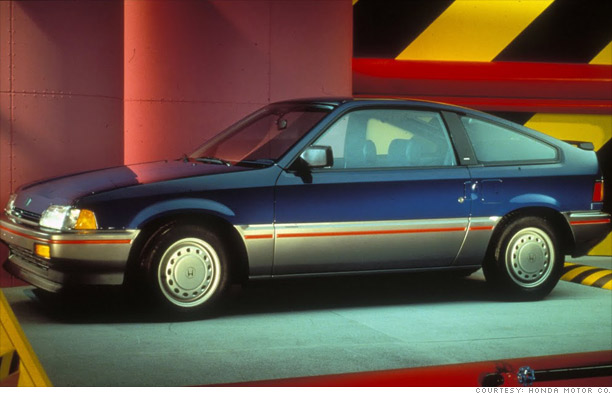
    For comparison, this NON-hybrid car got over 50 mpg more than 20 years ago.


  2. #2
    I am that guy RandomGuy's Avatar
    My Team
    San Antonio Spurs
    Join Date
    Jun 2005
    Post Count
    51,121
    Popular Mechanics


    Yippie!


    For comparison, this NON-hybrid car got over 50 mpg more than 20 years ago.


    Fuel Economy

    In addition to measuring EV range, we also recorded the fuel use when the car was in its “charge sustaining" mode. In other words, we computed the fuel economy after the battery was depleted, both on our city loop and the highway trip. In the city, we recorded 31.67 mpg and achieved 36.0 mpg on the highway. If we factor in the distance traveled on the battery's energy the fuel economy jumps to 37.5 mpg city and 38.15 mpg highway.
    Shocker.

  3. #3
    Veteran DarrinS's Avatar
    My Team
    San Antonio Spurs
    Join Date
    Jun 2005
    Post Count
    42,561

    Sounds like you didn't read the entire thing. They also accounted for distance traveled using the battery.

  4. #4
    Scrumtrulescent
    My Team
    San Antonio Spurs
    Join Date
    Nov 2006
    Post Count
    9,724
    So what's the point here?

  5. #5
    I am that guy RandomGuy's Avatar
    My Team
    San Antonio Spurs
    Join Date
    Jun 2005
    Post Count
    51,121
    Sounds like you didn't read the entire thing. They also accounted for distance traveled using the battery.
    You are correct. That is what I get for taking anti-histimine.

    I missed that part.

    Critical question time Darrin.

    What is your conclusion based on the article?

    What do you think it means?

  6. #6
    e^(i*pi) + 1 = 0 MannyIsGod's Avatar
    My Team
    San Antonio Spurs
    Join Date
    Mar 2003
    Post Count
    57,943
    Whats the fuel economy when running on batteries? How long do they last? Can you reasonably operate the car on a regular basis without anything but battery power?

  7. #7
    I am that guy RandomGuy's Avatar
    My Team
    San Antonio Spurs
    Join Date
    Jun 2005
    Post Count
    51,121
    So what's the point here?
    I believe Darrin is implying that these cars won't get as good a gas mileage as everybody thinks.

    He is missing a rather vital piece of information that will fatally wound that thesis.

    Let's see if he attempts to make his case first, or if he knows that fatal flaw already and is just passing on propaganda, as I am sure some conserva-blog told him to.

  8. #8
    I am that guy RandomGuy's Avatar
    My Team
    San Antonio Spurs
    Join Date
    Jun 2005
    Post Count
    51,121
    Shhhh.

    Give the man enough to hoist him by. (evil grin)

    I doubt he thought it through yet.

  9. #9
    Mr. John Wayne CosmicCowboy's Avatar
    My Team
    San Antonio Spurs
    Join Date
    Mar 2003
    Post Count
    44,134
    Whats the fuel economy when running on batteries? How long do they last? Can you reasonably operate the car on a regular basis without anything but battery power?
    I believe I read the Volt can only go 40 miles on a charge (with new/fresh batteries) That would work for someone with a reasonable to/from work commute.

  10. #10
    e^(i*pi) + 1 = 0 MannyIsGod's Avatar
    My Team
    San Antonio Spurs
    Join Date
    Mar 2003
    Post Count
    57,943
    How does it charge? Plug in or self generating? If its plug in then as long as you drive less than 40 miles between charges you would exponentially increase your fuel economy.

  11. #11
    🏆🏆🏆🏆🏆 ElNono's Avatar
    My Team
    San Antonio Spurs
    Join Date
    Apr 2007
    Post Count
    153,473
    For comparison, this NON-hybrid car got over 50 mpg more than 20 years ago.
    The Volt has a 149 HP electric motor on it, while that Honda CRX has a 58 HP engine on it.

    Not surprised that you're comparing oranges to apples, but if you actually match the power output, the Volt is undeniably much more efficient.

  12. #12
    🏆🏆🏆🏆🏆 ElNono's Avatar
    My Team
    San Antonio Spurs
    Join Date
    Apr 2007
    Post Count
    153,473
    Heck, the gas engine that feeds the generator on the Volt put out more HP (74) than the Honda's engine (58).

  13. #13
    e^(i*pi) + 1 = 0 MannyIsGod's Avatar
    My Team
    San Antonio Spurs
    Join Date
    Mar 2003
    Post Count
    57,943
    Ok, so CC is right, 40 miles before charging. Most Americans don't commute more than 40 miles per day. Charge is done by plugging in, therefor you could go a very very long time before you even need to kick in anything but battery power.

    Fuel economy is going to be very dependent on individual driving habits therefor rendering Darrin's OP meaningless.

  14. #14
    🏆🏆🏆🏆🏆 ElNono's Avatar
    My Team
    San Antonio Spurs
    Join Date
    Apr 2007
    Post Count
    153,473
    How does it charge? Plug in or self generating? If its plug in then as long as you drive less than 40 miles between charges you would exponentially increase your fuel economy.
    It's a plug in, but it also has a built in 1.4 L gas engine hooked to a generator to extend the range.

  15. #15
    Mr. John Wayne CosmicCowboy's Avatar
    My Team
    San Antonio Spurs
    Join Date
    Mar 2003
    Post Count
    44,134
    How does it charge? Plug in or self generating? If its plug in then as long as you drive less than 40 miles between charges you would exponentially increase your fuel economy.
    No argument on the efficiency if you can stomach the $40,000 price tag for an econo-box and the $10,000 to replace the batteries after the 100,000 mile warranty runs out.

  16. #16
    俺はまんこが大好きなんだよ baseline bum's Avatar
    My Team
    San Antonio Spurs
    Join Date
    Mar 2003
    Post Count
    97,881
    Sounds like you didn't read the entire thing. They also accounted for distance traveled using the battery.
    How much total distance was travelled in their test?

  17. #17
    I am that guy RandomGuy's Avatar
    My Team
    San Antonio Spurs
    Join Date
    Jun 2005
    Post Count
    51,121
    How does it charge? Plug in or self generating? If its plug in then as long as you drive less than 40 miles between charges you would exponentially increase your fuel economy.
    Man, you aren't letting him hang himself.

    That is the very obvious rejoinder, to everybody, it seems, except him.

    If you make no trips for an entire year that is less than the battery range and are concientious about recharging, then your gas mileage is essentially infinite.

    Intriging thing about electric cars is the ready solution to charging the things, PV panels backed up by the electrical grid.

    Imagine a parking garage capped by a good PV array, or for that matter, a lot of covered parking.

  18. #18
    🏆🏆🏆🏆🏆 ElNono's Avatar
    My Team
    San Antonio Spurs
    Join Date
    Apr 2007
    Post Count
    153,473
    Purposely missing from the same Popular Mechanics study:

    "As for the rather unremarkable fuel economy, it's useful to remember that the Volt carries two powertrains—electric and gas—and thus suffers a weight penalty that effects overall efficiency. But of course, those two powertrains are why the Volt can be a primary vehicle that doesn't ask the owner to compromise driving cycles like a pure EV. Consider the Volt a well-engineered first step on the path to electrified vehicles."

  19. #19
    $200 cash 4>0rings's Avatar
    My Team
    San Antonio Spurs
    Join Date
    Jan 2010
    Post Count
    6,882
    Popular Mechanics


    Yippie!


    For comparison, this NON-hybrid car got over 50 mpg more than 20 years ago.


    That tin can doesn't have to meet modern safety and envoirnment requirements. You're also asking a newer technology to surpass another of the same platform that has had over a century of r and d.

    I had a CRX HF for a year or 2. It would get over 50mpg on the highway. When ever I put gas in it, I could never remember when I had put gas in it before.

    Give it another 10 years and this won't even be an arguement.

    This is more than just about fuel economy, it's about placing a useable energy source in control of the country that uses it. The more we can use electricity to power vehicles and be self suficient, the less foreign countires have control over America.
    Last edited by 4>0rings; 10-11-2010 at 05:05 PM.

  20. #20
    e^(i*pi) + 1 = 0 MannyIsGod's Avatar
    My Team
    San Antonio Spurs
    Join Date
    Mar 2003
    Post Count
    57,943
    No argument on the efficiency if you can stomach the $40,000 price tag for an econo-box and the $10,000 to replace the batteries after the 100,000 mile warranty runs out.
    Definitely not for me but it definitely is efficent.

  21. #21
    I am that guy RandomGuy's Avatar
    My Team
    San Antonio Spurs
    Join Date
    Jun 2005
    Post Count
    51,121
    No argument on the efficiency if you can stomach the $40,000 price tag for an econo-box and the $10,000 to replace the batteries after the 100,000 mile warranty runs out.
    That is a good point.

    10,000/60 = 166.67

    If those batteries replace $166.67 dollars of gasoline per month over 5 years, then you have paid for them.

    That is roughly 10 cents per mile. The equivalent of a gasoline powered car with 30 MPG at 3.00 per gallon.

    That assumes that gas price increases do not exceed inflation.

    If they do, then the calculus starts shifting to the vehicle, as you start making up the purchase cost.

  22. #22
    Mr. John Wayne CosmicCowboy's Avatar
    My Team
    San Antonio Spurs
    Join Date
    Mar 2003
    Post Count
    44,134
    Definitely not for me but it definitely is efficent.
    For an urban commuter the Leaf is a much better choice. Ten Grand cheaper and 100 mile (battery only) range.

  23. #23
    I am that guy RandomGuy's Avatar
    My Team
    San Antonio Spurs
    Join Date
    Jun 2005
    Post Count
    51,121
    Intriging thing about electric cars is the ready solution to charging the things, PV panels backed up by the electrical grid.

    Imagine a parking garage capped by a good PV array, or for that matter, a lot of covered parking.
    By the by, those panels don't have to be re-imported every year.

  24. #24
    🏆🏆🏆🏆🏆 ElNono's Avatar
    My Team
    San Antonio Spurs
    Join Date
    Apr 2007
    Post Count
    153,473
    No argument on the efficiency if you can stomach the $40,000 price tag for an econo-box and the $10,000 to replace the batteries after the 100,000 mile warranty runs out.
    Or 3 to 5 years... That's how long LI-ION lifetime is...

    That said, this is the kind of development you need to advance the field if we're ever to start moving away from gas. An actual commercial product, produced in quan y that's relatively affordable.

  25. #25
    Mr. John Wayne CosmicCowboy's Avatar
    My Team
    San Antonio Spurs
    Join Date
    Mar 2003
    Post Count
    44,134
    By the by, those panels don't have to be re-imported every year.
    Just after the next hail storm

Thread Information

Users Browsing this Thread

There are currently 1 users browsing this thread. (0 members and 1 guests)

Posting Permissions

  • You may not post new threads
  • You may not post replies
  • You may not post attachments
  • You may not edit your posts
  •
