

 Reply With Quote
LOL...
I don't care if revenue decreased. It is still a spending problem when spending exceeds revenue.

More wing-nut lies exposed....
Sometimes you just have to call something what it is. Simply put, congressional Republicans are lying about the federal budget crisis and thus are suffocating America’s chance for an open, honest debate about the tough choices that are ahead.
The GOP’s bogus argument is built on the oft-repeated sound bite that the federal deficit is a spending problem, not a revenue problem. That isn’t true, as the data and U.S. history plainly show. The current budget deficit is MOSTLY a revenue problem.
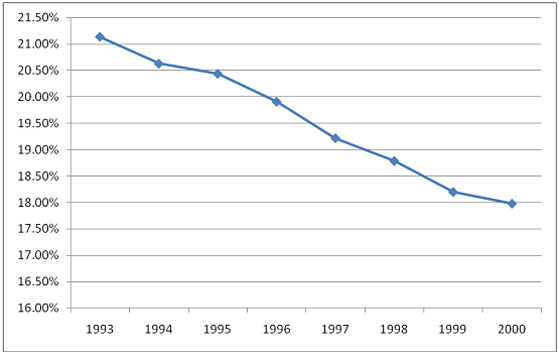
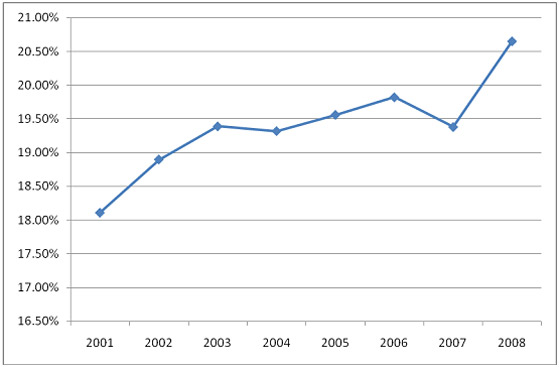
The most pronounced shift in budget calculations is that federal revenue has dropped from 20.35 percent of the Gross Domestic Product (GDP) in 2000 – when the U.S. government was running a surplus – to 14.41 percent of GDP today, with the projected deficit for fiscal 2011 at about $1.5 trillion.
A fair-minded review of the budget shows, too, that most of the contributions from the spending side of the ledger have almost nothing to do with President Barack Obama or what is typically described as “reckless spending” in Washington on domestic priorities.
The only “discretionary” item in the budget that has seen any significant increase in recent years is Defense. The rest of these “discretionary” categories – Education, Transportation, Environment, Agriculture, etc. – have actually decreased as a percent of GDP from around 4 percent in the early 1980s to less than 3 percent today.
What Spending Problem?
With few exceptions, national media pundits uncritically accept the “spending problem” GOP spin without even consulting the data available online to anyone with a search engine.
Yes, federal spending has apparently kissed 25 percent of GDP this year, which is historically high. But, three points must be made:
It’s not off-the-charts high.
Much of the higher spending was reactive to the financial crisis of 2008 or resulted from the deep recession that followed, not from new Washington programs.
It is a relatively short-term blip that is projected to come back to a more normal rate of around 22 percent to 23 percent in the next year or two.
Then came the Bush-II administration, which completely reversed this trend with major spending increases for the military and intelligence services to conduct the post-9/11 “war on terror” and the wars in Afghanistan and Iraq. George W. Bush also pushed through a new prescription drug bill.
Increases in Health Care and Defense spending accounted for nearly all of the spending increases during the Bush-II administration. Health spending grew from 3.8 percent of GDP in 2001 to 4.7 percent in 2008 and Defense spending increased from 3.6 percent of GDP in 2001 to 5.1 percent of GDP in 2008.
Two unfunded wars and an unfunded prescription drug bill will do that to you, as you can see here:
LinkOver the last couple of years, federal spending as a percentage of GDP has indeed surged topping out at 25.3 percent this year.
But that has little to do with so-called “reckless spending” in Washington and has even less to do with Obama specifically.
First, an obvious point: The recession reduced America’s GDP from $14.44 trillion in 2008 to $14.12 trillion in 2009. This automatically increased spending as a percent of GDP by lowering the denominator.
More importantly, the recession has led to hundreds of billions of dollars in temporary spending to stabilize the economy, bail out the financial markets, and provide support for the U.S. auto industry.
GOP talking heads like to complain about many of these programs. But several points must be clarified:
These emergency measures are short-term stimulus spending and don’t have a meaningful impact on spending in the coming years.
Most of the money used to bail out the banking and auto industries has already been paid back to the Treasury.
The bank bailout occurred on George W. Bush’s watch and it took bipartisan support in Congress to pass that bill.
Even accounting for all of these factors, which don’t even include the multiple wars that the United States continues to fight, federal spending as a percent of GDP is only a little more than half the emergency spending levels of the mid-1940s during WWII, a surge in federal spending that is classically viewed as ending the Great Depression.
In the next couple of years, assuming the economy recovers and stimulus funds and other economic stabilizers can be withdrawn, federal spending as a percent of GDP is forecast to decline to 23.6 percent next year and to 22.3 percent by 2015.
Which leads us to the debate around the stimulus bill.
Yes, Obama and the Democrats – with only a handful of GOP votes – pushed through a $787 billion stimulus bill in early 2009. What GOP talking heads never mention, however, is that more than a third of the package wasn’t spending at all. To secure those few Republican votes, a total of $288 billion – or more than one-third of the package – was dedicated to short-term tax breaks.
That left $499 billion in actual spending, but much of that went directly to the states to help rescue depleted state budgets and to avert large-scale layoffs of public employees. Indeed, only about $85 billion of the stimulus package actually went to things like infrastructure, new energy programs and transportation projects.
Given the economic crisis the country was facing – and continues to face – an allotment of $85 billion for capital projects and other infrastructure investments seems like chump change. And, given the weakness of the recovery, it appears that it was woefully insufficient to get the economy back on its feet.
But, even if you ignore these finer points and look at the $499 billion in actual stimulus spending, this is a tiny fraction (about 1.7 percent) of the $29 trillion, two-year GDP of the U.S.
And the money has just about run out, which means that long-term it will have a negligible impact on the overall deficit and will have no impact on long-term federal spending levels.
When it comes to spending under President Obama, only two other areas are even worth mentioning:
Defense has grown from 5.62 percent of GDP in 2009 to 6.4 percent this year, and
Health Care has risen from 5.4 percent to 5.9 percent.
Otherwise, there have been no other net spending increases of any significance added to the books since Obama was sworn in.
The one debateable caveat to all this is the controversial health care bill signed into law in March of 2010. While there are spending provisions in that law, there are also substantial cost savings. As Obama said repeatedly during the debate, the bill is projected to add nothing to the federal debt.
Altogether, the CBO estimates a net cost savings of $143 billion over the next 10 years – with more savings after that.
Going forward, President Obama has already committed the federal government to significant cuts in discretionary programs. For example, the total cost of the stimulus bill is more than offset by the Obama-ordered freeze in non-defense discretionary spending over the next ten years, which will reduce spending in that budget category from 3.4 percent of GDP to less than 2 percent.
In fact, taking these savings into account, the big GOP spending lie gets even more outlandish. Even if you take into account all spending relative to GDP, including Defense and Social Security/Medicare, total federal spending on these programs as a percent of GDP is projected to actually come down over the next ten years — from 25.3 percent of GDP in 2011 to 19.7 percent in 2021.

LOL...
I don't care if revenue decreased. It is still a spending problem when spending exceeds revenue.

You should start caring. That revenue shortfall is being put on a credit card you're going to be on the hook for.
When will you stop with your hateful use of my words out of context? How ing twisted is your mind?
Yes I care that revenue has decreased. my point was in line with government spending exceeding revenue.
How many times have I spoke about addressing the root problem?
There are currently 1 users browsing this thread. (0 members and 1 guests)
 Posting Permissions
