

 Reply With Quote
Blocks are incredibly overrated as a stat of defensive skill. Duncan has anchored a top 5 defense almost every season in his career.

It seems that analytics are the new way to gauge players impact nowadays. I'm curious to have your take on the following:
"And as much respect as we have for Duncan, it’s not clear that he performed better in his prime than Barkley did, either. Over the same range of ages (22-36), Barkley leads Duncan in BPM — by a whopping 1.8 points per 100 possessions — VORP and WS/48. (Granted, Duncan’s PER does edge out Barkley, 24.7 to 24.6.)"
Find the complete article here:
http://fivethirtyeight.com/datalab/c...sure-love-him/

Blocks are incredibly overrated as a stat of defensive skill. Duncan has anchored a top 5 defense almost every season in his career.

"Tim Duncan is the best Power Forward to ever play the game." -Charles Barkley
Analtyics = overrated?

Article isn´t about blocks. BPM stands for "Box +/-" in this case...
Analytics doesn't translate as well in the NBA. But it allows people to back up arguments using stats they don't understand. While coaches in the NBA use them, they don't overly emphasize them.

The numbers prove Barkley's point. By ANALYTICS Barkely, in his prime, might have been better than Duncan. In the real world? Barkely proclaimed Timmy, AS A ROOKIE, as the best power forward ever.
That's the point; analytics don't tell the whole story - and you can't use analytics to prove otherwise!

Thank you. Analytics, like any set of descriptive numbers, have their uses. But you are absolutely right to note that they do not tell the entire story and that an over-reliance on them will yield inaccurate assessments...just as the OP pointed out.

eye test >>>>>>>>>>>>> analytics

analytics

Barkley is a Hall-of-Famer. Is it really shocking that most stats would have them be similar? I also think that had that Barkley trade gone through all those years ago that the Spurs would have won a few championships in the 90s (though at the expense of their current five).

Analytics aren't to blame for misleading stats. The lack of categories is to blame. If you had enough categories, you'd have the entire picture, and it would be indisputable. You can blame interpreters however, since they attempt to draw conclusions from the stats that are basically non sequitur.

Do you think those categories remain absent because they're immeasurable?

I am not even going to read that crap, best PF ever period end of story.

Wouldn't surprise me at at all if this French found this by searching for ways to discredit analytics bc of how bad Enrique is this year.
They are only immeasurable with current technology... but they wont always be. All "analytics" represent is a structured way of processing data points, in much the same way the human brain does (although we're not always conscious of the specific steps its taking) in applying the "eye test."
Look at software/cameras like SportVU that allows us to track and analyze data from on-court movements. Before, we weren't able to correlate performance data with physical movement data, but we are starting to be able to. One day we'll be able to analyze data that looks at physical interactions between players as well and use that as a datapoint. , today websites and grocery stores use eye-tracking cameras to investigate how people process visual information. It won't be long until someone tries something similar with ball handlers to explore ways to measure "court vision."
Things like "drive" and "perseverance" and "leadership" are often called "immeasurable," but advances in neurology/psychology and technology that actually interprets the electrical signals in the brain may one day allow those things to be quantified too (especially if that data is correlated with stats, movement data, etc.)
There's nothing that will forever be "immeasurable." We're just limited by our current technology and understanding of human behavior. So we fill in the gaps with things like "the eye test" and "experience" until something better comes along.

Duncan is a center, Barkley isn't
NEXT..
Some. I think there's no money it measuring them. We don't use stats for average fastbreak speed, arc of shot, time between free throw attempts, near blocks, good passes that don't lead to assists, forcing a charge call, taking a charge/forcing a turnover. The numbers are out there, surely some teams are finding them but someone has to watch film and record numbers and then you worry about interpretation of footage, two people might have different interpretations of a play.

Barkley was not that great on defense, he could not guard Kevin McHale.
How did you know that i like it in the ass?
As for Parker, i don't need analytics to say that he plays like this year. You will not find ONE post where i say something else.

- In a later chapter of Basketball on Paper, Oliver emphasized that Offensive Ratings shouldn't be viewed in a vacuum. Introducing a concept he called "Skill Curves", he acknowledged that a player's ORtg needed to be judged in conjunction with his Usage Rate, a measure of how big a role the player fills in his team's offense. The bigger the role, the more difficult it is to maintain a high ORtg; the smaller the role, the easier it is to be highly efficient. Because of this, Oliver stressed that a player's ORtg should primarily be compared to those of other players in a similar role.
- Out of necessity (owing to a lack of defensive data in the basic boxscore), individual Defensive Ratings are heavily influenced by the team's defensive efficiency. They assume that all teammates are equally good (per minute) at forcing non-steal turnovers and non-block misses, as well as assuming that all teammates face the same number of total possessions per minute.
- Perhaps as a byproduct, big men tend to have the best Defensive Ratings (although Oliver notes that history's best defensive teams were generally anchored by dominant defensive big men, suggesting that those types of players are the most important to a team's defensive success). A corollary to this is that excellent perimeter defenders who don't steal the ball a lot — for instance, Joe Dumars or Doug Christie— are underrated defensively by DRtg, and are prone to look only as good as their team's overall defense performs.
These are just a few notes about the rating system. Dean Oliver-- the guy who invented the rating system-- acknowledges shortcomings in the rating process. It's a good guide, but it's simply not 100% accurate.
I agree. Analytics, as they currently are, can't tell the whole story.
And to be quite honest, i hope numbers will never say it all. As a Sport fan, I find it cool to give room to subjectivity
It'll be an interesting time when intuition becomes completely outdated. That'll be a huge change for sports when we arrive at that point. Wasn't aware of the sportsVU stuff going on either, so thanks for the heads up.
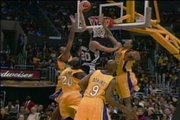
and Duncan couldn't guard Amare Stoudemire

solid take tbh.
There are currently 1 users browsing this thread. (0 members and 1 guests)
 Posting Permissions

