

 Reply With Quote
It's $2.29 a gallon gas under President Trump. It's $3.95 a gallon under MF Biden.
It's $3.00 a gallon bleach under President Trump. It's $5.00 a gallon under MF Biden.
Let us proceed...

Orig piece by Robert Reich.
Will try to put in the links in the original article at some point.
Yesterday, the Fed’s policy committee announced it would both end its bond-buying program and likely raise interest rates sooner than had been expected. “Inflation is more persistent and higher, and that the risk of it remaining higher for longer has grown,” Fed chair Jerome Powell explained. Translated: Powell and the Fed are about to slow the economy — even though we’re still at least 4 million jobs short of where we were before the pandemic. And even though, as a result, millions of American workers won’t get the raises they deserve.
I think that’s a big mistake. Powell’s medicine has nothing to do with the real reason for inflation: the increasing concentration of the American economy into the hands of a relative few corporate giants with the power to raise prices.
If markets were compe ive, companies would keep their prices down in order to prevent compe ors from grabbing away customers. But they’re raising prices even as they rake in record profits. How can this be? The answer is they have so much market power they can raise prices with impunity.
The underlying problem is not inflation. It’s lack of compe ion. Corporations are using the excuse of inflation to raise prices and make fatter profits.
In April, Procter & Gamble announced it would start charging more for consumer staples ranging from diapers to toilet paper, citing “rising costs for raw materials, such as resin and pulp, and higher expenses to transport goods.”
That was rubbish. P&G continues to rake in huge profits. In the quarter ending September 30 (after its price increases went into effect) it reported a whopping 24.7 percent profit margin. It even spent $3 billion during the quarter buying back its own stock.
The reason it could raise prices and rake in more money is P&G faces almost no compe ion. The lion’s share of the market for diapers (to take one example) is controlled by just two companies – P&G and Kimberly-Clark – which coordinate their prices and production. It was hardly a coincidence that Kimberly-Clark announced price increases similar to P&G’s at the same time P&G announced its own price increases.
Or consider another consumer product duopoly – PepsiCo (the parent company of Frito-Lay, Gatorade, Quaker, Tropicana, and other brands), and Coca-Cola. In April, PepsiCo announced it was increasing prices, blaming “higher costs for some ingredients, freight and labor.” That was pure baloney. The company didn’t have to raise prices. It recorded $3 billion in operating profits through September.
If PepsiCo faced tough compe ion it could never have gotten away with it. Consumers would have deserted it for lower-priced compe ors. But PepsiCo clearly colluded with its only major compe or, Coca-Cola – which announced similar price increases at about the same time as PepsiCo, and has increased its profit margins to 28.9 percent.
Half of the recent rise in grocery prices is from meat products — beef, pork, and poultry. Just four large conglomerates control most meat processing. They’re raising their prices — and coordinating their price increases — even as they’re scoring record profits. Here again, they’re using “inflation” as an excuse.
You see the same pattern all over the American economy.
Since the 1980s, two-thirds of all American industries have become more concentrated. Monsanto now sets the prices for most of the nation’s seed corn. Wall Street has consolidated into five giant banks. Airlines have merged from 12 carriers in 1980 to four today, which now control 80 percent of domestic seating capacity. The merger of Boeing and McDonnell Douglas has left the US with just one large producer of civilian aircraft — Boeing. Three giant cable companies dominate broadband: Comcast, AT&T and Verizon. A handful of drug companies control the pharmaceutical industry: Pfizer, Eli Lilly, Johnson & Johnson, Bristol-Myers Squibb and Merck.
All this concentration gives corporations the power to raise prices, because it makes it easy for them to coordinate price increases with the handful of other companies in their same industry — without risking the possibility of losing customers, who have no other choice.
In sum, inflation isn’t driving these price increases. Corporate power is driving them.
So what’s the appropriate government response? Not slowing down the economy. This will only hurt millions of workers, who are just beginning to get the raises they deserve. The problem at the heart of the economy is amenable to only one thing: the aggressive use of an rust laws to bust up monopolies.
This will take time — perhaps years. In the meantime, Biden and the Democrats could do something with a more immediate effect: Enact a windfall profits tax applicable to any large corporation that raises its prices during the same quarter its profits have risen.
What do you think?
--------------------
https://robertreich.substack.com/p/t...bout-inflation

It's $2.29 a gallon gas under President Trump. It's $3.95 a gallon under MF Biden.
It's $3.00 a gallon bleach under President Trump. It's $5.00 a gallon under MF Biden.
Let us proceed...

psst... OP doesn't have a clue either.
He does.
You don't.
deal.

Lmao Of course you're sucking off REICH!
Reich's guide to economics:
Spend more, tax the rich
The End

Time for Biden to drink the bleach already so we can have President Madame Harris already... that would be a barrel rollin' in' fun.... to watch her lose 400 electoral college votes in 2024, that is
To use the welfare of niggеrs as bait to turn the U.S. into post-Bolshevik Russia or modern-day Venezuela.
Not too far off.
Troll fail.
Why do people think "Tax the Rich" works? It works like tanking in the NBA works.
Apple, one of the largest slave plantations and most profitable companies doesn't pay more than a few bucks tax and every party gives enough loopholes where the rich basically never pay their fair share. Biden's plan gives the rich $70 billion in tax breaks.
Amazing that 1st worlders, in the highest quality of life ever recorded, still pipe dream this kind of nonsense and that the "rich", almost completely enabled by the 1st worlders who cry victim, are the golden ticket to relief from the horrible 1st world, high quality, en lement-laden lives we lead.
That's a relic in belief. The rich continually get richer because the average 1st worlder is fiscally irresponsible and can't stop themselves from making the rich richer.

Then proceeds to explain how taxing the rich isn’t happening.
Was there a point in US history where the rich were being taxed (effectively) and if so, what was the outcome?
I'd say now. The outcome is you sit up all night talking about stupid instead of wondering where you will get food and shelter tomorrow.

Those taxes are really keeping the rich down
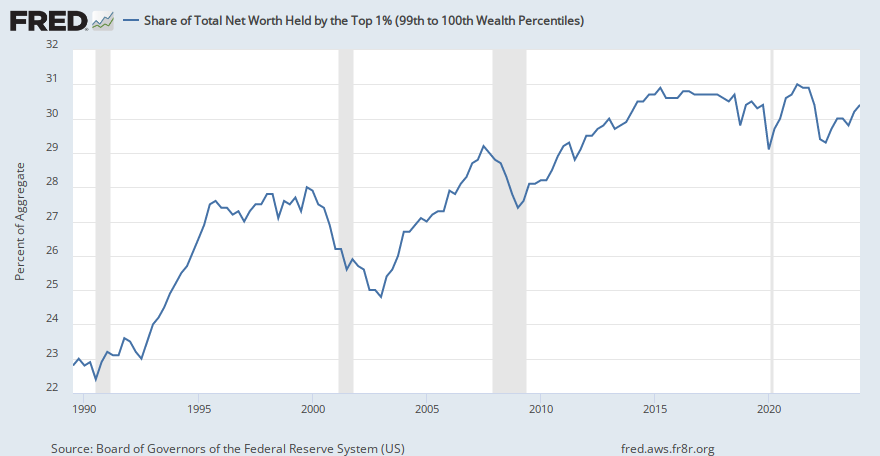
Which way is redistribution going?
That little blue line is barely visible.


Your tax charts suck. Actual federal tax rates were never as high as you guys keep claiming because deductions and shelters were much more generous. That changed in 86 when rates were lowered and lots of deductions were eliminated.
Not speaking for WH’s charts, but I explicitly indicated effective tax rate which would be the tax rate after deductions.
How do you know deductions and shelters were much more generous?
and
Does that really entirely negate the comparison? Or just make is slightly distorted, but still accurate?
or...
Are you talking out your ass again, assuming stupid because you don't like the message?

There’s a bit of everything, tbh… there’s also the recouping of losses from the pandemic, despite some of these companies received substantial bailouts (ie airlines), while offering much worse services.
That said, lack of compe ion and market concentration largely predate COVID. The pandemic did expose a worrisome fragility on the global supply chain, which will need to be addressed in the long term.
Yes, it totally negates the comparison. You keep pulling the same and using stated rate instead of effective rate. As an example, prior to 86 you could deduct every penny of interest paid including car payments and credit card interest. There were tons of legal oil and gas shelters, raw land shelters, etc. You could finance farm and ranch land, deduct the interest, deduct all operating expenses and then depreciate the dirt. If you had enough income to make the note you could basically buy land with money that would have gone to taxes.

The "globalist" Capitalists amass more Capital buying stuff abroad, putting American workers, even with their suppressed wages, in losing compe ion with Asian/Mexican workers, rather than making in USA.
That's why they did it, and will keep doing it.
China has so much economic power now that it is intimidating US companies in China to conform to Chinese policies on politics, human rights.
Of course, US companies value their Chinese profits above human rights.

Post the REAL charts.
There are currently 1 users browsing this thread. (0 members and 1 guests)
 Posting Permissions


