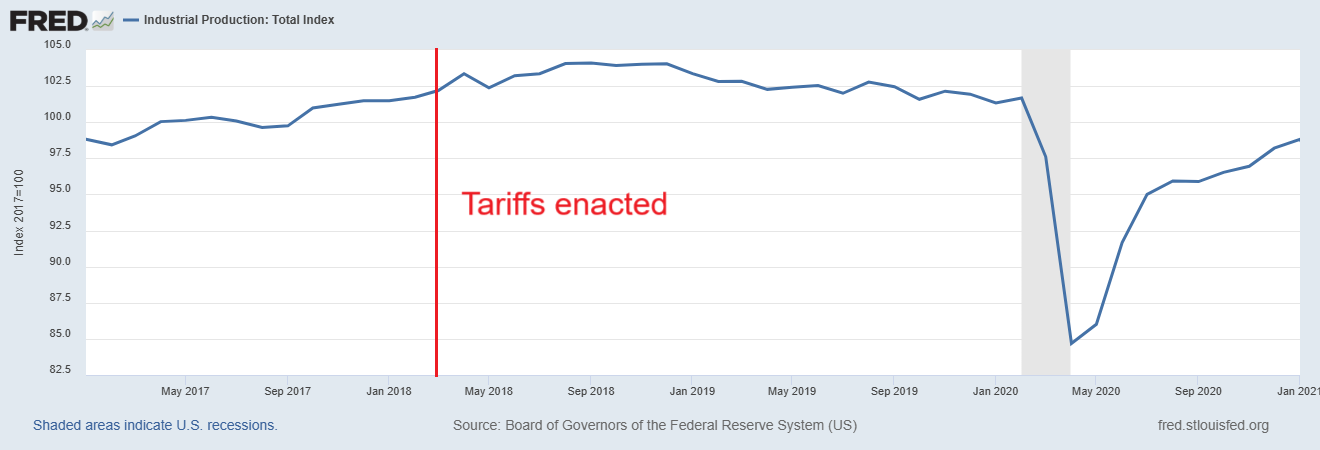
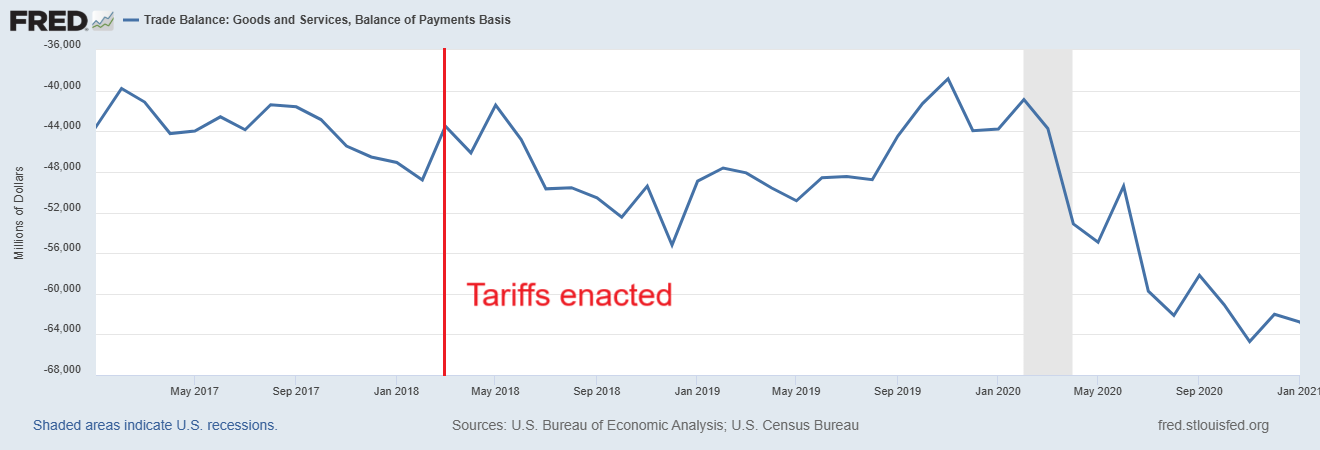
Spending on manufacturing imports
tends to track the business cycle and new orders for American-made goods. Imposing “universal” tariffs high enough to force those imports to fall by more than 40 percent to close the trade deficit would likely involve a severe economic downturn that hurts Americans more than anyone else. To avoid that pain, domestic production of those same goods would have to rise enough to cover the gap — and rise fast enough to prevent shortages and inflation. The experience of the pandemic suggests that this is not a realistic option…
Another counterintuitive impact is that the dollar tends to
become more expensive in response to the imposition —
or threat — of new tariffs…[This] means that goods made in the U.S. become more expensive for customers in the rest of the world. The net effect is that tariffs often hit
exports more than imports, even when foreign trade partners fail to retaliate.



 Reply With Quote